


H5N1 pathogenesis studies in mammalian models
- PMID: 23458998
- PMCID: PMC5858902
- DOI: 10.1016/j.virusres.2013.02.003
H5N1 pathogenesis studies in mammalian models
Abstract
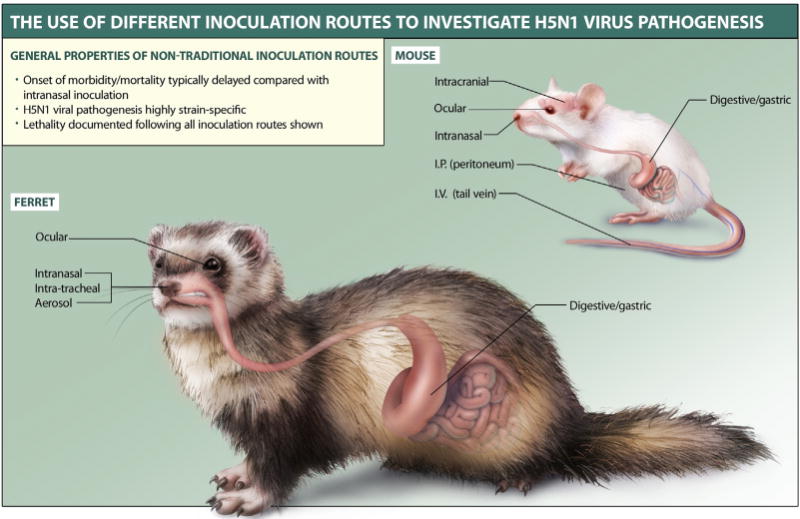
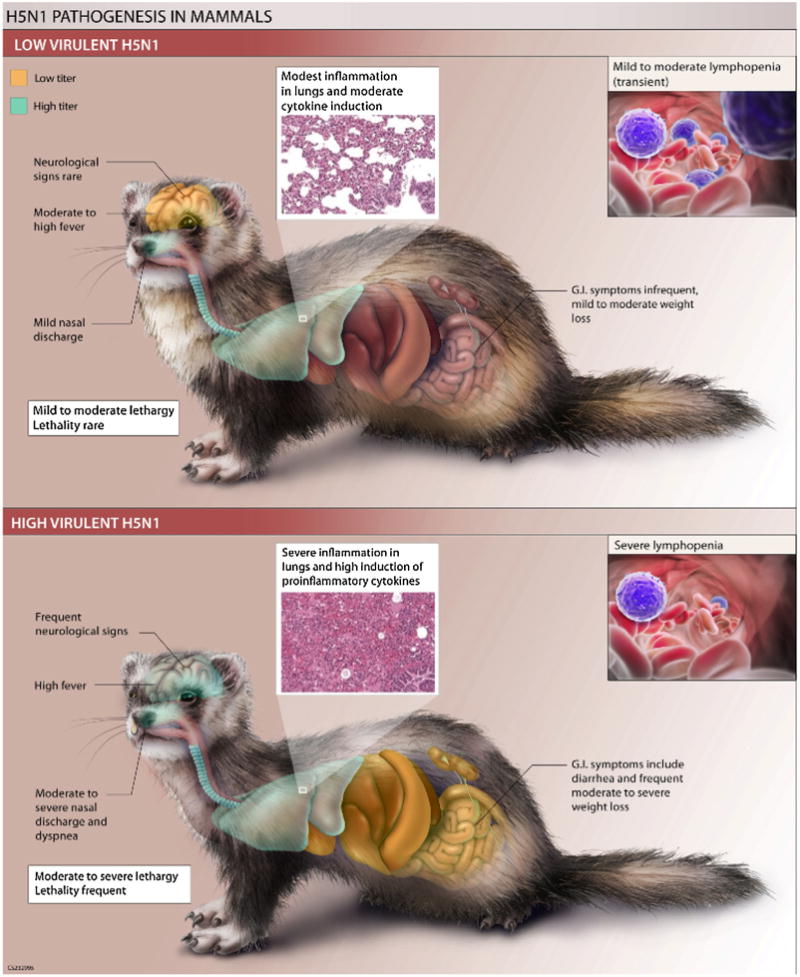
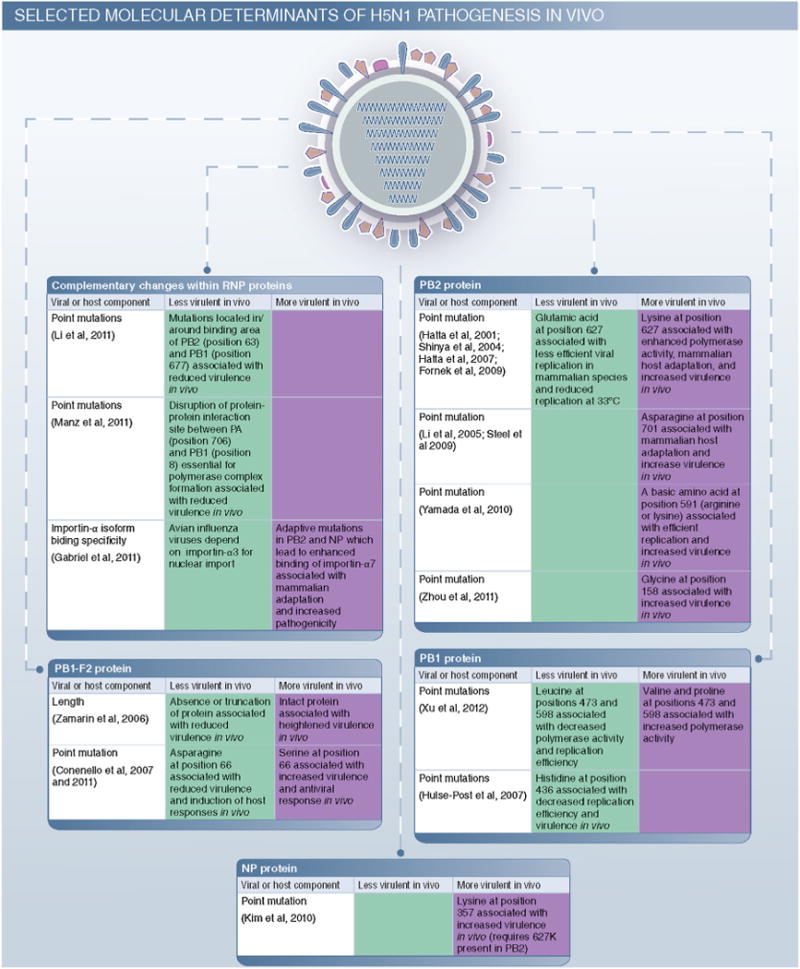
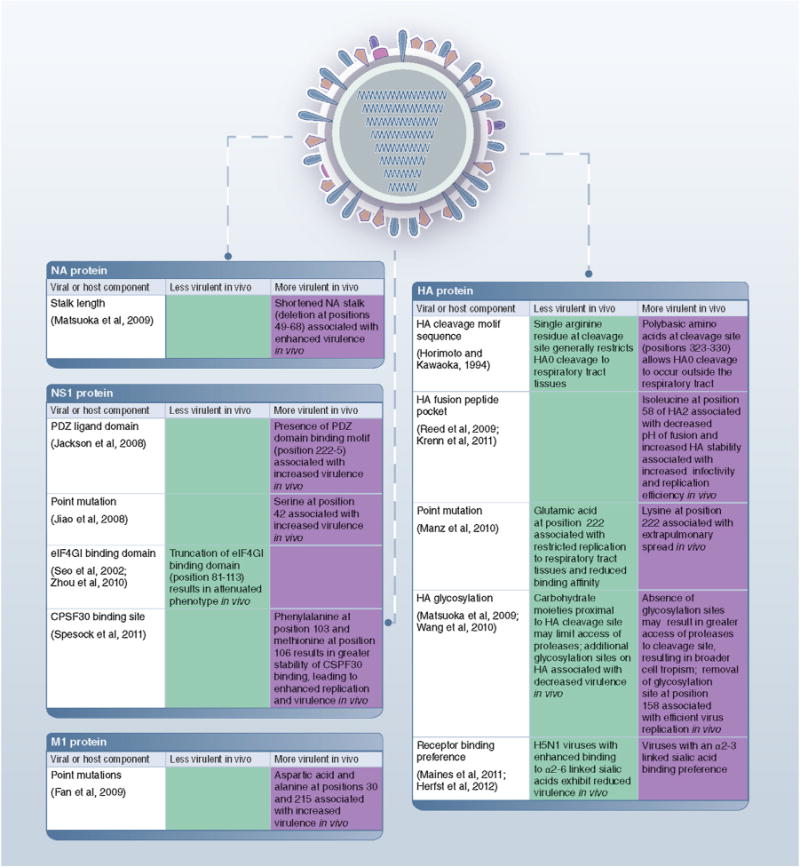
H5N1 influenza viruses are capable of causing severe disease and death in humans, and represent a potential pandemic subtype should they acquire a transmissible phenotype. Due to the expanding host and geographic range of this virus subtype, there is an urgent need to better understand the contribution of both virus and host responses following H5N1 virus infection to prevent and control human disease. The use of mammalian models, notably the mouse and ferret, has enabled the detailed study of both complex virus-host interactions as well as the contribution of individual viral proteins and point mutations which influence virulence. In this review, we describe the behavior of H5N1 viruses which exhibit high and low virulence in numerous mammalian species, and highlight the contribution of inoculation route to virus pathogenicity. The involvement of host responses as studied in both inbred and outbred mammalian models is discussed. The roles of individual viral gene products and molecular determinants which modulate the severity of H5N1 disease in vivo are presented. This research contributes not only to our understanding of influenza virus pathogenesis, but also identifies novel preventative and therapeutic targets to mitigate the disease burden caused by avian influenza viruses.
Keywords: Avian influenza; Ferret; H5N1; Influenza; Mammalian; Mice; Pathogenesis.
Published by Elsevier B.V.
Figures
References
-
- Abdel-Ghafar AN, Chotpitayasunondh T, Gao Z, Hayden FG, Nguyen DH, de Jong MD, Naghdaliyev A, Peiris JS, Shindo N, Soeroso S, Uyeki TM. Update on avian influenza A (H5N1) virus infection in humans. New England Journal of Medicine. 2008;358(3):261–273. - PubMed
-
- Aldridge JR, Jr, Moseley CE, Boltz DA, Negovetich NJ, Reynolds C, Franks J, Brown SA, Doherty PC, Webster RG, Thomas PG. TNF/iNOS-producing dendritic cells are the necessary evil of lethal influenza virus infection. Proceedings of the National Academy of Sciences of the United States of America. 2009;106(13):5306–5311. - PMC - PubMed
-
- Baigent SJ, McCauley JW. Glycosylation of haemagglutinin and stalk-length of neuraminidase combine to regulate the growth of avian influenza viruses in tissue culture. Virus Research. 2001;79(1/2):177–185. - PubMed
-
- Banks J, Plowright L. Additional glycosylation at the receptor binding site of the hemagglutinin (HA) for H5 and H7 viruses may be an adaptation to poultry hosts, but does it influence pathogenicity? Avian Diseases. 2003;47(3 Suppl):942–950. - PubMed
-
- Baskin CR, Bielefeldt-Ohmann H, Tumpey TM, Sabourin PJ, Long JP, Garcia-Sastre A, Tolnay AE, Albrecht R, Pyles JA, Olson PH, Aicher LD, Rosenzweig ER, Murali-Krishna K, Clark EA, Kotur MS, Fornek JL, Proll S, Palermo RE, Sabourin CL, Katze MG. Early and sustained innate immune response defines pathology and death in nonhuman primates infected by highly pathogenic influenza virus. Proceedings of the National Academy of Sciences of the United States of America. 2009;106(9):3455–3460. - PMC - PubMed
Publication types
MeSH terms
Substances
Grants and funding
LinkOut - more resources
Full Text Sources
Other Literature Sources
Medical
