


Stress-induced glucocorticoids as a neuroendocrine alarm signal of danger
- PMID: 23459026
- PMCID: PMC5652304
- DOI: 10.1016/j.bbi.2013.02.004
Stress-induced glucocorticoids as a neuroendocrine alarm signal of danger
Abstract
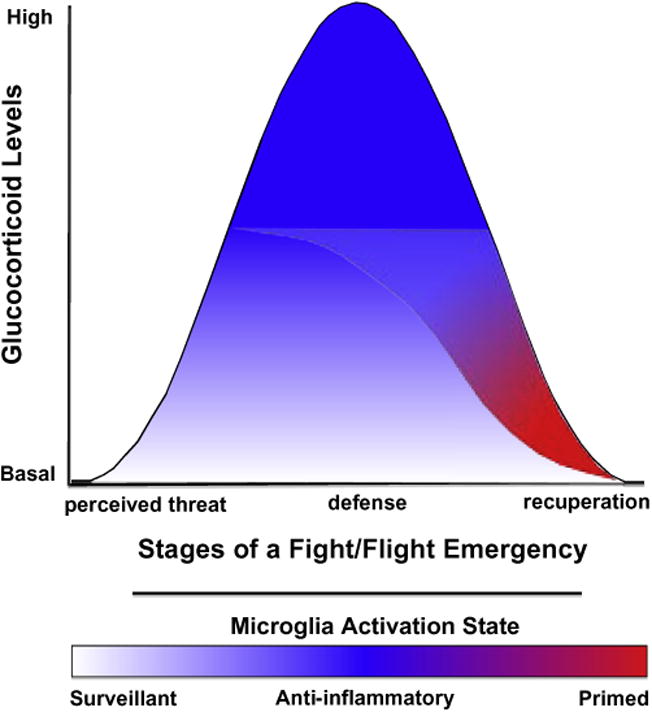
A considerable number of studies demonstrate that acute and chronic stressors prime CNS innate immune responses to subsequent pro-inflammatory challenges and that glucocorticoids mediate, in part, stress-induced sensitization of pro-inflammatory immune responses. Here, we explore the notion that GCs produce a persisting sensitization of CNS innate immune effectors (e.g. microglia) so that they will generate a potentiated pro-inflammatory response after the GC rise has dissipated, thereby enhancing the sickness response to infection or injury and maximizing the animal's ability to neutralize danger. The stress-induced GC response is conceptualized here as an neuroendocrine warning signal or alarmin to the innate immune system, which prepares or sensitizes the innate immune response to potential danger. Thus, a new understanding of the stress response and its function (priming CNS innate immune responses to infection or injury during a fight/flight emergency) would be suggested.
Keywords: Alarmin; Danger; Glucocorticoid; Microglia; Priming; Pro-inflammatory; Stress.
Copyright © 2013 Elsevier Inc. All rights reserved.
Figures
References
-
- Aravalli RN, Peterson PK, Lokensgard JR. Toll-like receptors in defense and damage of the central nervous system. J Neuroimmune Pharmacol. 2007;2:297–312. - PubMed
-
- Avitsur R, Powell N, Padgett DA, Sheridan JF. Social interactions, stress, and immunity. Immunol Allergy Clin North Am. 2009;29:285–293. - PubMed
-
- Basu A, Krady JK, Levison SW. Interleukin-1: a master regulator of neuroinflammation. J Neurosci Res. 2004;78:151–156. - PubMed
Publication types
MeSH terms
Substances
Grants and funding
LinkOut - more resources
Full Text Sources
Other Literature Sources
Medical
Miscellaneous
