


A direct comparison of efficacy between desloratadine and rupatadine in seasonal allergic rhinoconjunctivitis: a randomized, double-blind, placebo-controlled study
- PMID: 23459334
- PMCID: PMC3582315
- DOI: 10.2147/JAA.S39496
A direct comparison of efficacy between desloratadine and rupatadine in seasonal allergic rhinoconjunctivitis: a randomized, double-blind, placebo-controlled study
Abstract
Background: H1-antihistamines are recommended as the first-line symptomatic treatment of allergic rhinitis. The objective of this study was to evaluate the effects of rupatadine (RUP) versus desloratadine (DES) in subjects with seasonal allergic rhinitis (SAR).
Method: To assess the efficacy and safety of RUP in SAR in comparison with placebo (PL) and DES. A randomized, double-blind, multicenter, international, and PL-controlled study was carried out. The main selection criteria included SAR patients over 12 years old with a positive prick test to a relevant seasonal allergen for the geographic area. Symptomatic patients at screening with a nasal symptom sum score of ≥6 points (nasal discharge, nasal obstruction, sneezing, and nasal pruritus), a non-nasal score of ≥3 points (ocular pruritus, ocular redness, and tearing eyes), and a rhinorrhea score of ≥2 points with laboratory test results and electrocardiography within acceptable limits were included in the study. Change from baseline in the total symptom-score (T7SS) over the 4-week treatment period (reflective evaluation) was considered the primary efficacy variable. Secondary efficacy measures included total nasal symptom score (T4NSS) and conjunctival symptom score (T3NNSS), both of which are reflective and instantaneous evaluations. Furthermore questions related to quality of life (eg, sleep disturbances or impairment of daily activities) have also been evaluated. Safety was assessed according to adverse events reported, as well as laboratory and electrocardiography controls.
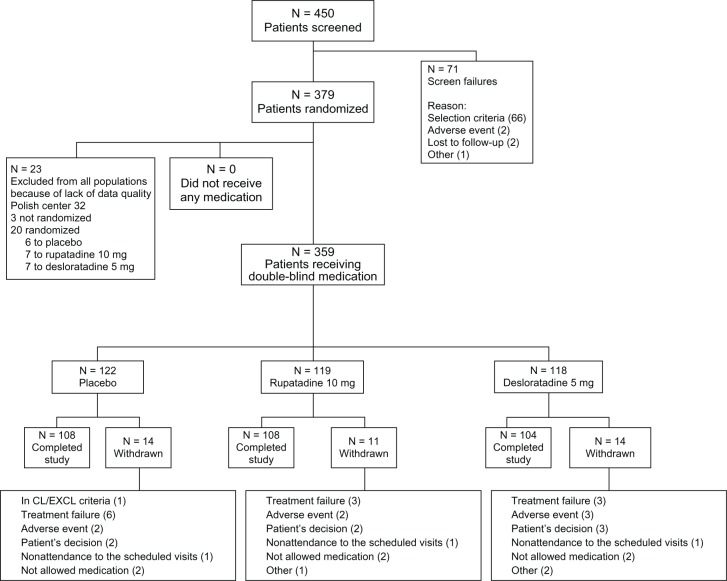
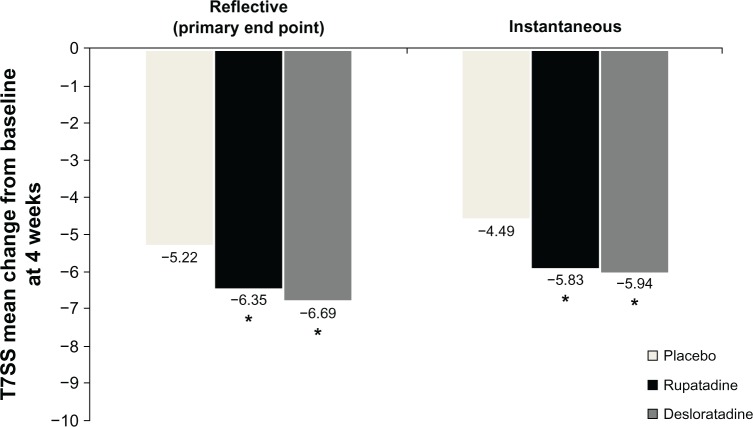
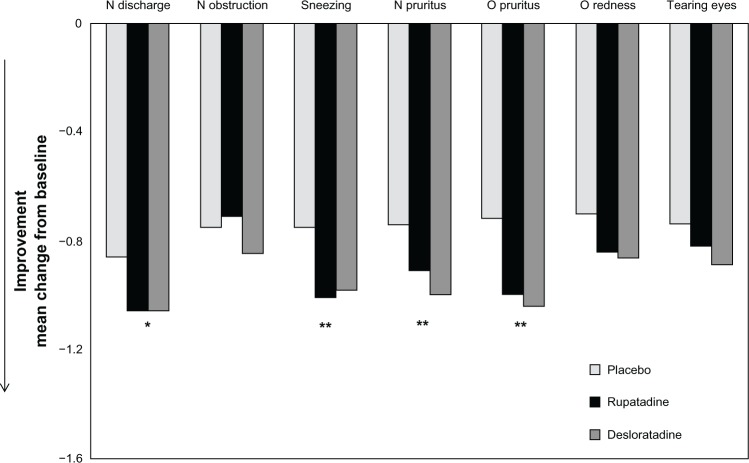
Results: A total of 379 patients were randomized, of which 356 were included and allocated to PL (n = 122), RUP (n = 117), or DES (n = 117). Mean change of T7SS over the 4-week treatment period was significantly reduced in the RUP (-46.1%, P = 0.03) and DES (-48.9%, P = 0.01) groups, compared with PL. Similarly, RUP and DES were comparable and significantly superior to PL for all secondary endpoints, including nasal and conjunctival symptoms and patients' and investigator's overall clinical opinions. Symptom score evaluation (both reflective and instantaneous evaluations) throughout the treatment period showed a progressive and maintained significant improvement with both treatments at day 7 (P = 0.01), day 14 (P = 0.007), and day 21 (P = 0.01) in comparison with PL. Adverse events were scarce and were similar in both treatment groups. Electrocardiography (QTc) and lab test results did not show any relevant findings.
Conclusion: RUP is a very good choice for SAR due to its contribution to the improvement of nasal (including obstruction) and non-nasal symptoms to a similar degree as DES.
Keywords: H1-antihistamines; allergic rhinitis; desloratadine; rupatadine; seasonal.
Figures
References
-
- Bauchau V, Durham SR. Prevalence and rate of diagnosis of allergic rhinitis in Europe. Eur Respir J. 2004;24(5):758–764. - PubMed
-
- Bachert C, van Cauwenberge P, Olbrecht J, van Schoor J. Prevalence, classification and perception of allergic and nonallergic rhinitis in Belgium. Allergy. 2006;61(6):693–698. - PubMed
-
- Bousquet J, Khaltaev N, Cruz AA, et al. World Health Organization GA(2)LEN, AllerGen. Allergic Rhinitis and its Impact on Asthma (ARIA) 2008 update (in collaboration with the World Health Organization, GA(2)LEN and AllerGen) Allergy. 2008;63(Suppl 86):8–160. - PubMed
-
- Schatz M. A survey of the burden of allergic rhinitis in the USA. Allergy. 2007;62(Suppl 85):9–16. - PubMed
-
- Mullol J. A survey of the burden of allergic rhinitis in Spain. J Invest Allergol Clin Immunol. 2009;19(1):27–34. - PubMed
LinkOut - more resources
Full Text Sources
Other Literature Sources
Miscellaneous
