


A novel extracorporeal CO(2) removal system: results of a pilot study of hypercapnic respiratory failure in patients with COPD
- PMID: 23460154
- PMCID: PMC3590884
- DOI: 10.1378/chest.12-0228
A novel extracorporeal CO(2) removal system: results of a pilot study of hypercapnic respiratory failure in patients with COPD
Abstract
Background: Hypercapnic respiratory failure in patients with COPD frequently requires mechanical ventilatory support. Extracorporeal CO2 removal (ECCO2R) techniques have not been systematically evaluated in these patients.
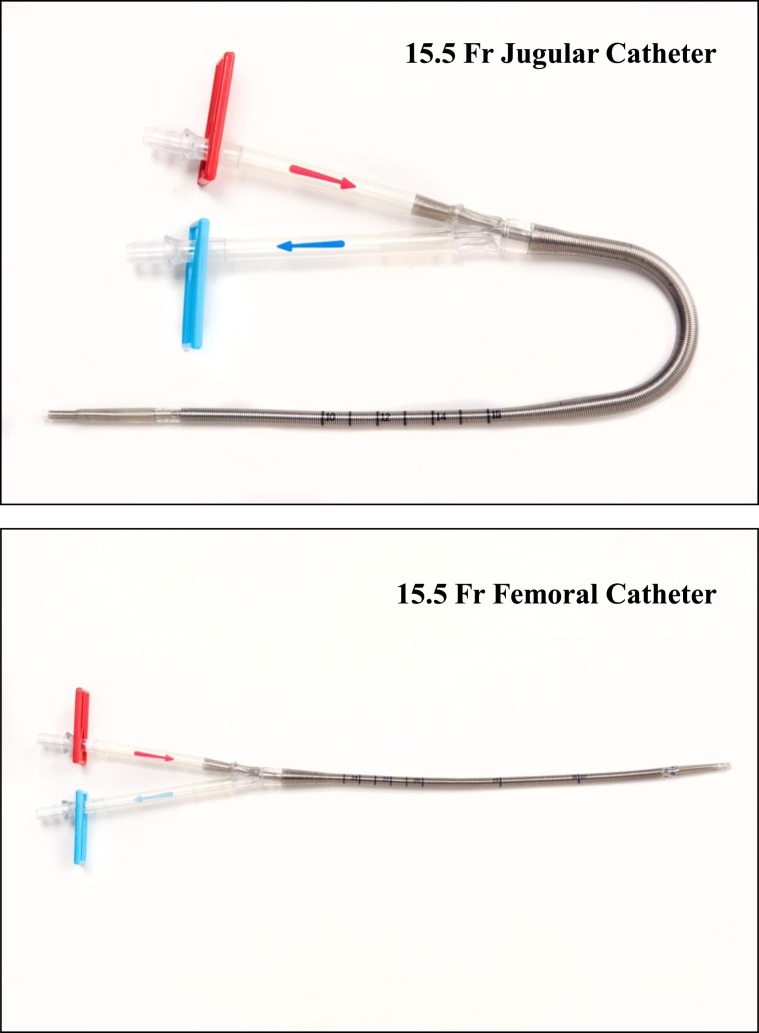
Methods: This is a pilot study of a novel ECCO2R device that utilizes a single venous catheter with high CO2 removal rates at low blood flows. Twenty hypercapnic patients with COPD received ECCO2R. Group 1 (n = 7) consisted of patients receiving noninvasive ventilation with a high likelihood of requiring invasive ventilation, group 2 (n = 2) consisted of patients who could not be weaned from noninvasive ventilation, and group 3 (n = 11) consisted of patients on invasive ventilation who had failed attempts to wean.
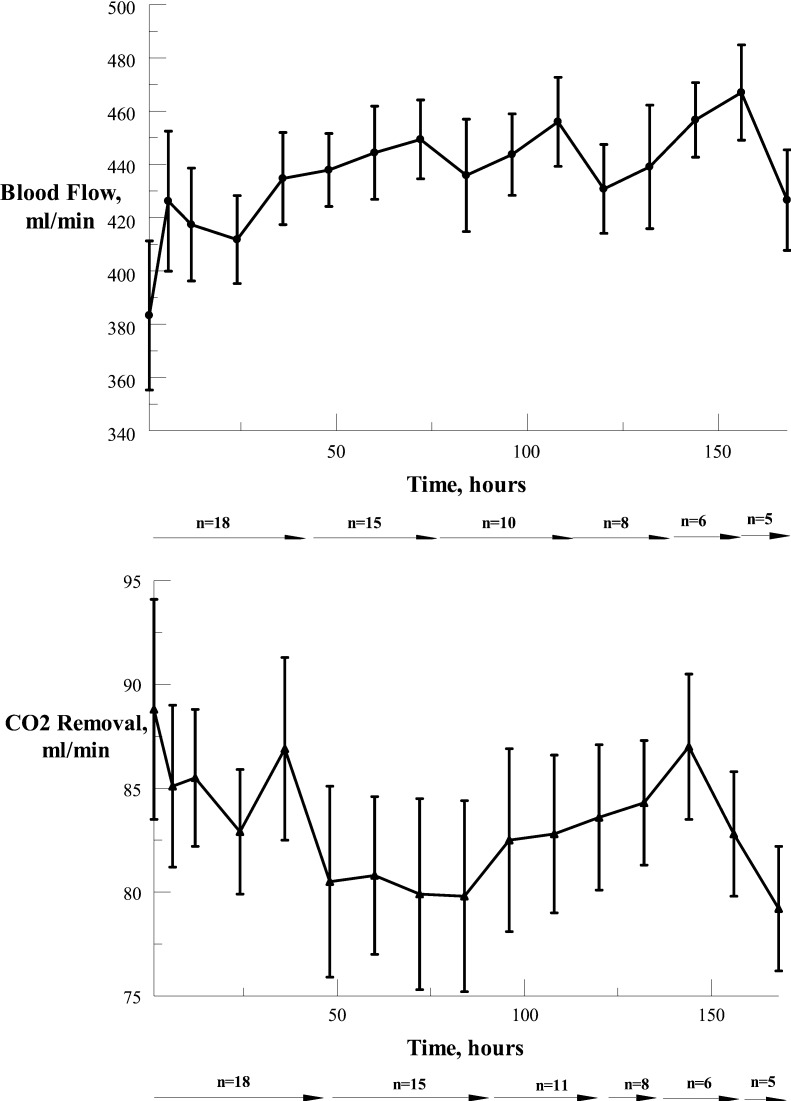
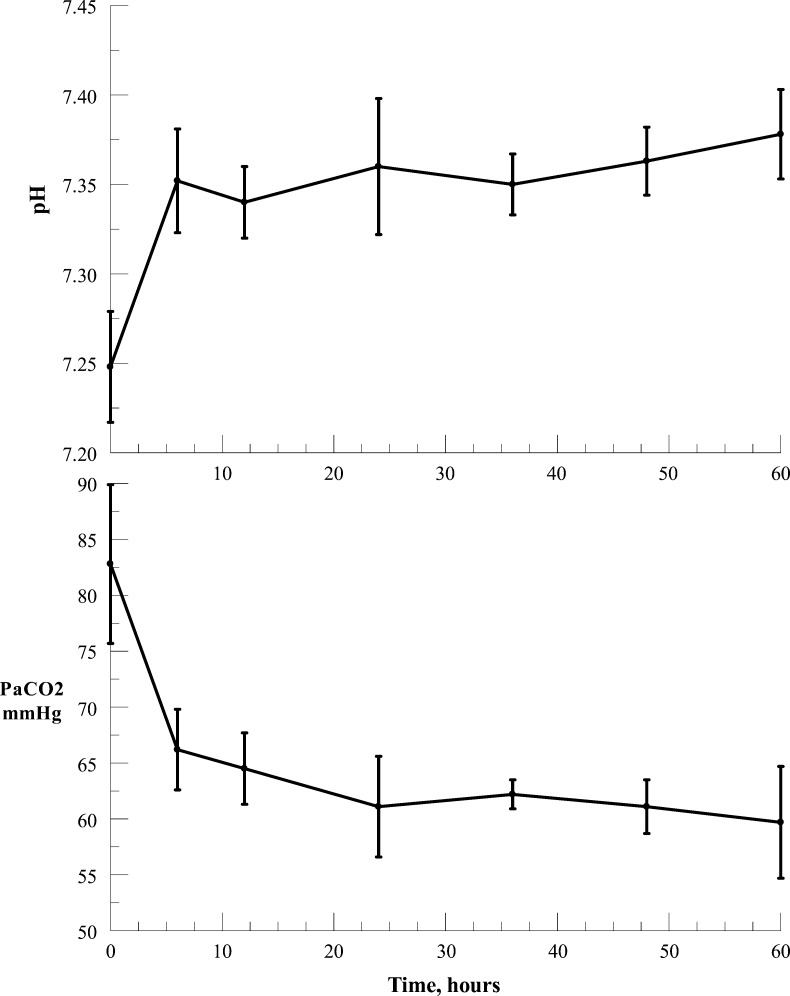
Results: The device was well tolerated, with complications and rates similar to those seen with central venous catheterization. Blood flow through the system was 430.5 ± 73.7 mL/min, and ECCO2R was 82.5 ± 15.6 mL/min and did not change significantly with time. Invasive ventilation was avoided in all patients in group 1 and both patients in group 2 were weaned; PaCO2 decreased significantly (P < .003) with application of the device from 78.9 ± 16.8 mm Hg to 65.9 ± 11.5 mm Hg. In group 3, three patients were weaned, while the level of invasive ventilatory support was reduced in three patients. One patient in group 3 died due to a retroperitoneal bleed following catheterization.
Conclusions: This single-catheter, low-flow ECCO2R system provided clinically useful levels of CO2 removal in these patients with COPD. The system appears to be a potentially valuable additional modality for the treatment of hypercapnic respiratory failure.
Trial registration: ClinicalTrials.gov NCT00987740 NCT01021605.
Figures
References
-
- Qaseem A, Wilt TJ, Weinberger SE, et al. American College of Physicians American College of Chest Physicians American Thoracic Society European Respiratory Society Diagnosis and management of stable chronic obstructive pulmonary disease: a clinical practice guideline update from the American College of Physicians, American College of Chest Physicians, American Thoracic Society, and European Respiratory Society. Ann Intern Med. 2011;155(3):179-191 - PubMed
-
- Diener CF, Burrows B. Further observations on the course and prognosis of chronic obstructive lung disease. Am Rev Respir Dis. 1975;111(6):719-724 - PubMed
-
- Connors AF, Jr, Dawson NV, Thomas C, et al. Outcomes following acute exacerbation of severe chronic obstructive lung disease. The SUPPORT investigators (Study to Understand Prognoses and Preferences for Outcomes and Risks of Treatments). Am J Respir Crit Care Med. 1996;154(4 pt 1):959-967 - PubMed
-
- Hoogendoorn M, Hoogenveen RT, Rutten-van Mölken MP, Vestbo J, Feenstra TL. Case fatality of COPD exacerbations: a meta-analysis and statistical modelling approach. Eur Respir J. 2011;37(3):508-515 - PubMed
Publication types
MeSH terms
Associated data
LinkOut - more resources
Full Text Sources
Other Literature Sources
Medical
