. 2013 Apr;41(8):e95.
doi: 10.1093/nar/gkt145. Epub 2013 Mar 4.

Canonical correlation analysis for RNA-seq co-expression networks

Affiliations

Canonical correlation analysis for RNA-seq co-expression networks

Shengjun Hong et al. Nucleic Acids Res. 2013 Apr.

Abstract

Digital transcriptome analysis by next-generation sequencing discovers substantial mRNA variants. Variation in gene expression underlies many biological processes and holds a key to unravelling mechanism of common diseases. However, the current methods for construction of co-expression networks using overall gene expression are originally designed for microarray expression data, and they overlook a large number of variations in gene expressions. To use information on exon, genomic positional level and allele-specific expressions, we develop novel component-based methods, single and bivariate canonical correlation analysis, for construction of co-expression networks with RNA-seq data. To evaluate the performance of our methods for co-expression network inference with RNA-seq data, they are applied to lung squamous cell cancer expression data from TCGA database and our bipolar disorder and schizophrenia RNA-seq study. The preliminary results demonstrate that the co-expression networks constructed by canonical correlation analysis and RNA-seq data provide rich genetic and molecular information to gain insight into biological processes and disease mechanism. Our new methods substantially outperform the current statistical methods for co-expression network construction with microarray expression data or RNA-seq data based on overall gene expression levels.


Figures
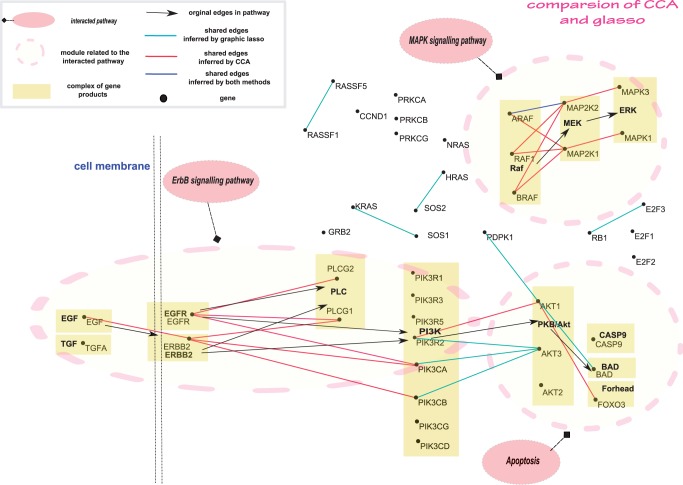
Figure 1.
Figure 1.
The shared network structure by non-small lung cancer pathway in KEGG and reconstructed co-expression networks using the CCA and GLASSO methods.
Figure 2.
Figure 2.
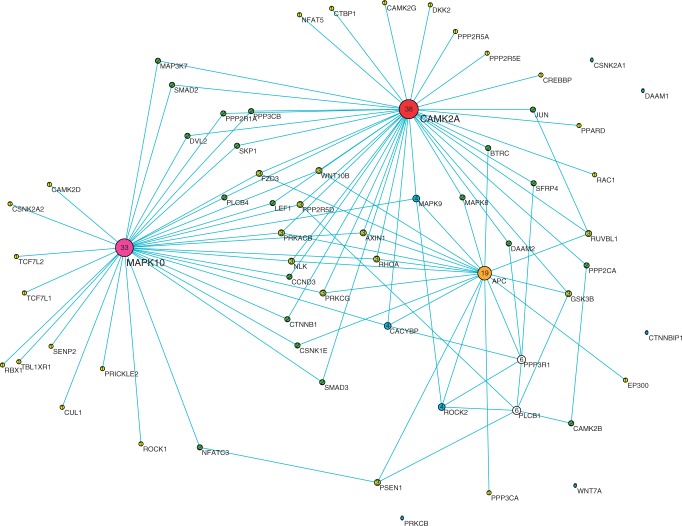
The co-expression network reconstructed by CCA method using position-level RNA-seq data in Wnt pathway of schizophrenia tissue samples. Nodes are sized, numbered and coloured by their degree value.
Figure 3.
Figure 3.
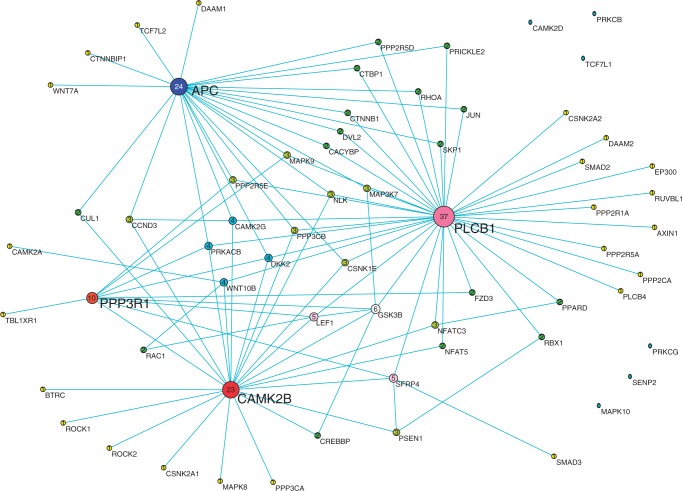
The co-expression network reconstructed by CCA method using position-level RNA-seq data in Wnt pathway of bipolar tissue samples. Nodes are sized, numbered and coloured by their degree value.
Figure 4.
Figure 4.
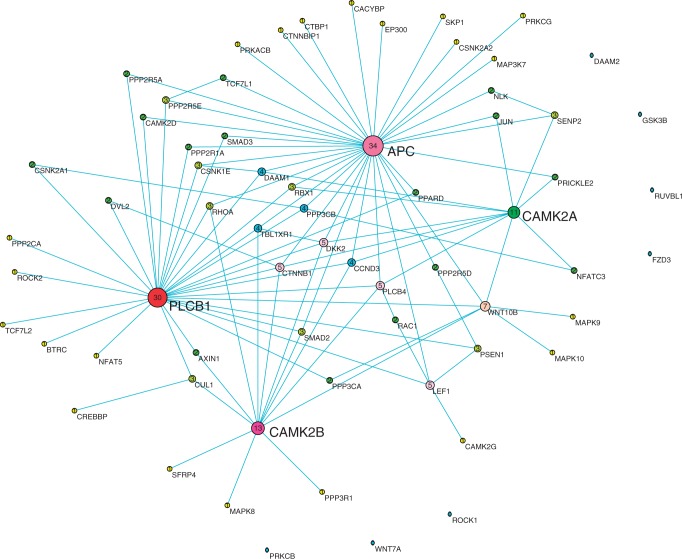
The co-expression network reconstructed by CCA method using position-level RNA-seq data in Wnt pathway of normal tissue samples. Nodes are sized, numbered and coloured by their degree value.
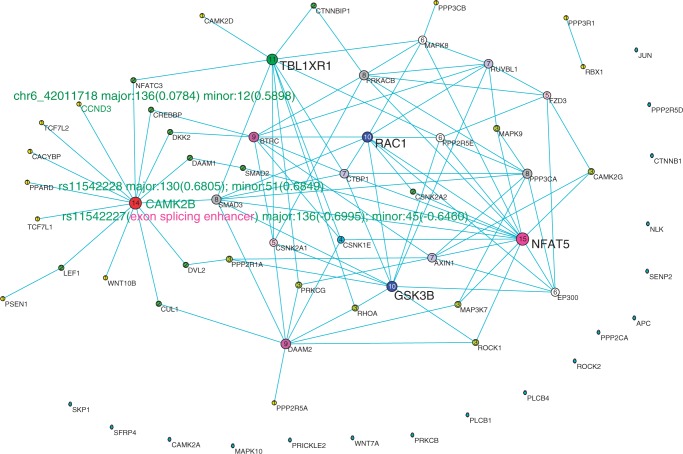
Figure 5.
Figure 5.
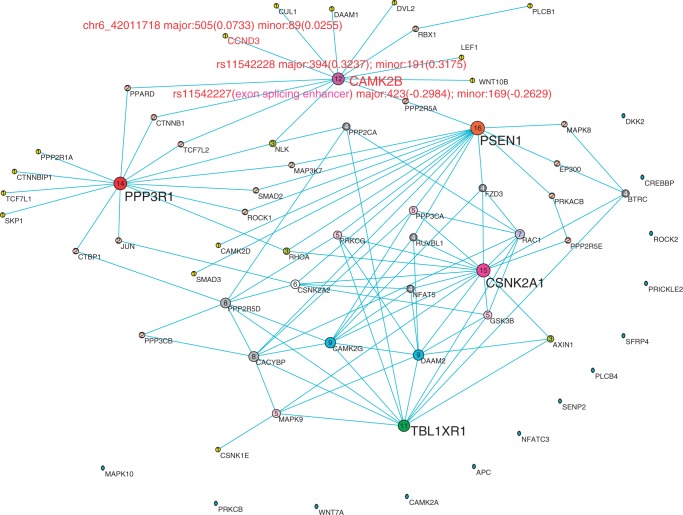
The co-expression network reconstructed by bivariate CCA method using ASE RNA-seq data of schizophrenia tissue samples. Nodes are sized, numbered and coloured according to their degree value. The important SNPs in genes are represented by their names, expression value and their CCA coefficients in the figure and described elaborately in the article.
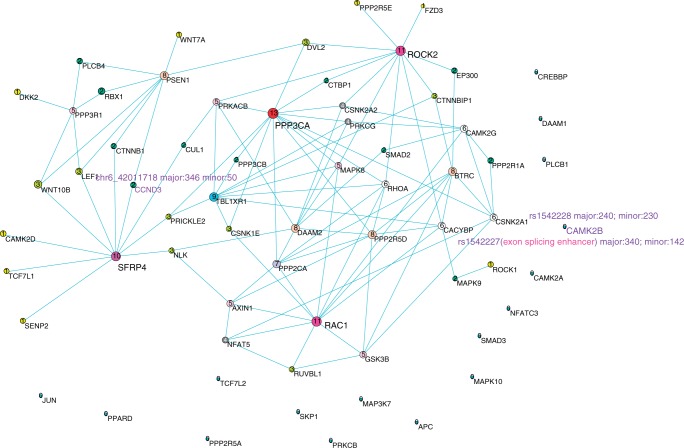
Figure 6.
Figure 6.
The co-expression network reconstructed by bivariate CCA method using ASE RNA-seq data of bipolar. Nodes are sized, numbered and coloured according to their degree value. The important SNPs in genes are represented by their names, expression value and their CCA coefficients in the figure and described elaborately in the article.
Figure 7.
Figure 7.
The network reconstructed by bivariate CCA method using ASE RNA-seq data of normal tissue samples. Nodes are sized, numbered and coloured according to their degree value. The important SNPs in genes are represented by their names, expression value and their CCA coefficients in the figure and described elaborately in the article.

References

    1. Costa V, Aprile M, Esposito R, Ciccodicola A. RNA-Seq and human complex diseases: recent accomplishments and future perspectives. Eur. J. Hum. Genet. 2012;21:134–142. - PMC - PubMed
    1. Skelly DA, Johansson M, Madeoy J, Wakefield J, Akey JM. A powerful and flexible statistical framework for testing hypotheses of allele-specific gene expression from RNA-seq data. Genome Res. 2011;21:1728–1737. - PMC - PubMed
    1. Wang Z, Gerstein M, Snyder M. RNA-Seq: a revolutionary tool for transcriptomics. Nat. Rev. Genet. 2009;10:57–63. - PMC - PubMed
    1. Westermann AJ, Gorski SA, Vogel J. Dual RNA-seq of pathogen and host. Nat. Rev. Microbiol. 2012;10:618–630. - PubMed
    1. Uyar B, Chu JS, Vergara IA, Chua SY, Jones MR, Wong T, Baillie DL, Chen N. RNA-seq analysis of the C. briggsae transcriptome. Genome Res. 2012;22:1567–1580. - PMC - PubMed

Publication types

LinkOut - more resources