Nonbenzodiazepine sleep medication use and hip fractures in nursing home residents
- PMID: 23460413
- PMCID: PMC3676706
- DOI: 10.1001/jamainternmed.2013.3795
Nonbenzodiazepine sleep medication use and hip fractures in nursing home residents
Abstract
Importance: It is important to understand the relationship between sleep medication use and injurious falls in nursing home residents.
Objective: To conduct a case-crossover study to estimate the association between nonbenzodiazepine hypnotic drug use (zolpidem tartrate, eszopiclone, or zaleplon) and the risk for hip fracture among a nationwide sample of long-stay nursing home residents, overall and stratified by individual and facility-level characteristics.
Design and setting: Case-crossover study performed in an academic research setting.
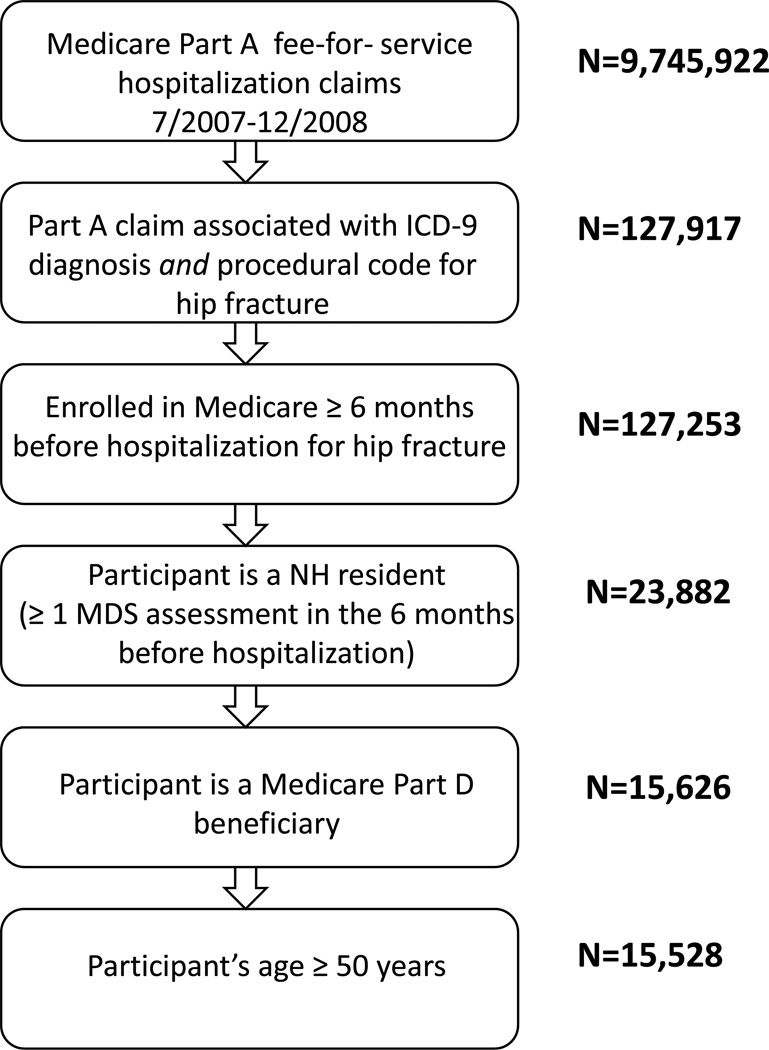
Participants: The study participants included 15,528 long-stay US nursing home residents 50 years or older with a hip fracture documented in Medicare Part A and Part D fee-for-service claims between July 1, 2007, and December 31, 2008.
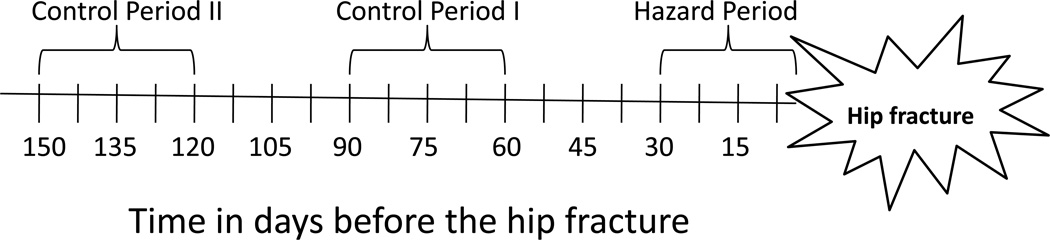
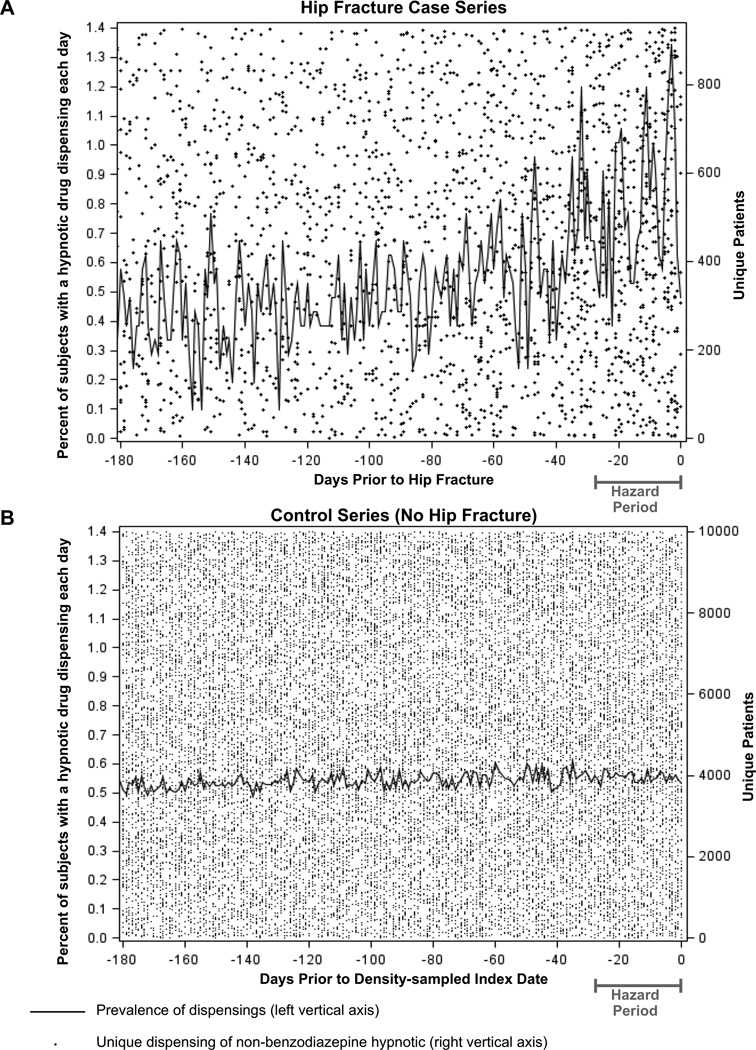
Main outcome measures: Odds ratios (ORs) of hip fracture were estimated using conditional logistic regression models by comparing the exposure to nonbenzodiazepine hypnotic drugs during the 0 to 29 days before the hip fracture (hazard period) with the exposure during the 60 to 89 and 120 to 149 days before the hip fracture (control periods). Analyses were stratified by individual and facility-level characteristics.
Results: Among the study participants, 1715 (11.0%) were dispensed a nonbenzodiazepine hypnotic drug before the hip fracture, with 927 exposure-discordant pairs included in the analyses. The mean (SD) age of participants was 81.0 (9.7) years, and 77.6% were female. The risk for hip fracture was elevated among users of a nonbenzodiazepine hypnotic drug (OR, 1.66; 95% CI, 1.45-1.90). The association between nonbenzodiazepine hypnotic drug use and hip fracture was somes greater in new users (OR, 2.20; 95% CI, 1.76-2.74) and in residents with mild vs moderate to severe impairment in cognition (OR, 1.86 vs 1.43; P = .06), with moderate vs total or severe functional impairment (OR, 1.71 vs 1.16; P = .11), with limited vs full assistance required with transfers (OR, 2.02 vs 1.43; P = .02), or in a facility with fewer Medicaid beds (OR, 1.90 vs 1.46; P = .05).
Conclusions and relevance: The risk for hip fracture is elevated among nursing home residents using a nonbenzodiazepine hypnotic drug. New users and residents having mild to moderate cognitive impairment or requiring limited assistance with transfers may be most vulnerable to the use of these drugs. Caution should be exercised when prescribing sleep medications to nursing home residents.
Figures
Comment in
-
What's to blame for falls and fractures? Poor sleep or the sleeping medication?: Comment on "Nonbenzodiazepine sleep medication use and hip fractures in nursing home residents".JAMA Intern Med. 2013 May 13;173(9):761-2. doi: 10.1001/jamainternmed.2013.3801. JAMA Intern Med. 2013. PMID: 23459766 No abstract available.
-
Understanding drug effects in older people: the role of pharmacology.JAMA Intern Med. 2013 Nov 11;173(20):1930. doi: 10.1001/jamainternmed.2013.9782. JAMA Intern Med. 2013. PMID: 24217385 No abstract available.
-
Understanding drug effects in older people: the role of pharmacology--reply.JAMA Intern Med. 2013 Nov 11;173(20):1930-1. doi: 10.1001/jamainternmed.2013.9762. JAMA Intern Med. 2013. PMID: 24217386 No abstract available.
References
-
- Wang PS, Bohn RL, Glynn RJ, Mogun H, Avorn J. Zolpidem use and hip fractures in older people. J Am Geriatr Soc. 2001 Dec;49(12):1685–1690. - PubMed
-
- Finkle WD, Der JS, Greenland S, et al. Risk of fractures requiring hospitalization after an initial prescription for zolpidem, alprazolam, lorazepam, or diazepam in older adults. J Am Geriatr Soc. 2011 Oct;59(10):1883–1890. - PubMed
-
- Avidan AY, Fries BE, James ML, Szafara KL, Wright GT, Chervin RD. Insomnia and hypnotic use, recorded in the minimum data set, as predictors of falls and hip fractures in Michigan nursing homes. J Am Geriatr Soc. 2005 Jun;53(6):955–962. - PubMed
Publication types
MeSH terms
Substances
Grants and funding
LinkOut - more resources
Full Text Sources
Other Literature Sources
Medical