


Preeradication vaccine policy options for poliovirus infection and disease control
- PMID: 23461599
- PMCID: PMC7941951
- DOI: 10.1111/risa.12019
Preeradication vaccine policy options for poliovirus infection and disease control
Abstract
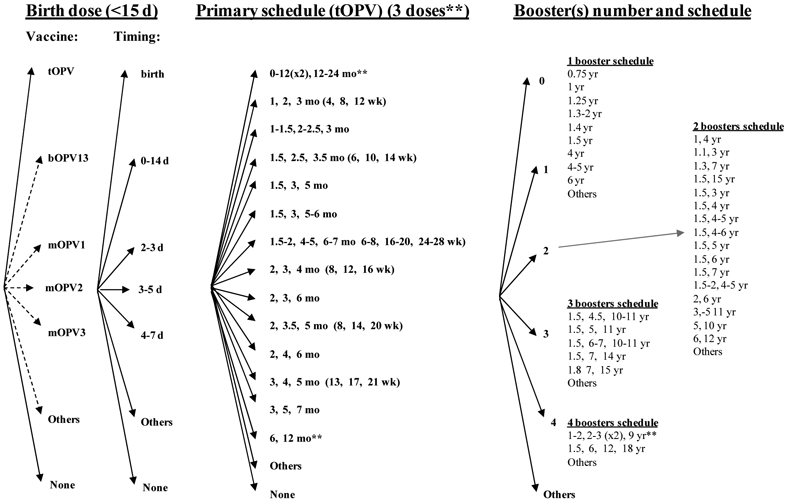
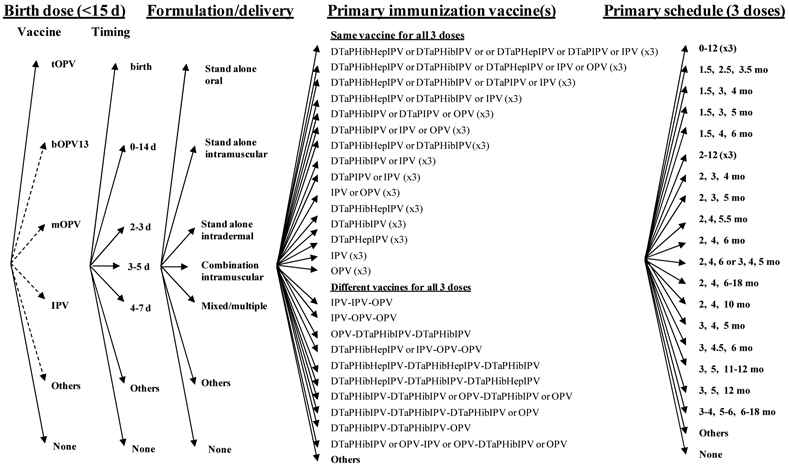
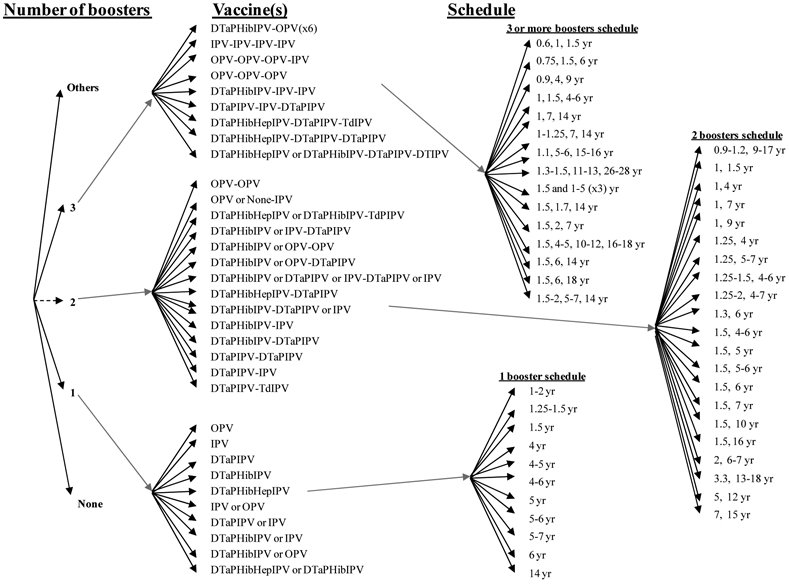
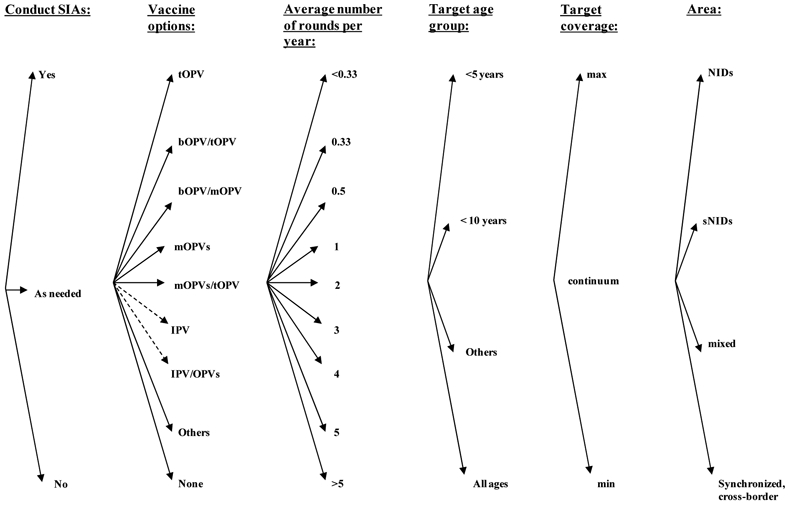
With the circulation of wild poliovirus (WPV) types 1 and 3 continuing more than a decade after the original goal of eradicating all three types of WPVs by 2000, policymakers consider many immunization options as they strive to stop transmission in the remaining endemic and outbreak areas and prevent reintroductions of live polioviruses into nonendemic areas. While polio vaccination choices may appear simple, our analysis of current options shows remarkable complexity. We offer important context for current and future polio vaccine decisions and policy analyses by developing decision trees that clearly identify potential options currently used by countries as they evaluate national polio vaccine choices. Based on a comprehensive review of the literature we (1) identify the current vaccination options that national health leaders consider for polio vaccination, (2) characterize current practices and factors that appear to influence national and international choices, and (3) assess the evidence of vaccine effectiveness considering sources of variability between countries and uncertainties associated with limitations of the data. With low numbers of cases occurring globally, the management of polio risks might seem like a relatively low priority, but stopping live poliovirus circulation requires making proactive and intentional choices to manage population immunity in the remaining endemic areas and to prevent reestablishment in nonendemic areas. Our analysis shows remarkable variability in the current national polio vaccine product choices and schedules, with combination vaccine options containing inactivated poliovirus vaccine and different formulations of oral poliovirus vaccine making choices increasingly difficult for national health leaders.
© 2013 Society for Risk Analysis.
Figures

References
-
- World Health Organization. Transmission of wild poliovirus type 2: Apparent global interruption. Weekly Epidemiological Record. 2001; 76, 95–97. - PubMed
-
- World Health Organization. Global Polio Eradication Initiative -- cases of wild poliovirus by country and by year 2000-2012. Available at: http://www.polioeradication.org/Dataandmonitoring/Poliothisweek/Wildpoli..., accessed January 2, 2013.
-
- World Health Organization. Polio news - April 2001. Geneva; 2001. Report No.: WHO/POLIO/01.02.
-
- World Health Organization . Polio news - December 2000. Geneva; 2000. Report No.: WHO/POLIO/00.08.
Publication types
MeSH terms
Substances
Grants and funding
LinkOut - more resources
Full Text Sources
Other Literature Sources
Medical
