


Diversity in the origins of proteostasis networks--a driver for protein function in evolution
- PMID: 23463216
- PMCID: PMC3718298
- DOI: 10.1038/nrm3542
Diversity in the origins of proteostasis networks--a driver for protein function in evolution
Abstract
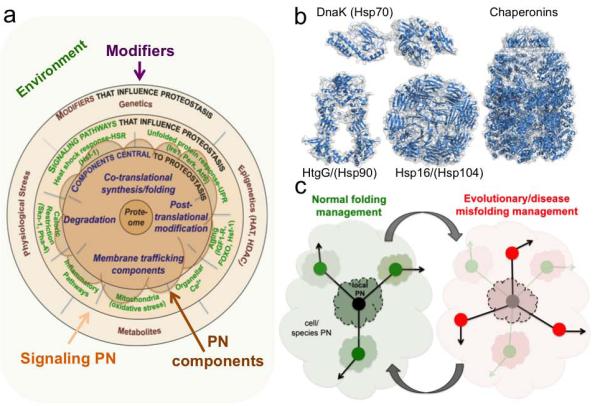
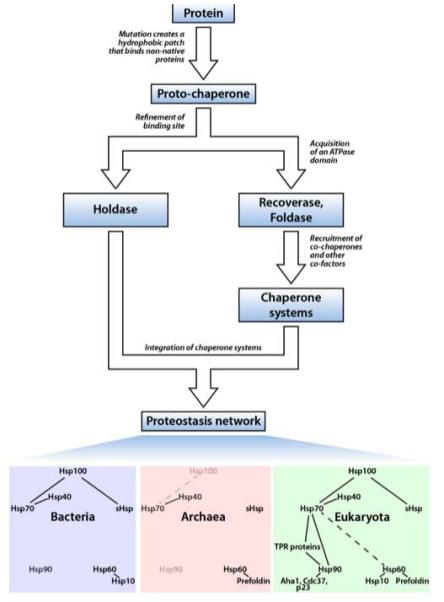
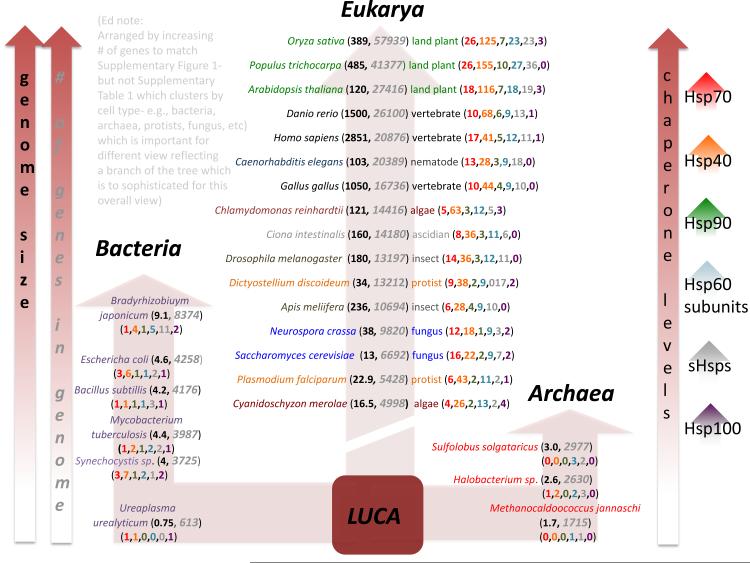
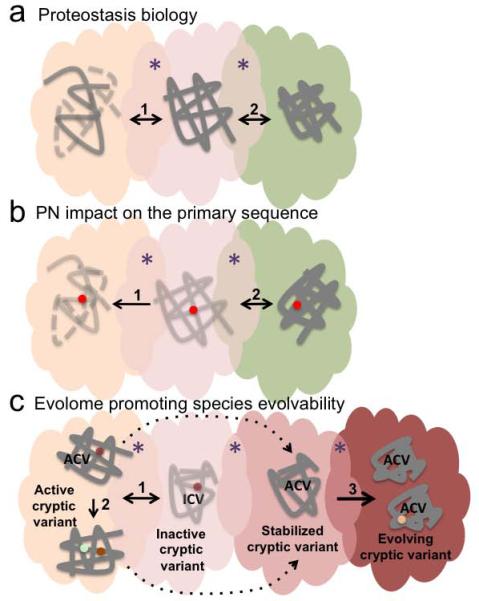
Although the sequence of a protein largely determines its function, proteins can adopt different folding states in response to changes in the environment, some of which may be deleterious to the organism. All organisms--Bacteria, Archaea and Eukarya--have evolved a protein homeostasis, or proteostasis, network comprising chaperones and folding factors, degradation components, signalling pathways and specialized compartmentalized modules that manage protein folding in response to environmental stimuli and variation. Surveying the origins of proteostasis networks reveals that they have co-evolved with the proteome to regulate the physiological state of the cell, reflecting the unique stresses that different cells or organisms experience, and that they have a key role in driving evolution by closely managing the link between the phenotype and the genotype.
Figures
References
-
- Anfinsen CB. Principles that govern the folding of protein chains. Science. 1973;181:223–30. - PubMed
-
- Balch WE, Morimoto RI, Dillin A, Kelly JW. Adapting proteostasis for disease intervention. Science. 2008;319:916–9. - PubMed
-
- Darwin C. The Origin of the Species. 1867.
-
- Tokuriki N, Tawfik DS. Stability effects of mutations and protein evolvability. Curr Opin Struct Biol. 2009;19:596–604. - PubMed
Publication types
MeSH terms
Substances
Grants and funding
LinkOut - more resources
Full Text Sources
Other Literature Sources
