. 2013 May;162(1):484-95.
doi: 10.1104/pp.112.210260. Epub 2013 Mar 5.

Thylakoid terminal oxidases are essential for the cyanobacterium Synechocystis sp. PCC 6803 to survive rapidly changing light intensities

Affiliations

Thylakoid terminal oxidases are essential for the cyanobacterium Synechocystis sp. PCC 6803 to survive rapidly changing light intensities

David J Lea-Smith et al. Plant Physiol. 2013 May.

Abstract

Cyanobacteria perform photosynthesis and respiration in the thylakoid membrane, suggesting that the two processes are interlinked. However, the role of the respiratory electron transfer chain under natural environmental conditions has not been established. Through targeted gene disruption, mutants of Synechocystis sp. PCC 6803 were generated that lacked combinations of the three terminal oxidases: the thylakoid membrane-localized cytochrome c oxidase (COX) and quinol oxidase (Cyd) and the cytoplasmic membrane-localized alternative respiratory terminal oxidase. All strains demonstrated similar growth under continuous moderate or high light or 12-h moderate-light/dark square-wave cycles. However, under 12-h high-light/dark square-wave cycles, the COX/Cyd mutant displayed impaired growth and was completely photobleached after approximately 2 d. In contrast, use of sinusoidal light/dark cycles to simulate natural diurnal conditions resulted in little photobleaching, although growth was slower. Under high-light/dark square-wave cycles, the COX/Cyd mutant suffered a significant loss of photosynthetic efficiency during dark periods, a greater level of oxidative stress, and reduced glycogen degradation compared with the wild type. The mutant was susceptible to photoinhibition under pulsing but not constant light. These findings confirm a role for thylakoid-localized terminal oxidases in efficient dark respiration, reduction of oxidative stress, and accommodation of sudden light changes, demonstrating the strong selective pressure to maintain linked photosynthetic and respiratory electron chains within the thylakoid membrane. To our knowledge, this study is the first to report a phenotypic difference in growth between terminal oxidase mutants and wild-type cells and highlights the need to examine mutant phenotypes under a range of conditions.


Figures
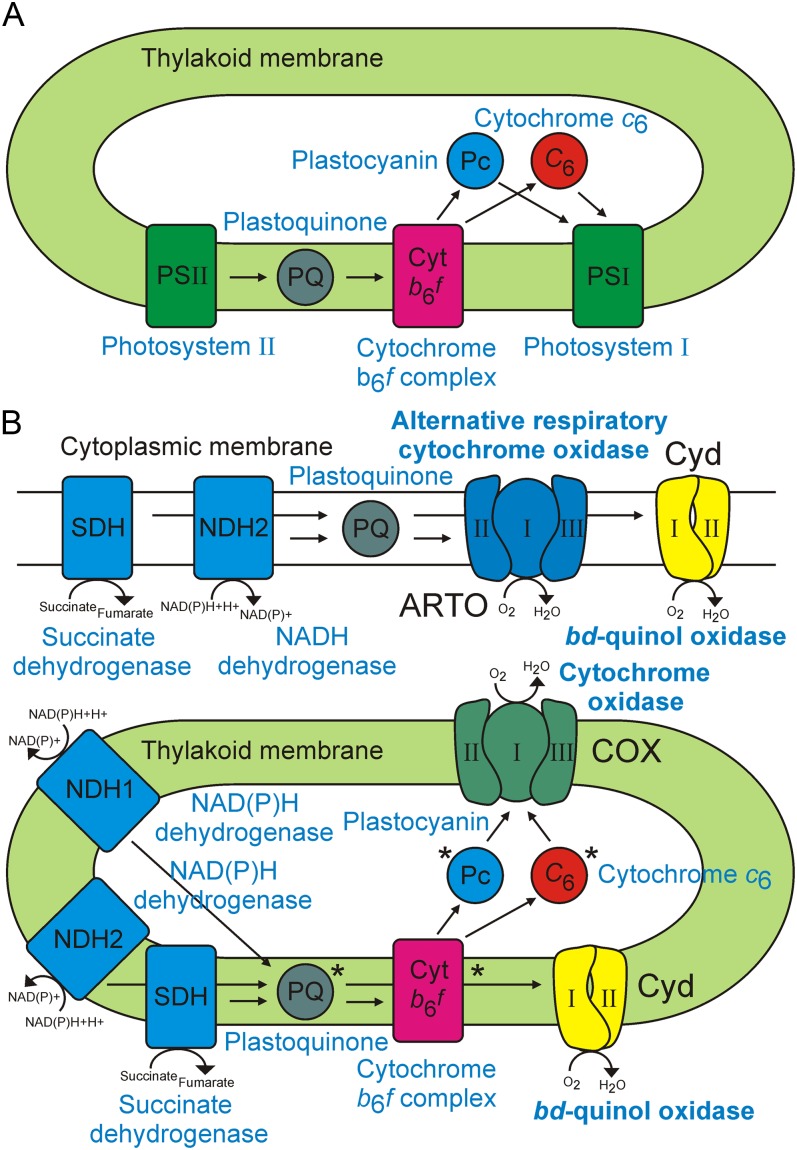
Figure 1.
Figure 1.
Schematic diagrams of the photosynthetic electron transport chain (A) and respiratory electron chains (B). Components shared by both processes are indicated with asterisks, and terminal oxidase complexes are highlighted in boldface type. Individual subunits are only shown for terminal oxidase complexes. The localization of NAD(P)H dehydrogenase (NDH2), succinate dehydrogenase, and Cyd in the cytoplasmic membrane has not been confirmed. [See online article for color version of this figure.]
Figure 2.
Figure 2.
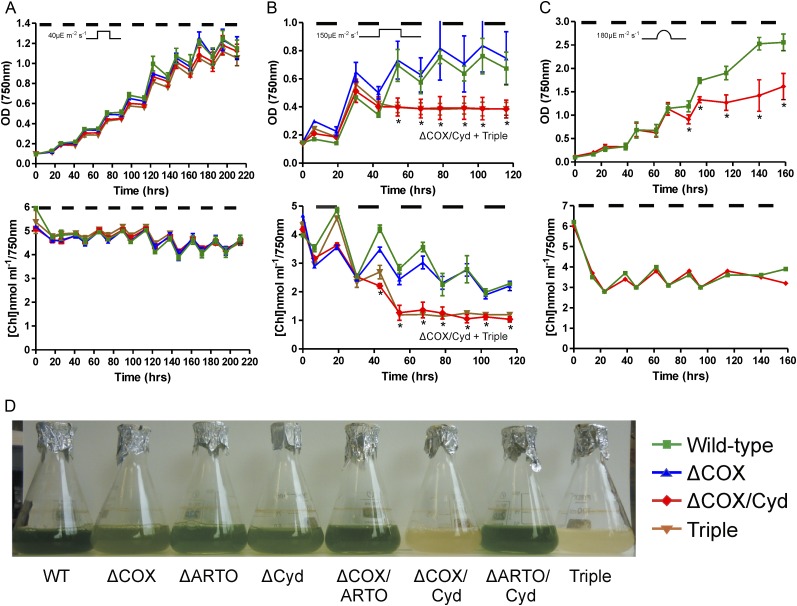
A to C, Growth of triplicate cultures was measured at OD of 750 and 680 nm under 12-h moderate-light (40 µmol photons m−2 s−1)/dark square-wave cycles (A), 12-h high-light (150 µmol photons m−2 s−1)/dark square-wave cycles (B), and 12-h sinusoidal light (maximum light level of 180 µmol photons m−2 s−1)/dark cycles (diurnal; C). Dark periods are indicated by black bars. The amount of chlorophyll was determined by 680:750-nm ratios and is an indication of photobleaching in cells. For ease of visualization, only results from the wild-type (green), ΔCOX (blue), ΔCOX/Cyd (red), and triple mutant (brown) strains are shown. Results from all strains are shown in Supplemental Figure S4, C to E. Asterisks indicate significant differences between wild-type and ΔCOX/Cyd samples (P < 0.05). D, Strains exposed to 50 h of 12-h high-light (150 µmol photons m−2 s−1)/dark square-wave cycles. The thylakoid-localized terminal oxidase-deficient strains appear completely photobleached in marked comparison with the other six strains. Results for the other biological replicates are shown in Supplemental Figure S4. WT, Wild type. [See online article for color version of this figure.]
Figure 3.
Figure 3.
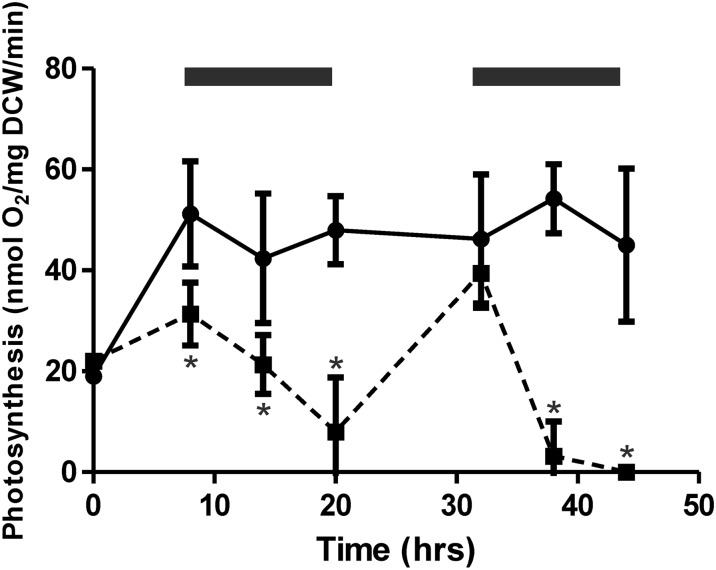
Oxygen evolution rates of wild-type (solid line) and ΔCOX/Cyd (dashed line) samples cultured under 12-h high-light (150 µmol photons m−2 s−1)/dark square-wave cycles. Asterisks indicate significant differences between samples (P < 0.05). Dark periods are indicated by black bars. Results are from three biological replicates.
Figure 4.
Figure 4.
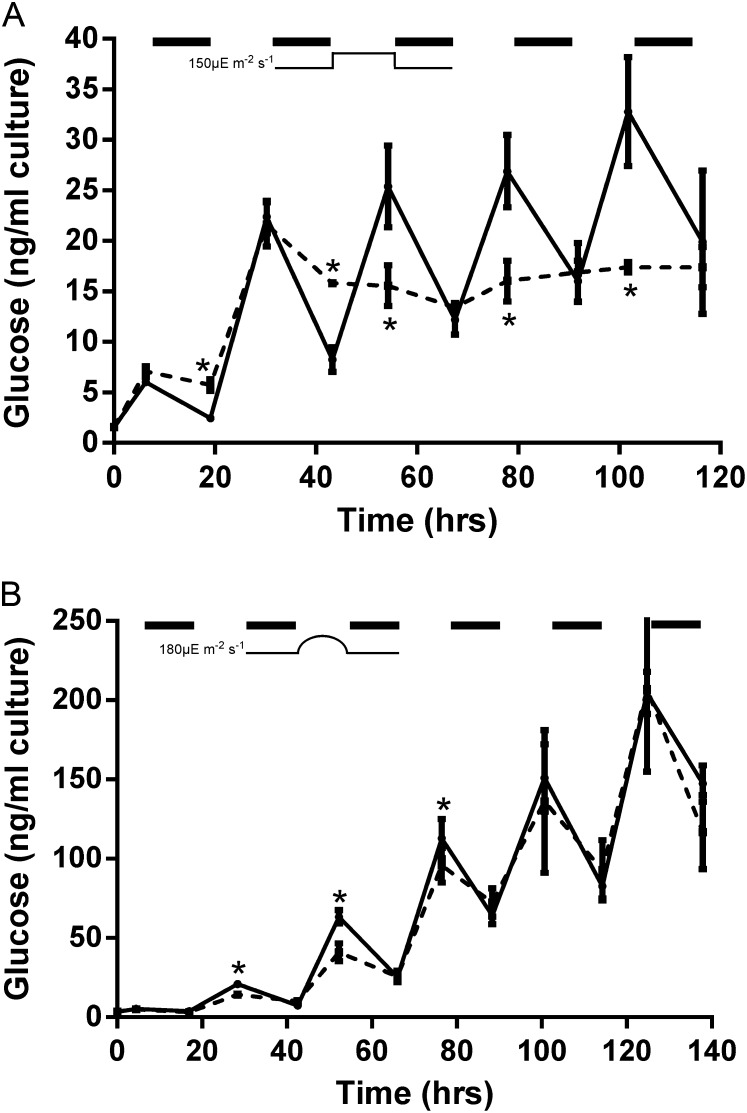
Glc measurements of wild-type (solid line) and ΔCOX/Cyd (dashed line) samples cultured under 12-h high-light (150 µmol photons m−2 s−1)/dark square-wave cycles (A) and 12-h sinusoidal light (maximum light level of 180 µmol photons m−2 s−1)/dark cycles (diurnal; B). Asterisks indicate significant differences between samples (P < 0.05). Dark periods are indicated by black bars. Results are from three biological replicates. Glc was measured from 1-mL samples and is dependent on cell amounts.
Figure 5.
Figure 5.
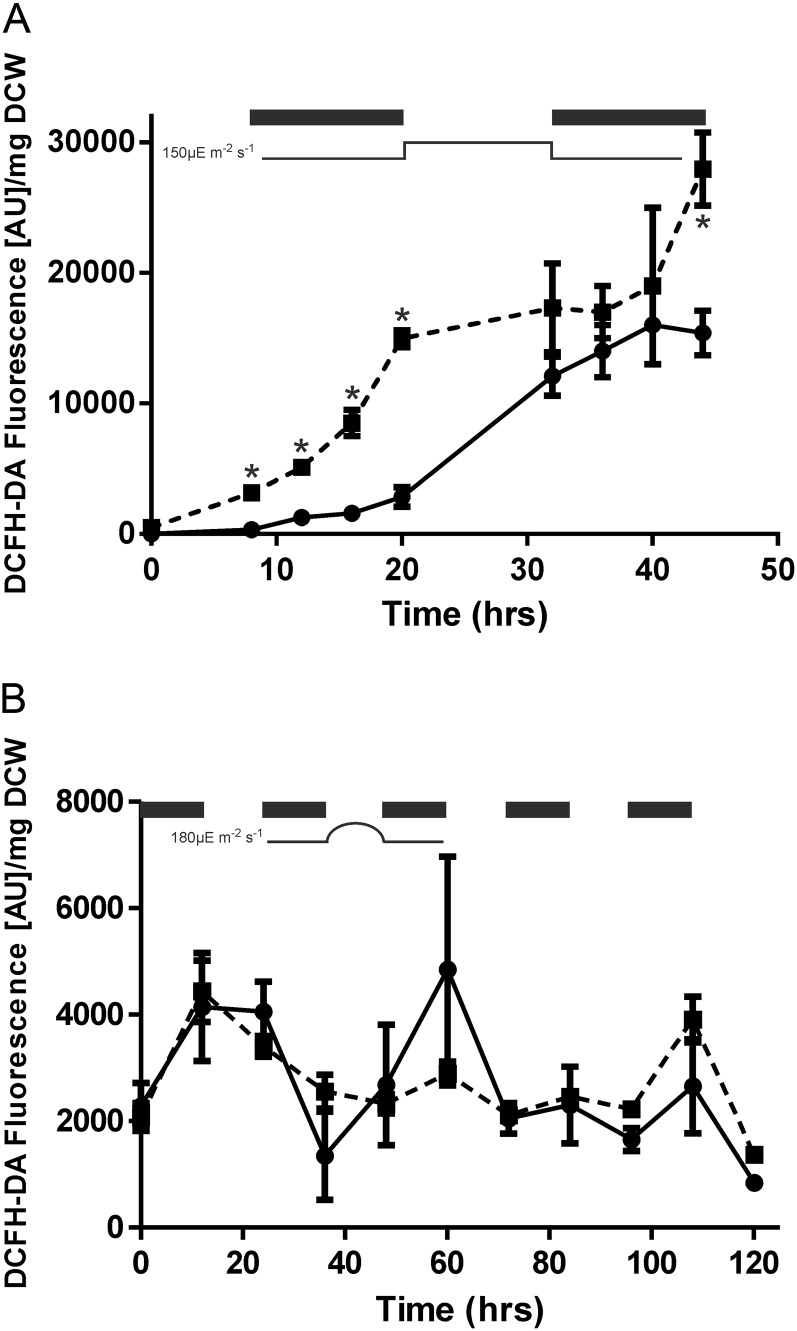
DCF fluorescence of wild-type (solid line) and ΔCOX/Cyd (dashed line) samples cultured under 12-h high-light (150 µmol photons m−2 s−1)/dark square-wave cycles (A) and 12-h sinusoidal light (180 µmol photons m−2 s−1)/dark cycles (B). Asterisks indicate significant differences between samples (P < 0.05). Dark periods are indicated by black bars. Results are from three biological replicates. AU, Absorbance units.
Figure 6.
Figure 6.
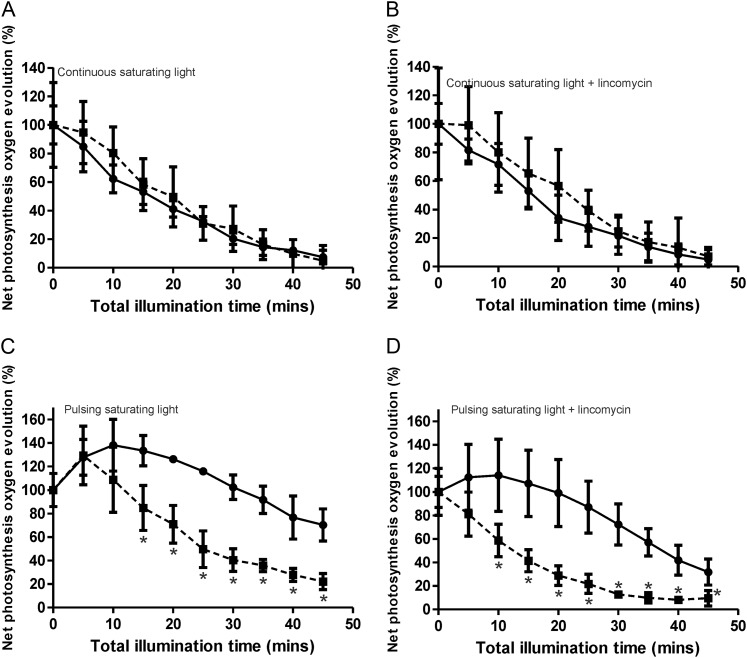
Characterization of wild-type (solid line) and ΔCOX/Cyd (dashed line) strains. Photoinhibition was measured under constant light and in the absence (A) and presence (B) of lincomycin or under pulsing light of 5 min on/5 min off in the absence (C) and presence (D) of lincomycin. Only measurements from light periods are shown. Light was at an intensity of 1,500 µmol photons m−2 s−1. Asterisks indicate significant differences between samples (P < 0.05). Results are from three separate biological replicates.

References

    1. Abramson J, Riistama S, Larsson G, Jasaitis A, Svensson-Ek M, Laakkonen L, Puustinen A, Iwata S, Wikström M. (2000) The structure of the ubiquinol oxidase from Escherichia coli and its ubiquinone binding site. Nat Struct Biol 7: 910–917 - PubMed
    1. Agarwal R, Matros A, Melzer M, Mock HP, Sainis JK. (2010) Heterogeneity in thylakoid membrane proteome of Synechocystis 6803. J Proteomics 73: 976–991 - PubMed
    1. Altschul SF, Gish W, Miller W, Myers EW, Lipman DJ. (1990) Basic local alignment search tool. J Mol Biol 215: 403–410 - PubMed
    1. Bailey S, Melis A, Mackey KR, Cardol P, Finazzi G, van Dijken G, Berg GM, Arrigo K, Shrager J, Grossman A. (2008) Alternative photosynthetic electron flow to oxygen in marine Synechococcus. Biochim Biophys Acta 1777: 269–276 - PubMed
    1. Ben-Porath J, Zehr JP. (1994) Detection and characterization of cyanobacterial nifH genes. Appl Environ Microbiol 60: 880–887 - PMC - PubMed

Publication types

MeSH terms

LinkOut - more resources