Efficacy and safety of canagliflozin in subjects with type 2 diabetes and chronic kidney disease
- PMID: 23464594
- PMCID: PMC3654568
- DOI: 10.1111/dom.12090
Efficacy and safety of canagliflozin in subjects with type 2 diabetes and chronic kidney disease
Abstract
Aims: Canagliflozin is a sodium glucose co-transporter 2 inhibitor in development for treatment of type 2 diabetes mellitus (T2DM). This study evaluated the efficacy and safety of canagliflozin in subjects with T2DM and stage 3 chronic kidney disease [CKD; estimated glomerular filtration rate (eGFR) ≥30 and <50 ml/min/1.73 m(2)].
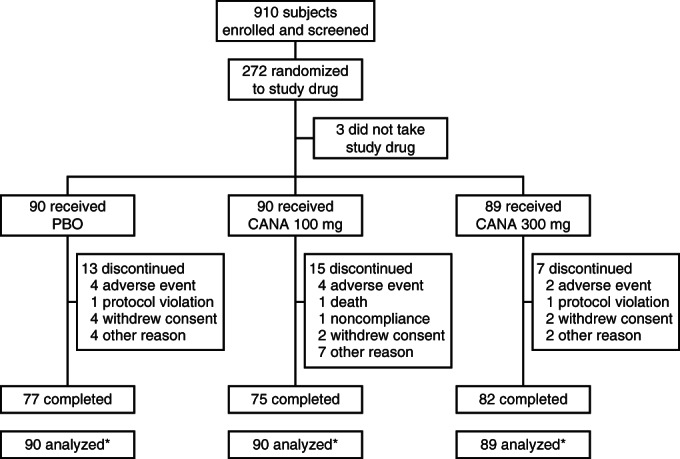
Methods: In this randomized, double-blind, placebo-controlled, phase 3 trial, subjects (N = 269) received canagliflozin 100 or 300 mg or placebo daily. The primary efficacy endpoint was change from baseline in HbA1c at week 26. Prespecified secondary endpoints were change in fasting plasma glucose (FPG) and proportion of subjects reaching HbA1c <7.0%. Safety was assessed based on adverse event (AE) reports; renal safety parameters (e.g. eGFR, blood urea nitrogen and albumin/creatinine ratio) were also evaluated.
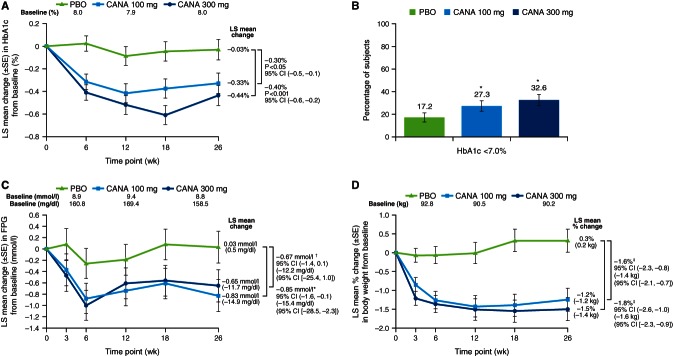
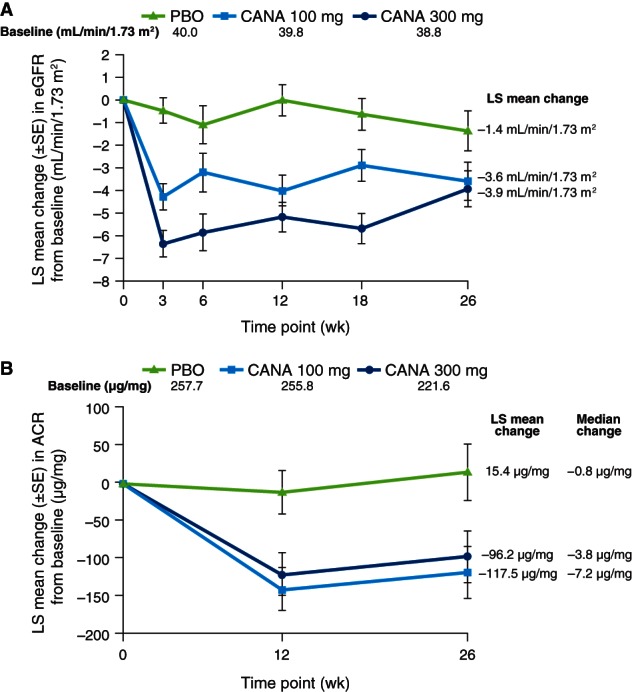
Results: Both canagliflozin 100 and 300 mg reduced HbA1c from baseline compared with placebo at week 26 (-0.33, -0.44 and -0.03%; p < 0.05). Numerical reductions in FPG and higher proportions of subjects reaching HbA1c < 7.0% were observed with canagliflozin 100 and 300 mg versus placebo (27.3, 32.6 and 17.2%). Overall AE rates were similar for canagliflozin 100 and 300 mg and placebo (78.9, 74.2 and 74.4%). Slightly higher rates of urinary tract infections and AEs related to osmotic diuresis and reduced intravascular volume were observed with canagliflozin 300 mg compared with other groups. Transient changes in renal function parameters that trended towards baseline over 26 weeks were observed with canagliflozin.
Conclusion: Canagliflozin improved glycaemic control and was generally well tolerated in subjects with T2DM and Stage 3 CKD.
© 2013 Blackwell Publishing Ltd.
Figures
References
-
- Kramer H, Molitch ME. Screening for kidney disease in adults with diabetes. Diabetes Care. 2005;28:1813–1816. - PubMed
-
- Flynn C, Bakris G. Noninsulin glucose-lowering agents for the treatment of patients on dialysis. Nat Rev Nephrol. 2013;9:147–153. - PubMed
-
- Cavanaugh KL. Diabetes management issues for patients with chronic kidney disease. Clin Diabetes. 2007;25:90–97.
-
- UK Prospective Diabetes Study (UKPDS) Group. Intensive blood-glucose control with sulphonylureas or insulin compared with conventional treatment and risk of complications in patients with type 2 diabetes (UKPDS 33) Lancet. 1998;352:837–853. - PubMed
Publication types
MeSH terms
Substances
LinkOut - more resources
Full Text Sources
Other Literature Sources
Medical
Research Materials
Miscellaneous