


Circulating microRNAs and aerobic fitness--the HUNT-Study
- PMID: 23469005
- PMCID: PMC3585333
- DOI: 10.1371/journal.pone.0057496
Circulating microRNAs and aerobic fitness--the HUNT-Study
Abstract
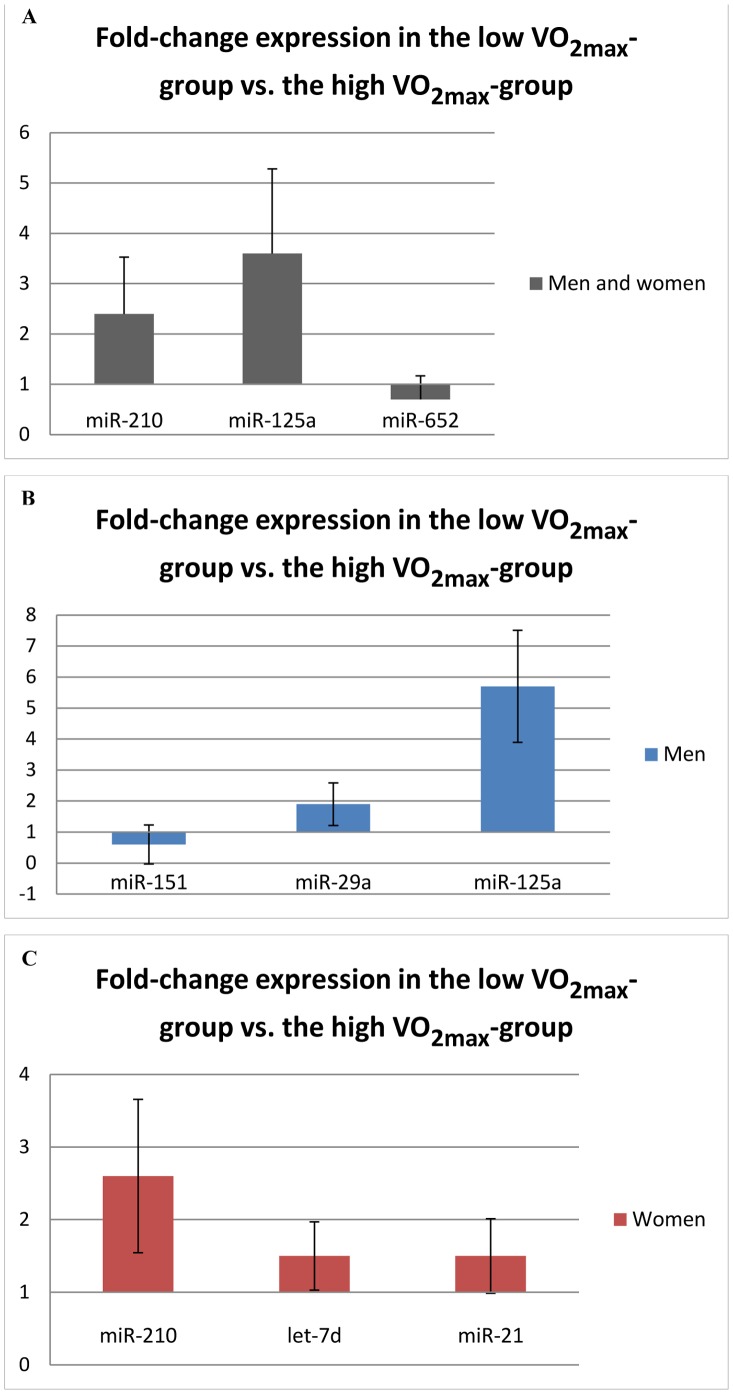
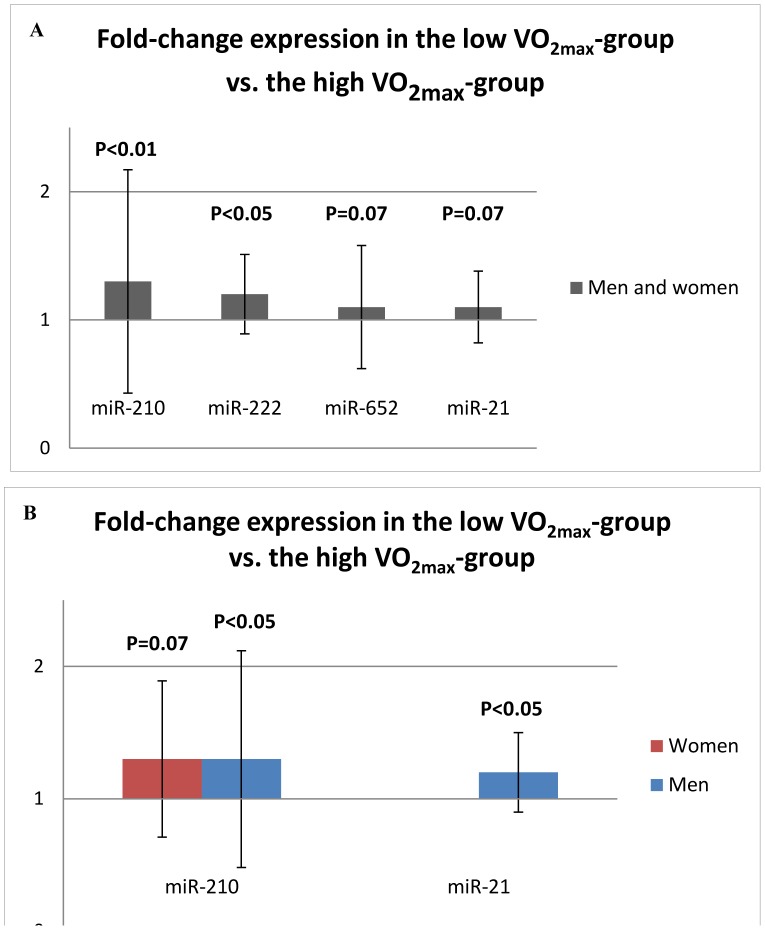
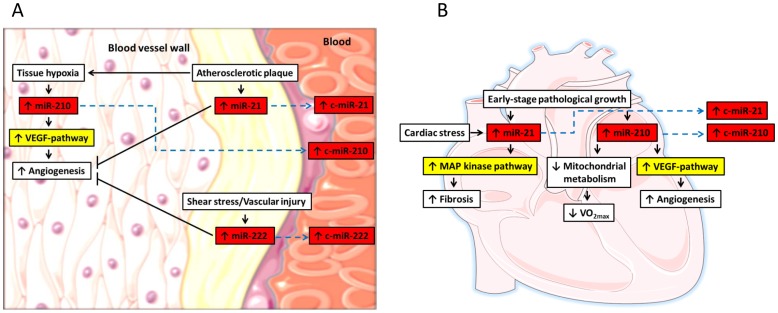
Aerobic fitness, measured as maximal oxygen uptake (VO2max), is a good indicator of cardiovascular health, and a strong predictor of cardiovascular mortality. Biomarkers associated with low VO2max may therefore represent potential early markers of future cardiovascular disease (CVD). The aim of this study was to assess whether circulating microRNAs (miRs) are associated with VO2max-level in healthy individuals. In a screening study, 720 miRs were measured in serum samples from healthy individuals (40-45 yrs) with high (n = 12) or low (n = 12) VO2max matched for gender, age and physical activity. Candiate miRs were validated in a second cohort of subjects with high (n = 38) or low (n = 38) VO2max. miR-210 and miR-222 were found to be higher in the low VO2max-group (p<0.05). In addition, miR-21 was increased in male participants with low VO2max (p<0.05). There were no correlations between traditional risk factors for CVD (blood pressure, cholesterol, smoking habit, or obesity) and miR-21, miR-210 and miR-222. DIANA-mirPath identified 611 potential gene-targets of miR-21, miR-210 and miR-222, and pathway analysis indicated alterations in several important signaling systems in subjects with low VO2max. Potential bias involve that blood was collected from non-fasting individuals, and that 8 performed exercise within 24 h before sampling. In conclusion, we found that miR-210, miR-21, and miR-222 were increased in healthy subjects with low VO2max. The lack of association between these three miRs, and other fitness related variables as well as traditional CVD risk factors, suggests that these miRs may have a potential as new independent biomarkers of fitness level and future CVD.
Conflict of interest statement
Figures
References
-
- LaMonte MJ, Barlow CE, Jurca R, Kampert JB, Church TS, et al. (2005) Cardiorespiratory fitness is inversely associated with the incidence of metabolic syndrome: a prospective study of men and women. Circulation 112: 505–512. - PubMed
-
- Farrell SW, Cheng YJ, Blair SN (2004) Prevalence of the metabolic syndrome across cardiorespiratory fitness levels in women. Obes Res 12: 824–830. - PubMed
-
- Kavanagh T, Mertens DJ, Hamm LF, Beyene J, Kennedy J, et al. (2002) Prediction of long-term prognosis in 12 169 men referred for cardiac rehabilitation. Circulation 106: 666–671. - PubMed
-
- Myers J, Prakash M, Froelicher V, Do D, Partington S, et al. (2002) Exercise Capacity and Mortality among Men Referred for Exercise Testing. New England Journal of Medicine 346: 793–801. - PubMed
-
- Booth FW, Chakravarthy MV, Gordon SE, Spangenburg EE (2002) Waging war on physical inactivity: using modern molecular ammunition against an ancient enemy. J Appl Physiol 93: 3–30. - PubMed
Publication types
MeSH terms
Substances
LinkOut - more resources
Full Text Sources
Other Literature Sources
Medical
