


The impact of induced anxiety on response inhibition
- PMID: 23471118
- PMCID: PMC3590569
- DOI: 10.3389/fnhum.2013.00069
The impact of induced anxiety on response inhibition
Abstract
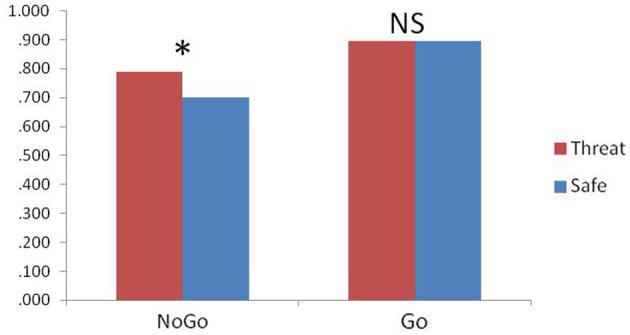
Anxiety has wide reaching effects on cognition; evidenced most prominently by the "difficulties concentrating" seen in anxiety disorders, and by adaptive harm-avoidant behaviors adopted under threatening circumstances. Despite having critical implications for daily-living, the precise impact of anxiety on cognition is as yet poorly quantified. Here we attempt to clarify the impact of anxiety on sustained attention and response inhibition via a translational anxiety induction in healthy individuals (N = 22). Specifically, in a within-subjects design, participants completed the Sustained Attention to Response Task (SART) in which subjects withhold responses to infrequent no-go stimuli under threat of unpredictable electrical shock (anxious) and safe (non-anxious) conditions. Different studies have argued that this task measures either (1) attention lapses due to off-task thinking or (2) response inhibition; two cognitive functions which are likely impacted by anxiety. We show that threat of shock significantly reduces errors of commission on the no-go trials relative to the safe condition whilst having no effect on go trials or overall reaction time (RT). We suggest that this is because threat of shock during SART promotes response inhibition. In particular we argue that, by virtue of frequency, subjects acquire a habitual bias toward a go response which impairs no-go performance and that threat of shock improves the ability to withhold these prepotent responses. This improved response inhibition likely falls within the range of adaptive cognitive functions which promote cautious harm avoidance under threatening conditions, although a range of alternative explanations for this effect is discussed.
Keywords: anxiety; mind-wandering; response inhibition; threat; threat of shock.
Figures
References
-
- Agnew N., Agnew M. (1963). Drive level effects on tasks of narrow and broad attention. Q. J. Exp. Psychol. A 15, 58–62
LinkOut - more resources
Full Text Sources
Other Literature Sources
