


Eye-size variability in deep-sea lanternfishes (Myctophidae): an ecological and phylogenetic study
- PMID: 23472203
- PMCID: PMC3589346
- DOI: 10.1371/journal.pone.0058519
Eye-size variability in deep-sea lanternfishes (Myctophidae): an ecological and phylogenetic study
Abstract
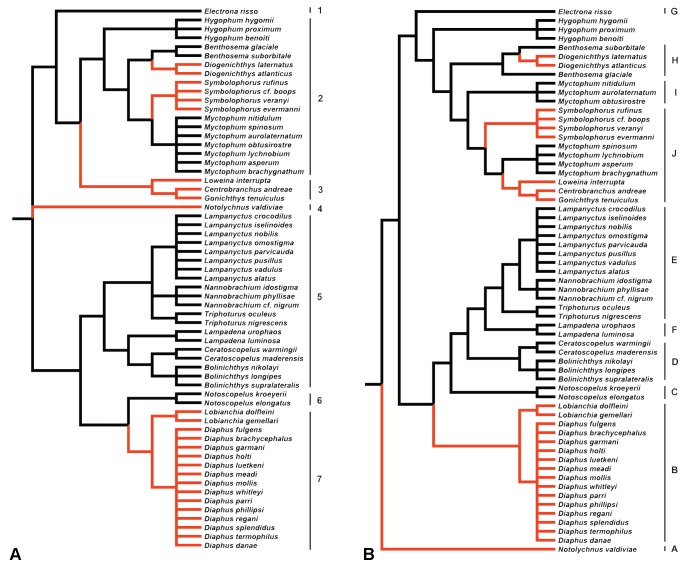
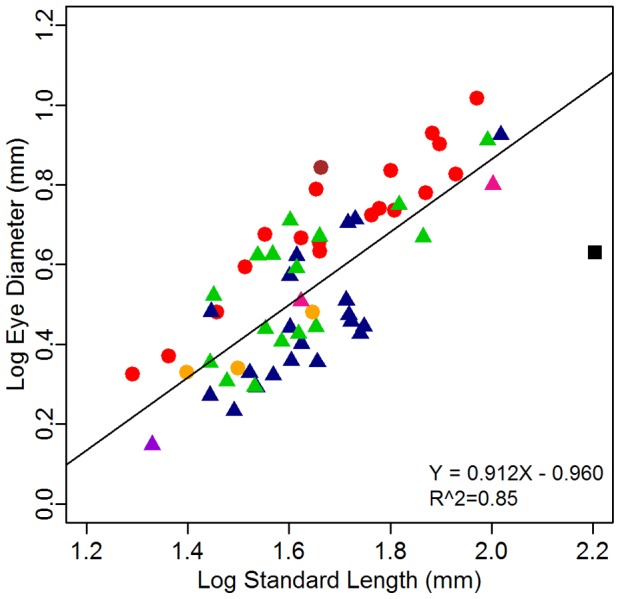
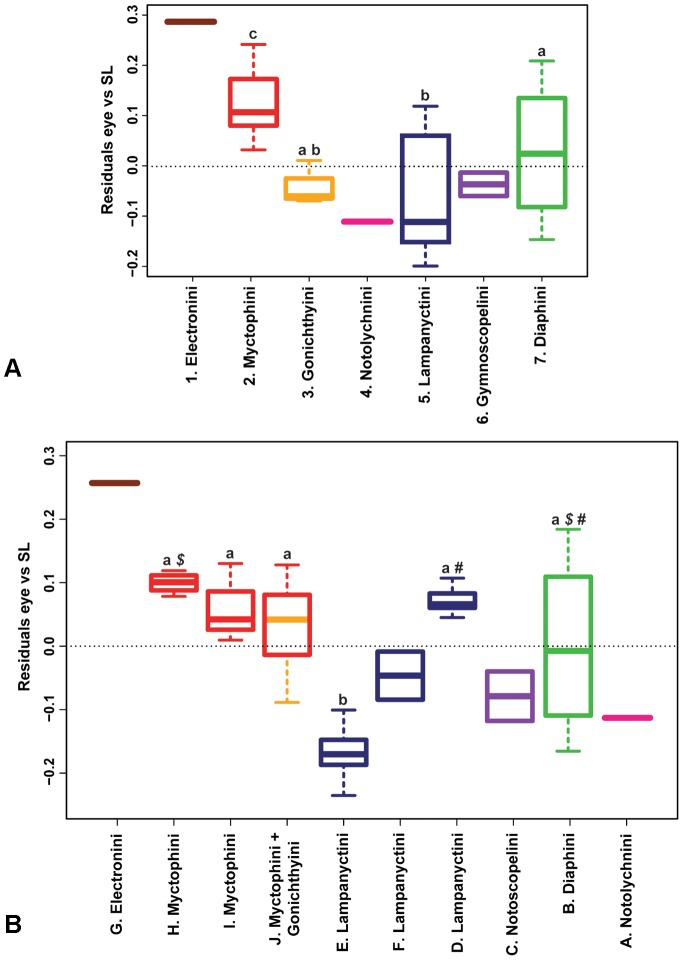
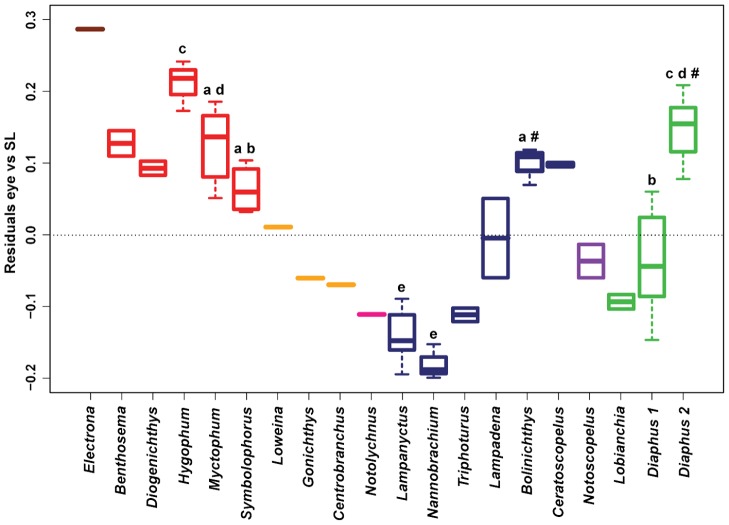
One of the most common visual adaptations seen in the mesopelagic zone (200-1000 m), where the amount of light diminishes exponentially with depth and where bioluminescent organisms predominate, is the enlargement of the eye and pupil area. However, it remains unclear how eye size is influenced by depth, other environmental conditions and phylogeny. In this study, we determine the factors influencing variability in eye size and assess whether this variability is explained by ecological differences in habitat and lifestyle within a family of mesopelagic fishes characterized by broad intra- and interspecific variance in depth range and luminous patterns. We focus our study on the lanternfish family (Myctophidae) and hypothesise that lanternfishes with a deeper distribution and/or a reduction of bioluminescent emissions have smaller eyes and that ecological factors rather than phylogenetic relationships will drive the evolution of the visual system. Eye diameter and standard length were measured in 237 individuals from 61 species of lanternfishes representing all the recognised tribes within the family in addition to compiling an ecological dataset including depth distribution during night and day and the location and sexual dimorphism of luminous organs. Hypotheses were tested by investigating the relationship between the relative size of the eye (corrected for body size) and variations in depth and/or patterns of luminous-organs using phylogenetic comparative analyses. Results show a great variability in relative eye size within the Myctophidae at all taxonomic levels (from subfamily to genus), suggesting that this character may have evolved several times. However, variability in eye size within the family could not be explained by any of our ecological variables (bioluminescence and depth patterns), and appears to be driven solely by phylogenetic relationships.
Conflict of interest statement
Figures
References
-
- Land MF (1990) Optics of the eyes of marine animals. In: Herring PJ, Campbell AK, Whitfield M, Maddock L, editors. Light and life in the sea: Cambridge University Press. pp. 149–166.
-
- Matthiessen L (1882) Über die Beziehungen, welche zwischen dem Brechungsindex des Kernzentrums der Krystalllinse und den Dimensionen des Auges bestehen. Pflügers Archiv für die gesamate Physiologie des Menschen und der Tiere 27: 510–523.
-
- Matthiessen L (1886) Über den physikalisch-optischen Bau des Auges der Cetacean und der Fische. Pflügers Archiv für die gesamate Physiologie des Menschen und der Tiere 38: 521–528.
-
- Warrant E (2004) Vision in the dimmest habitats on Earth. Journal of Comparative Physiology A 190: 765–789. - PubMed
-
- Denton EJ (1990) Light and vision at depths greater than 200 metres. In: Herring PJ, Campbell AK, Whitfield M, Maddock L, editors. Light and life in the sea: Cambridge University Press. pp. 127–148.
Publication types
MeSH terms
LinkOut - more resources
Full Text Sources
Other Literature Sources
