


Relapse induced by cues predicting cocaine depends on rapid, transient synaptic potentiation
- PMID: 23473317
- PMCID: PMC3619421
- DOI: 10.1016/j.neuron.2013.01.005
Relapse induced by cues predicting cocaine depends on rapid, transient synaptic potentiation
Abstract
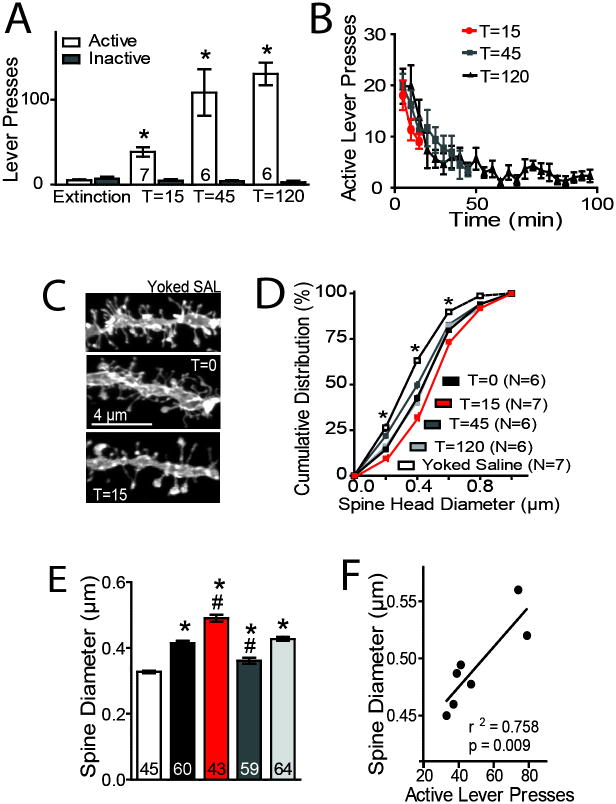
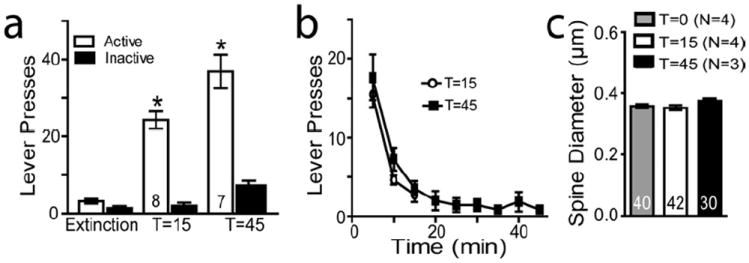
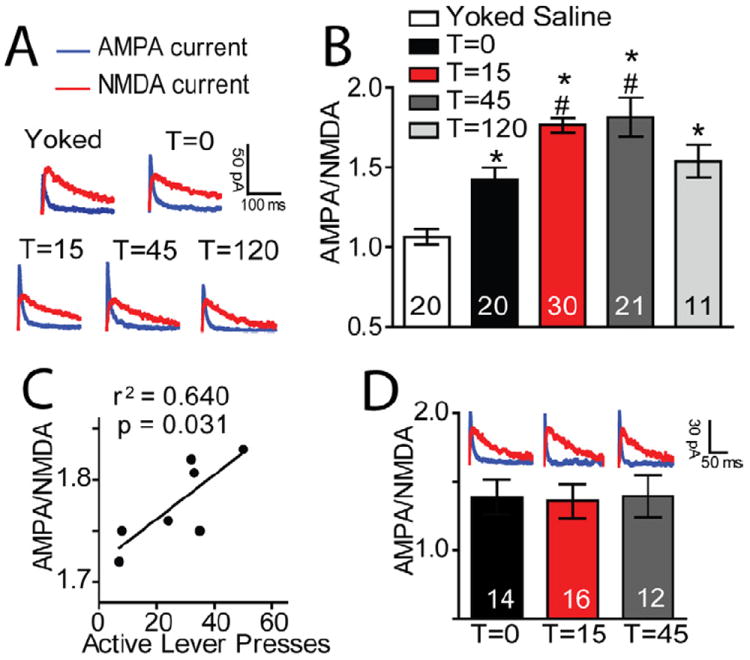
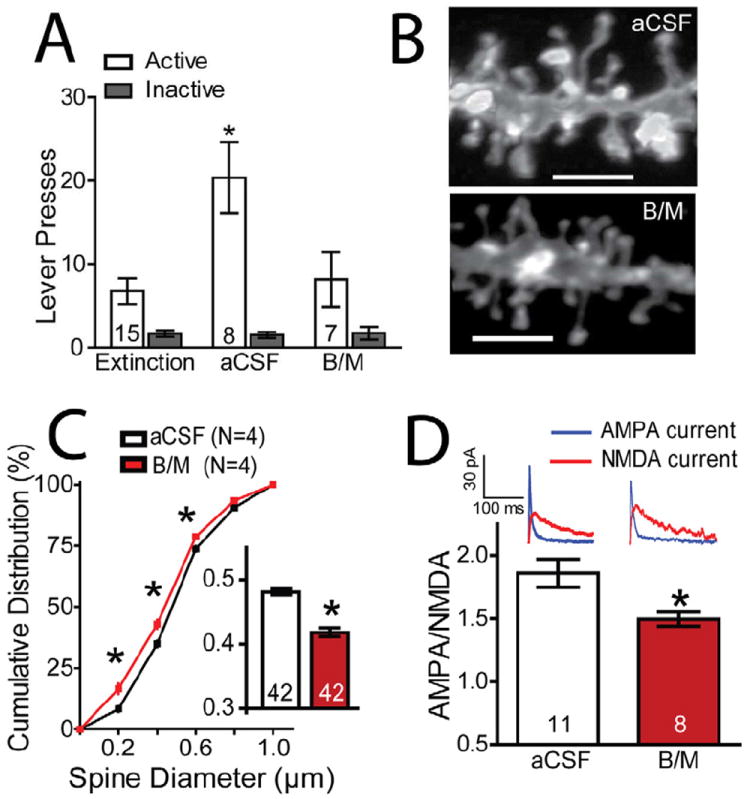
Cocaine addiction is characterized by long-lasting vulnerability to relapse arising because neutral environmental stimuli become associated with drug use and then act as cues that induce relapse. It is not known how cues elicit cocaine seeking, and why cocaine seeking is more difficult to regulate than seeking a natural reward. We found that cocaine-associated cues initiate cocaine seeking by inducing a rapid, transient increase in dendritic spine size and synaptic strength in the nucleus accumbens. These changes required neural activity in the prefrontal cortex. This is not the case when identical cues were associated with obtaining sucrose, which did not elicit changes in spine size or synaptic strength. The marked cue-induced synaptic changes in the accumbens were correlated with the intensity of cocaine, but not sucrose seeking, and may explain the difficulty addicts experience in managing relapse to cocaine use.
Copyright © 2013 Elsevier Inc. All rights reserved.
Figures
References
-
- Boudreau AC, Reimers JM, Milovanovic M, Wolf ME. Cell surface AMPA receptors in the rat nucleus accumbens increase during cocaine withdrawal but internalize after cocaine challenge in association with altered activation of mitogen-activated protein kinases. J Neurosci. 2007;27:10621–10635. - PMC - PubMed
-
- Carlisle HJ, Kennedy MB. Spine architecture and synaptic plasticity. Trends Neurosci. 2005;28:182–187. - PubMed
-
- De Roo M, Klauser P, Garcia PM, Poglia L, Muller D. Spine dynamics and synapse remodeling during LTP and memory processes. Prog Brain Res. 2008;169:199–207. - PubMed
Publication types
MeSH terms
Substances
Grants and funding
LinkOut - more resources
Full Text Sources
Other Literature Sources
Medical
