


VEGF ligands and receptors: implications in neurodevelopment and neurodegeneration
- PMID: 23475071
- PMCID: PMC11113464
- DOI: 10.1007/s00018-013-1283-7
VEGF ligands and receptors: implications in neurodevelopment and neurodegeneration
Erratum in
- Cell Mol Life Sci. 2013 Jun;70(12):2221. Carmen, Ruiz de Almodovar [corrected to Ruiz de Almodovar, Carmen]
Abstract
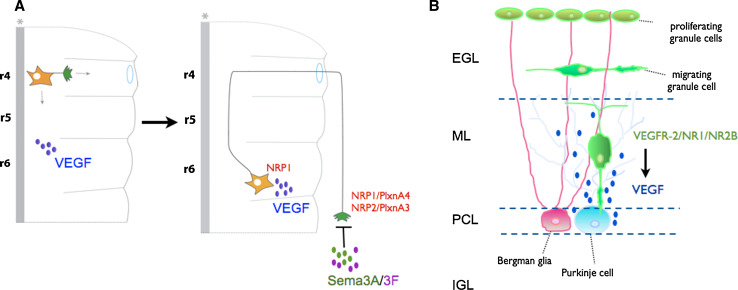
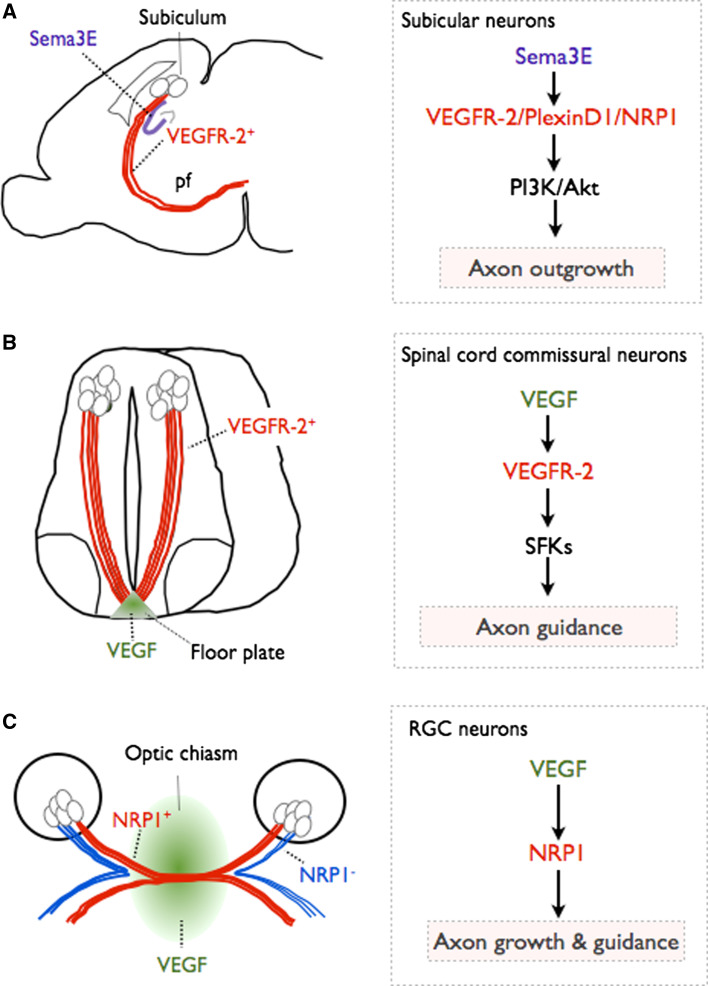
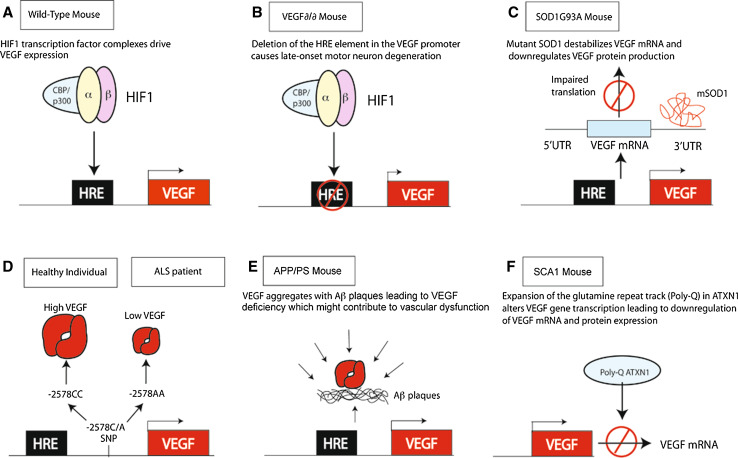
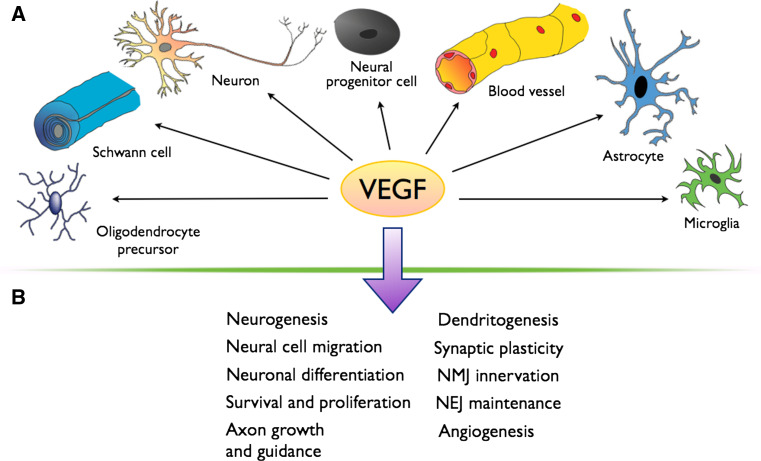
Intensive research in the last decade shows that the prototypic angiogenic factor vascular endothelial growth factor (VEGF) can have direct effects in neurons and modulate processes such as neuronal migration, axon outgrowth, axon guidance and neuronal survival. Depending on the neuronal cell type and the process, VEGF seems to exert these effects by signaling via different receptors. It is also becoming clear that other VEGF ligands such as VEGF-B, -C and -D can act in various neuronal cell types as well. Moreover, apart from playing a role in physiological conditions, VEGF and VEGF-B have been related to different neurological disorders. We give an update on how VEGF controls different processes during neurodevelopment as well as on its role in several neurodegenerative disorders. We also discuss recent findings demonstrating that other VEGF ligands influence processes such as neurogenesis and dendrite arborization and participate in neurodegeneration.
Figures
References
Publication types
MeSH terms
Substances
LinkOut - more resources
Full Text Sources
Other Literature Sources
