


Class I HDAC inhibition blocks cocaine-induced plasticity by targeted changes in histone methylation
- PMID: 23475113
- PMCID: PMC3609040
- DOI: 10.1038/nn.3354
Class I HDAC inhibition blocks cocaine-induced plasticity by targeted changes in histone methylation
Abstract
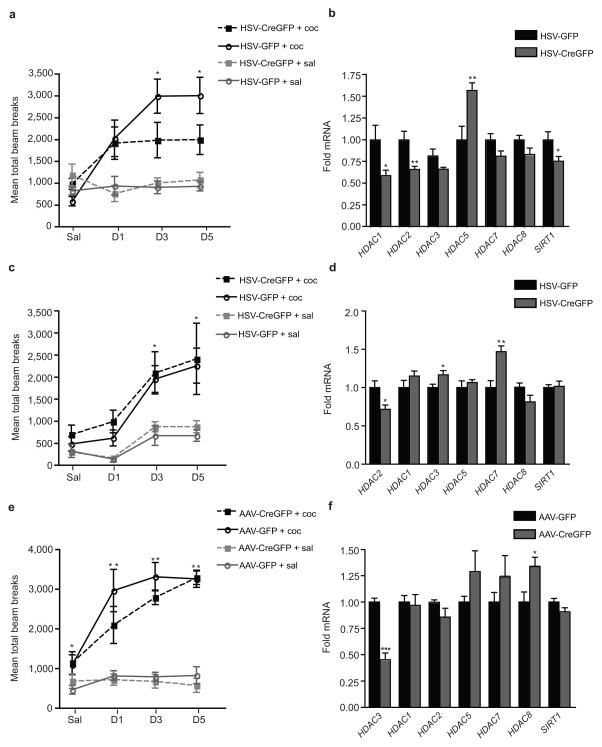
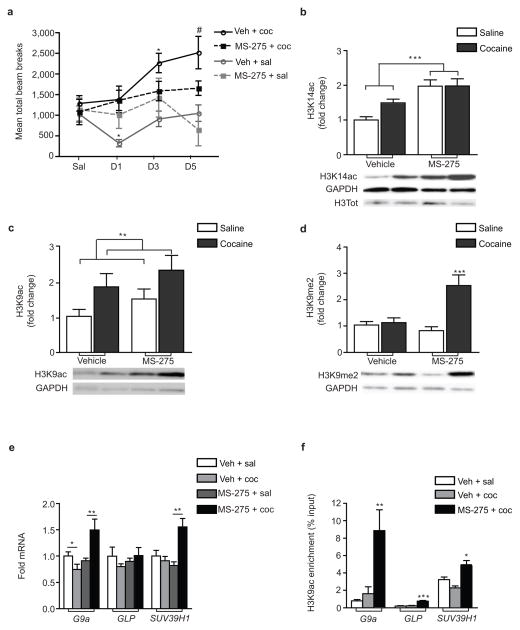
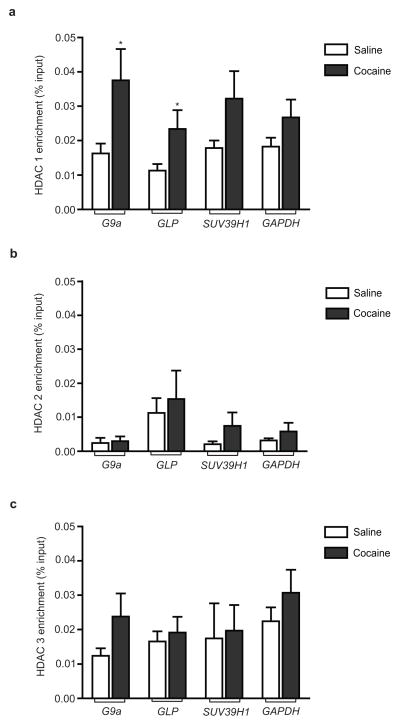
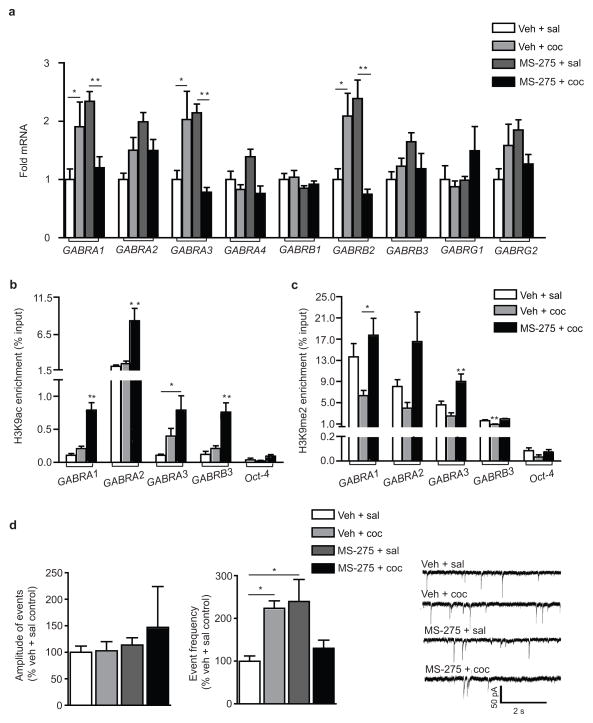
Induction of histone acetylation in the nucleus accumbens (NAc), a key brain reward region, promotes cocaine-induced alterations in gene expression. Histone deacetylases (HDACs) tightly regulate the acetylation of histone tails, but little is known about the functional specificity of different HDAC isoforms in the development and maintenance of cocaine-induced plasticity, and previous studies of HDAC inhibitors report conflicting effects on cocaine-elicited behavioral adaptations. Here we demonstrate that specific and prolonged blockade of HDAC1 in NAc of mice increased global levels of histone acetylation, but also induced repressive histone methylation and antagonized cocaine-induced changes in behavior, an effect mediated in part through a chromatin-mediated suppression of GABAA receptor subunit expression and inhibitory tone on NAc neurons. Our findings suggest a new mechanism by which prolonged and selective HDAC inhibition can alter behavioral and molecular adaptations to cocaine and inform the development of therapeutics for cocaine addiction.
Figures
References
-
- Kumar A, et al. Chromatin remodeling is a key mechanism underlying cocaine-induced plasticity in striatum. Neuron. 2005;48:303–314. - PubMed
-
- Shen HY, et al. Additive effects of histone deacetylase inhibitors and amphetamine on histone H4 acetylation, cAMP responsive element binding protein phosphorylation and DeltaFosB expression in the striatum and locomotor sensitization in mice. Neuroscience. 2008;157:644–655. - PubMed
Publication types
MeSH terms
Substances
Grants and funding
LinkOut - more resources
Full Text Sources
Other Literature Sources
Molecular Biology Databases
Research Materials
Miscellaneous
