Review
. 2013 Jan-Feb;11(1):15-22.
doi: 10.1016/j.tmaid.2012.12.003. Epub 2013 Mar 9.

Mobile phones and malaria: modeling human and parasite travel

Affiliations
Review

Mobile phones and malaria: modeling human and parasite travel

Caroline O Buckee et al. Travel Med Infect Dis. 2013 Jan-Feb.

Abstract

Human mobility plays an important role in the dissemination of malaria parasites between regions of variable transmission intensity. Asymptomatic individuals can unknowingly carry parasites to regions where mosquito vectors are available, for example, undermining control programs and contributing to transmission when they travel. Understanding how parasites are imported between regions in this way is therefore an important goal for elimination planning and the control of transmission, and would enable control programs to target the principal sources of malaria. Measuring human mobility has traditionally been difficult to do on a population scale, but the widespread adoption of mobile phones in low-income settings presents a unique opportunity to directly measure human movements that are relevant to the spread of malaria. Here, we discuss the opportunities for measuring human mobility using data from mobile phones, as well as some of the issues associated with combining mobility estimates with malaria infection risk maps to meaningfully estimate routes of parasite importation.


Conflict of interest statement

Conflict of Interest Statement

The authors declare no competing interests.

Figures
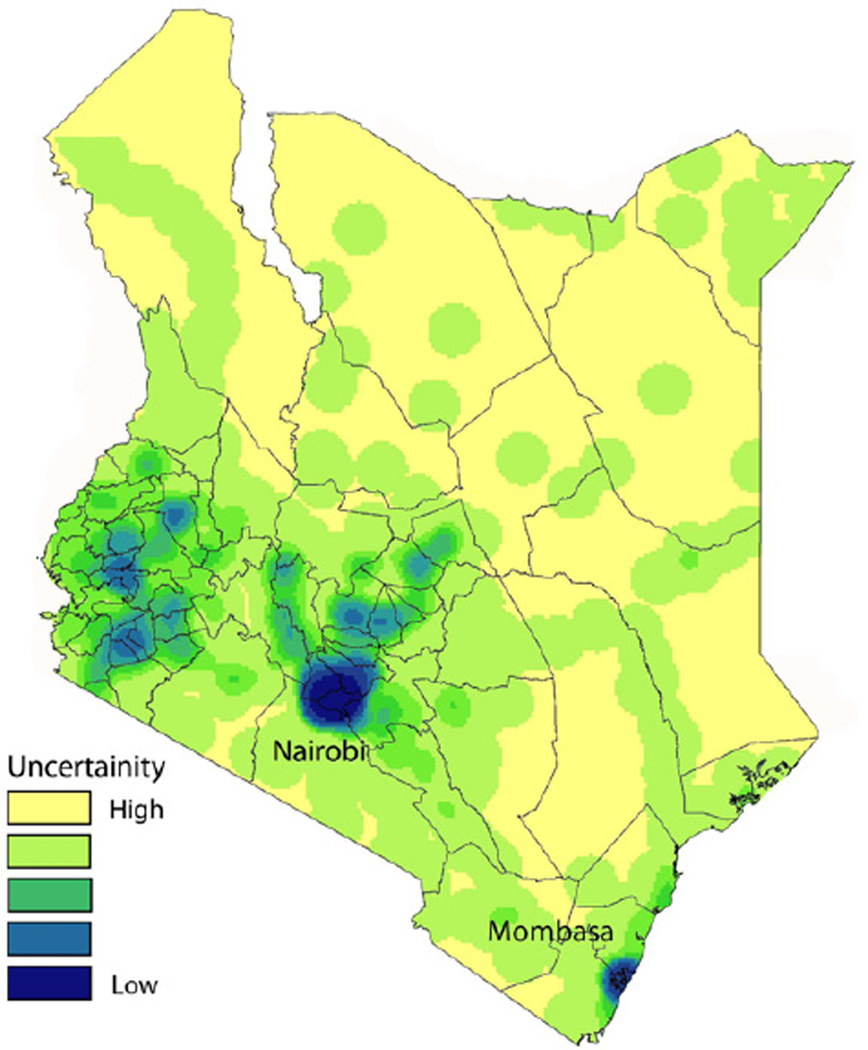
Figure 1
Figure 1. The density of mobile phone towers across Kenya
A spatial kernel density was estimated in Kenya using the location of all mobile phone towers owned by the leading mobile phone operator in the country. The density of mobile phone towers is an estimate of uncertainty of using CDR data to quantify travel. In Nairobi and Mombasa, the two largest cities in the country, the mobile phone tower density is high leading to more certainty of mobility estimate. In the rural areas of eastern and northern Kenya, the uncertainty is lower due to poor tower coverage. The density of towers is strongly correlated with population density (R2 = 0.688, p < 0.001).
Figure 2
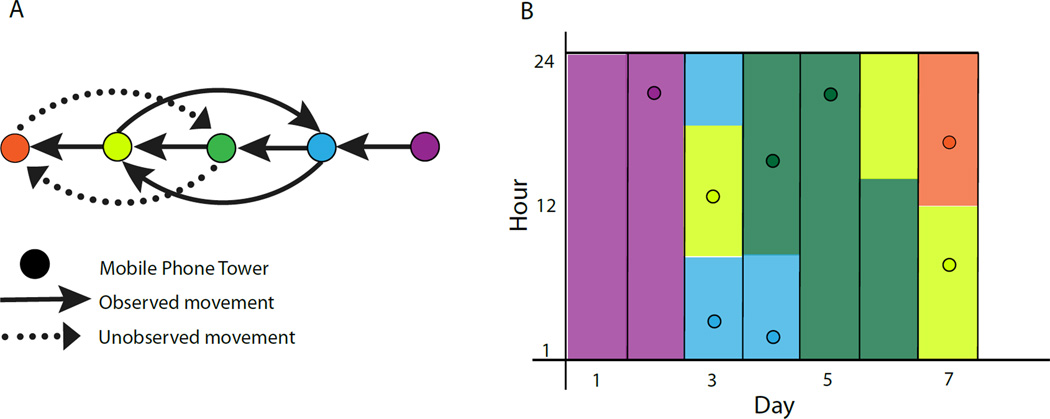
Figure 2. Approach to using CDRs to approximate location and movement for a subscriber
A) Observed and unobserved movements between cell towers. Each circle represents a mobile phone tower with arrows indicating the day and direction of movement. Solid arrows indicate movement that can be measured using CDRs. Dotted arrows indicate movements that will not be measured. B) The estimated location and time of the subscriber for all 7 days. Points show the time of each call record (y axis) for each day of the week (x axis), with the color indicating the tower at which the call was made. Column colors represent the inferred location of the subscriber; it is assumed that the caller is at the mobile phone tower that routed their most recent call or text, and transitions between towers occur half way between two calls.
Figure 3
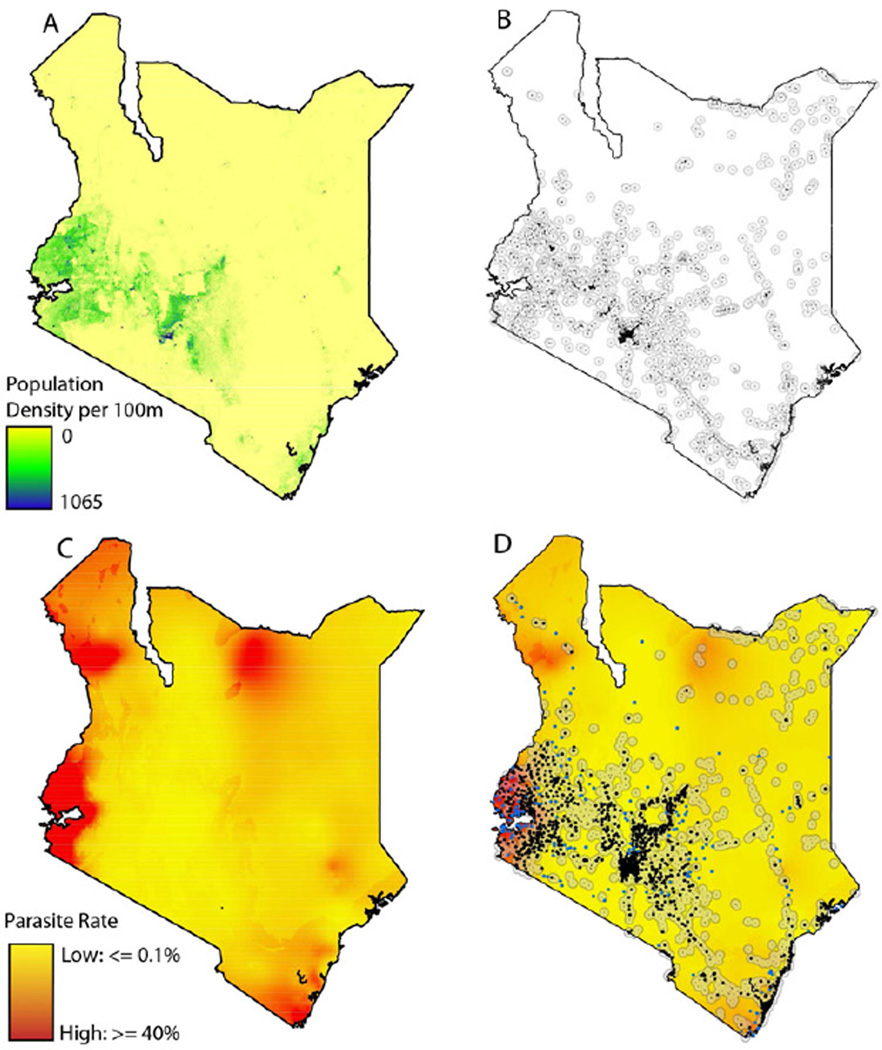
Figure 3. Data layers for defining resolution of mobility estimates
A) The population density of Kenya with data from Afripop. B) The location of settlements in Kenya. A 10km buffer is drawn around each settlement to define a catchment area. C) The parasite rate in Kenya with data from MAP. D) The location of mobile phone tower in Kenya overlaid on a settlement and parasite rate maps.
Figure 4
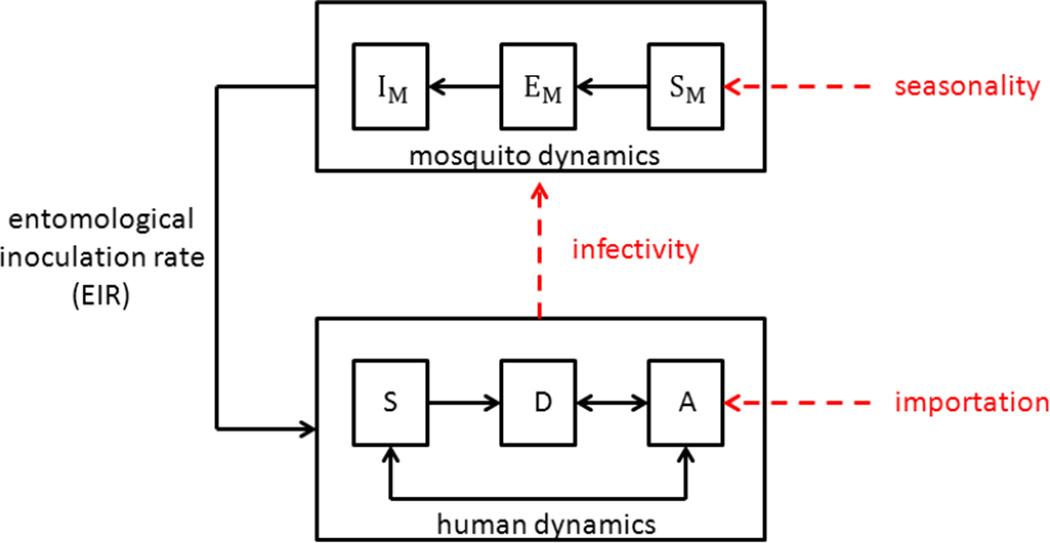
Figure 4. Knowledge gaps in malaria transmission models
Important factors that are expected to have significant effects on malaria transmission but are currently poorly quantified include: importation of asymptomatic infections, human infectivity to mosquitoes and the effects of seasonality on mosquito abundance. The specific model assumptions made about these factors will impact the modeled entomological inoculation rate (EIR) and ultimately effect model predictions. Basic models for the human dynamics of malaria transmission include susceptible (S), diseased (D) and asymptomatic (A) individuals and for mosquito dynamics include susceptible (S_M), exposed (E_M) and infectious (I_M) mosquitoes.

References

    1. Porter G. Living in a Walking World: Rural Mobility and Social Equity Issues in subSaharan Africa. World Development. 2002;30(2):285–300.
    1. Prothero RM. Population mobility and trypanosomiasis in Africa. Bull World Health Organ. 1963;28(5-6):615–626. - PMC - PubMed
    1. Prothero RM. Disease and mobility: a neglected factor in epidemiology. Int J Epidemiol. 1977;6(3):259–267. - PubMed
    1. Anderson J. Space-time budgets and activity studies in urban geography and planning. Environment and Planning. 1971;3(4):353–368.
    1. Deane KD, Parkhurst JO, Johnston D. Linking migration, mobility and HIV. Trop Med Int Health. 2010;15(12):1458–1463. - PubMed

Publication types