


B cells promote inflammation in obesity and type 2 diabetes through regulation of T-cell function and an inflammatory cytokine profile
- PMID: 23479618
- PMCID: PMC3612635
- DOI: 10.1073/pnas.1215840110
B cells promote inflammation in obesity and type 2 diabetes through regulation of T-cell function and an inflammatory cytokine profile
Abstract
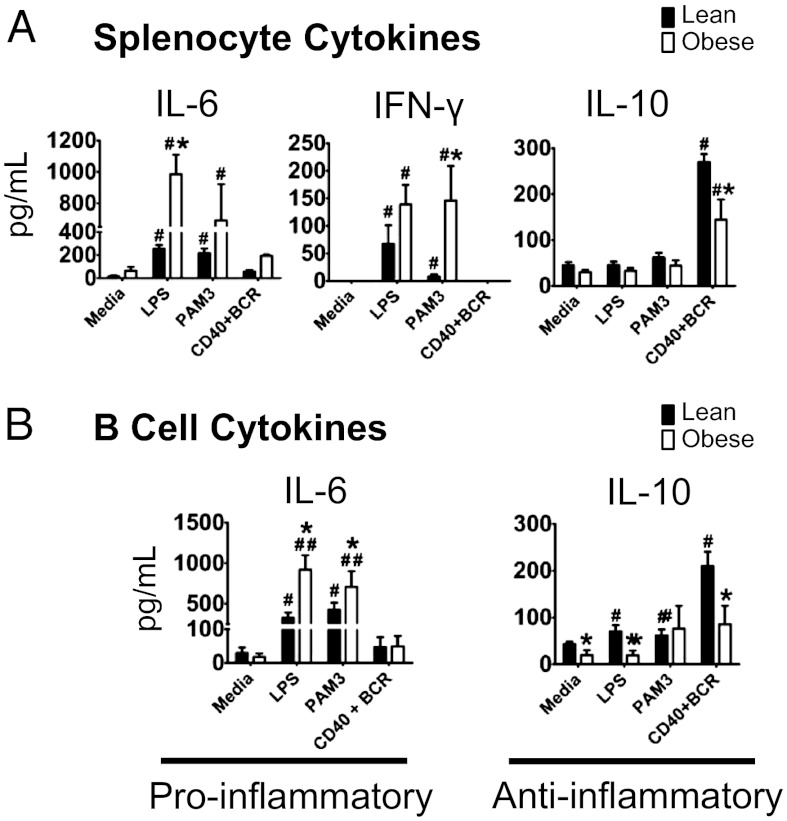
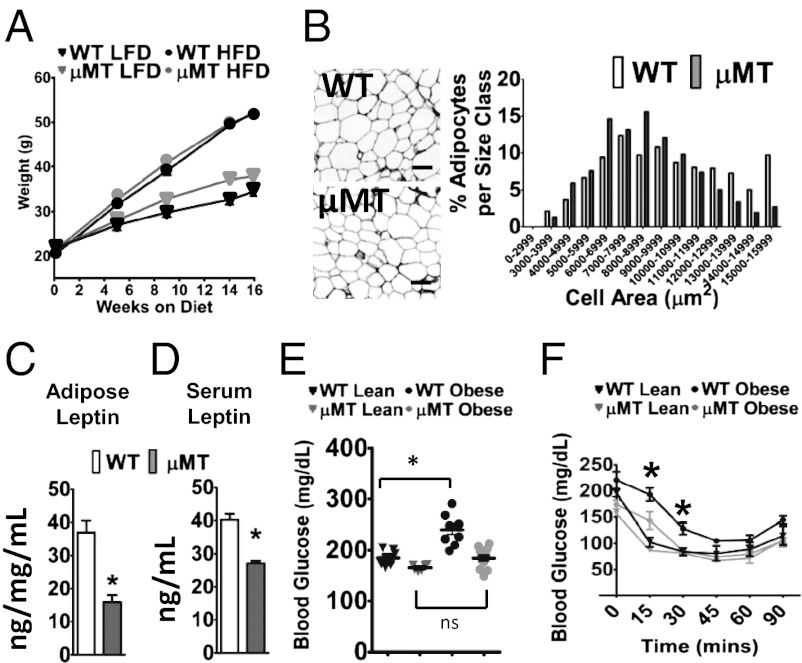
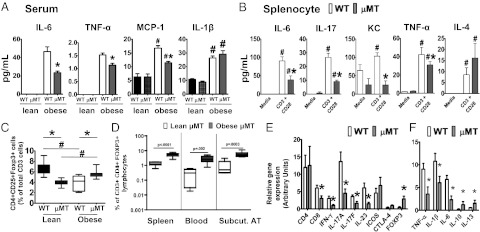
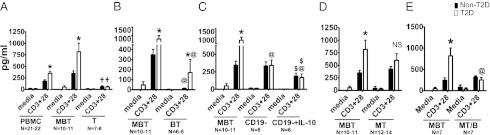
Patients with type 2 diabetes (T2D) have disease-associated changes in B-cell function, but the role these changes play in disease pathogenesis is not well established. Data herein show B cells from obese mice produce a proinflammatory cytokine profile compared with B cells from lean mice. Complementary in vivo studies show that obese B cell-null mice have decreased systemic inflammation, inflammatory B- and T-cell cytokines, adipose tissue inflammation, and insulin resistance (IR) compared with obese WT mice. Reduced inflammation in obese/insulin resistant B cell-null mice associates with an increased percentage of anti-inflammatory regulatory T cells (Tregs). This increase contrasts with the sharply decreased percentage of Tregs in obese compared with lean WT mice and suggests that B cells may be critical regulators of T-cell functions previously shown to play important roles in IR. We demonstrate that B cells from T2D (but not non-T2D) subjects support proinflammatory T-cell function in obesity/T2D through contact-dependent mechanisms. In contrast, human monocytes increase proinflammatory T-cell cytokines in both T2D and non-T2D analyses. These data support the conclusion that B cells are critical regulators of inflammation in T2D due to their direct ability to promote proinflammatory T-cell function and secrete a proinflammatory cytokine profile. Thus, B cells are potential therapeutic targets for T2D.
Conflict of interest statement
The authors declare no conflict of interest.
Figures
Comment in
-
Metabolism: Contribution of B cells to obesity and insulin resistance.Nat Rev Endocrinol. 2013 Jun;9(6):315. doi: 10.1038/nrendo.2013.69. Epub 2013 Apr 2. Nat Rev Endocrinol. 2013. PMID: 23545488 No abstract available.
References
-
- Carter NA, et al. Mice lacking endogenous IL-10-producing regulatory B cells develop exacerbated disease and present with an increased frequency of Th1/Th17 but a decrease in regulatory T cells. J Immunol. 2011;186(10):5569–5579. - PubMed
-
- Fain JN. Release of interleukins and other inflammatory cytokines by human adipose tissue is enhanced in obesity and primarily due to the nonfat cells. Vitam Horm. 2006;74:443–477. - PubMed
Publication types
MeSH terms
Substances
Grants and funding
- DK046200/DK/NIDDK NIH HHS/United States
- R21 DE021154/DE/NIDCR NIH HHS/United States
- U01 CA182898/CA/NCI NIH HHS/United States
- R21 DK089270/DK/NIDDK NIH HHS/United States
- P30 DK046200/DK/NIDDK NIH HHS/United States
- R56 DK090455/DK/NIDDK NIH HHS/United States
- R21DK089270/DK/NIDDK NIH HHS/United States
- T32 AI007309/AI/NIAID NIH HHS/United States
- T32 HL007501/HL/NHLBI NIH HHS/United States
- R56 DK096525/DK/NIDDK NIH HHS/United States
- 5R21DE021154/DE/NIDCR NIH HHS/United States
- HL007501/HL/NHLBI NIH HHS/United States
- AI007309/AI/NIAID NIH HHS/United States
LinkOut - more resources
Full Text Sources
Other Literature Sources
Medical
Molecular Biology Databases
