


Identification of a pharmacologically tractable Fra-1/ADORA2B axis promoting breast cancer metastasis
- PMID: 23483055
- PMCID: PMC3612632
- DOI: 10.1073/pnas.1222085110
Identification of a pharmacologically tractable Fra-1/ADORA2B axis promoting breast cancer metastasis
Abstract
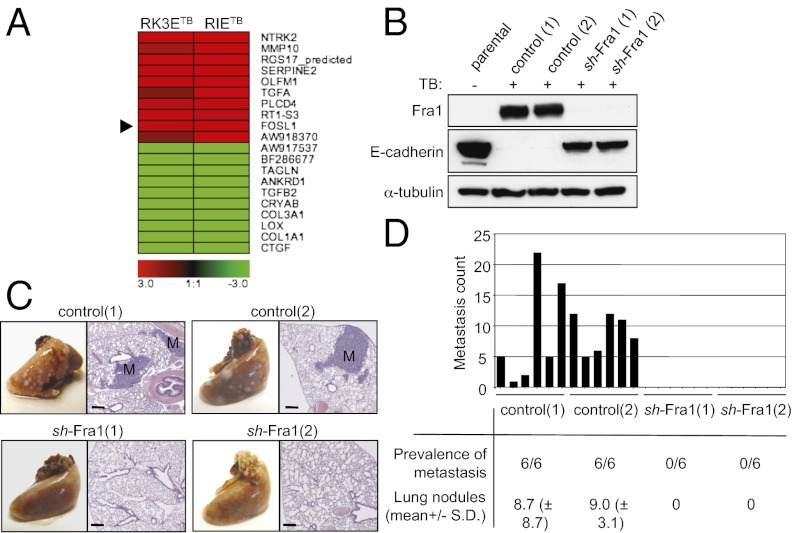
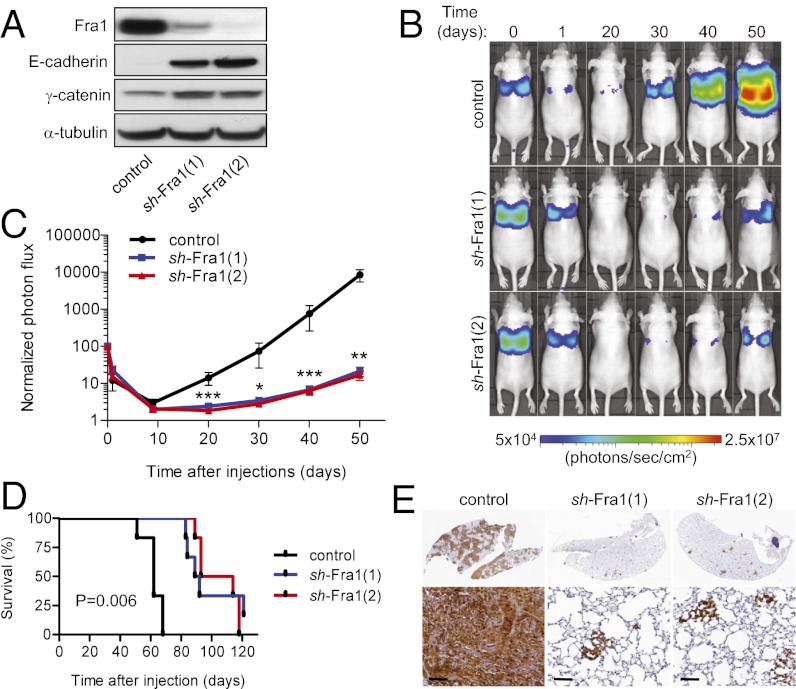
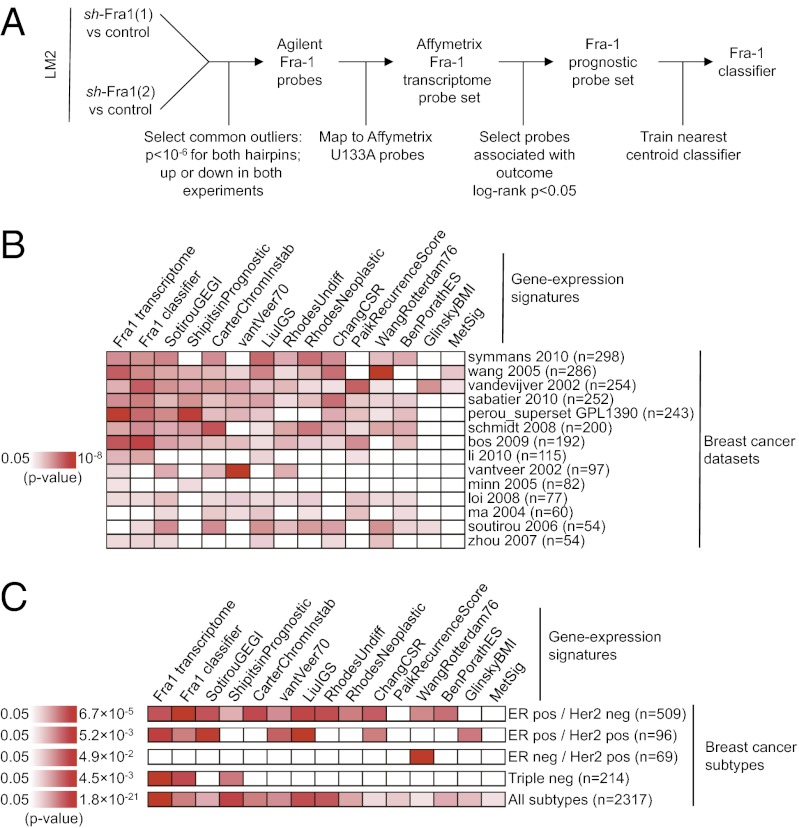
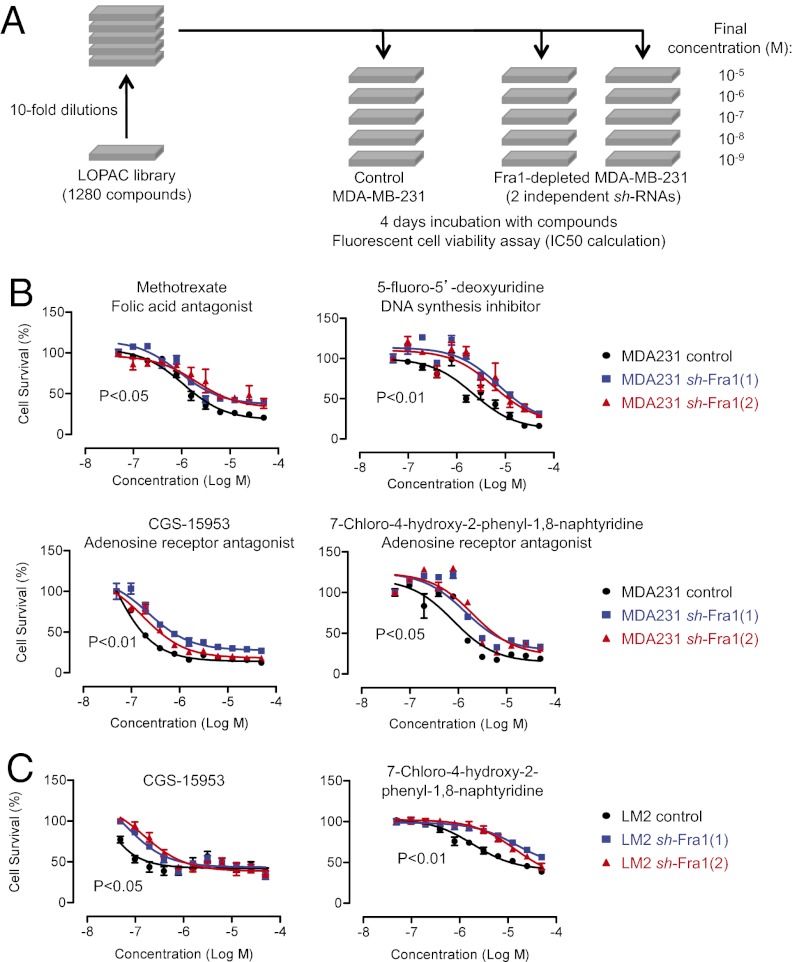
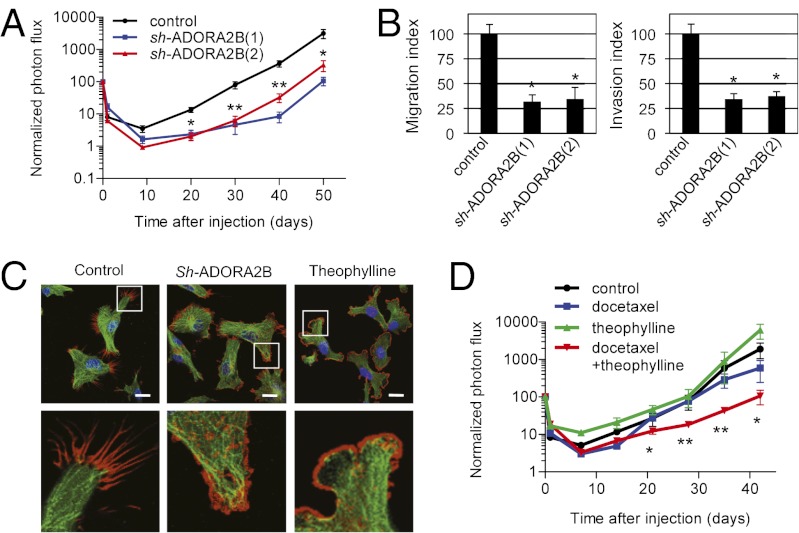
Metastasis confronts clinicians with two major challenges: estimating the patient's risk of metastasis and identifying therapeutic targets. Because they are key signal integrators connecting cellular processes to clinical outcome, we aimed to identify transcriptional nodes regulating cancer cell metastasis. Using rodent xenograft models that we previously developed, we identified the transcription factor Fos-related antigen-1 (Fra-1) as a key coordinator of metastasis. Because Fra-1 often is overexpressed in human metastatic breast cancers and has been shown to control their invasive potential in vitro, we aimed to assess the implication and prognostic significance of the Fra-1-dependent genetic program in breast cancer metastasis and to identify potential Fra-1-dependent therapeutic targets. In several in vivo assays in mice, we demonstrate that stable RNAi depletion of Fra-1 from human breast cancer cells strongly suppresses their ability to metastasize. These results support a clinically important role for Fra-1 and the genetic program it controls. We show that a Fra-1-dependent gene-expression signature accurately predicts recurrence of breast cancer. Furthermore, a synthetic lethal drug screen revealed that antagonists of the adenosine receptor A2B (ADORA2B) are preferentially toxic to breast tumor cells expressing Fra-1. Both RNAi silencing and pharmacologic blockade of ADORA2B inhibited filopodia formation and invasive activity of breast cancer cells and correspondingly reduced tumor outgrowth in the lungs. These data show that Fra-1 activity is causally involved in and is a prognostic indicator of breast cancer metastasis. They suggest that Fra-1 activity predicts responsiveness to inhibition of pharmacologically tractable targets, such as ADORA2B, which may be used for clinical interference of metastatic breast cancer.
Conflict of interest statement
Conflict of interest statement: A patent application for the gene-expression classifier described in this paper has been filed with C.J.D., F.R. and D.S.P. as inventors.
Figures
Comment in
-
Metastasis: ADORA(2B)tion.Nat Rev Cancer. 2013 May;13(5):294-5. doi: 10.1038/nrc3508. Epub 2013 Mar 28. Nat Rev Cancer. 2013. PMID: 23535847 No abstract available.
References
-
- Perou CM, et al. Molecular portraits of human breast tumours. Nature. 2000;406(6797):747–752. - PubMed
-
- van de Vijver MJ, et al. A gene-expression signature as a predictor of survival in breast cancer. N Engl J Med. 2002;347(25):1999–2009. - PubMed
-
- Wang Y, et al. Gene-expression profiles to predict distant metastasis of lymph-node-negative primary breast cancer. Lancet. 2005;365(9460):671–679. - PubMed
Publication types
MeSH terms
Substances
LinkOut - more resources
Full Text Sources
Other Literature Sources
Medical
