


Evening chronotype is associated with changes in eating behavior, more sleep apnea, and increased stress hormones in short sleeping obese individuals
- PMID: 23483886
- PMCID: PMC3590198
- DOI: 10.1371/journal.pone.0056519
Evening chronotype is associated with changes in eating behavior, more sleep apnea, and increased stress hormones in short sleeping obese individuals
Abstract
Background: Short sleep duration and decreased sleep quality are emerging risk factors for obesity and its associated morbidities. Chronotype, an attribute that reflects individual preferences in the timing of sleep and other behaviors, is a continuum from morningness to eveningness. The importance of chronotype in relation to obesity is mostly unknown. Evening types tend to have unhealthy eating habits and suffer from psychological problems more frequently than Morning types, thus we hypothesized that eveningness may affect health parameters in a cohort of obese individuals reporting sleeping less than 6.5 hours per night.
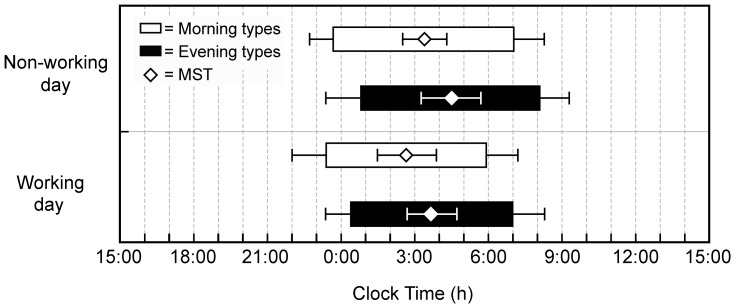
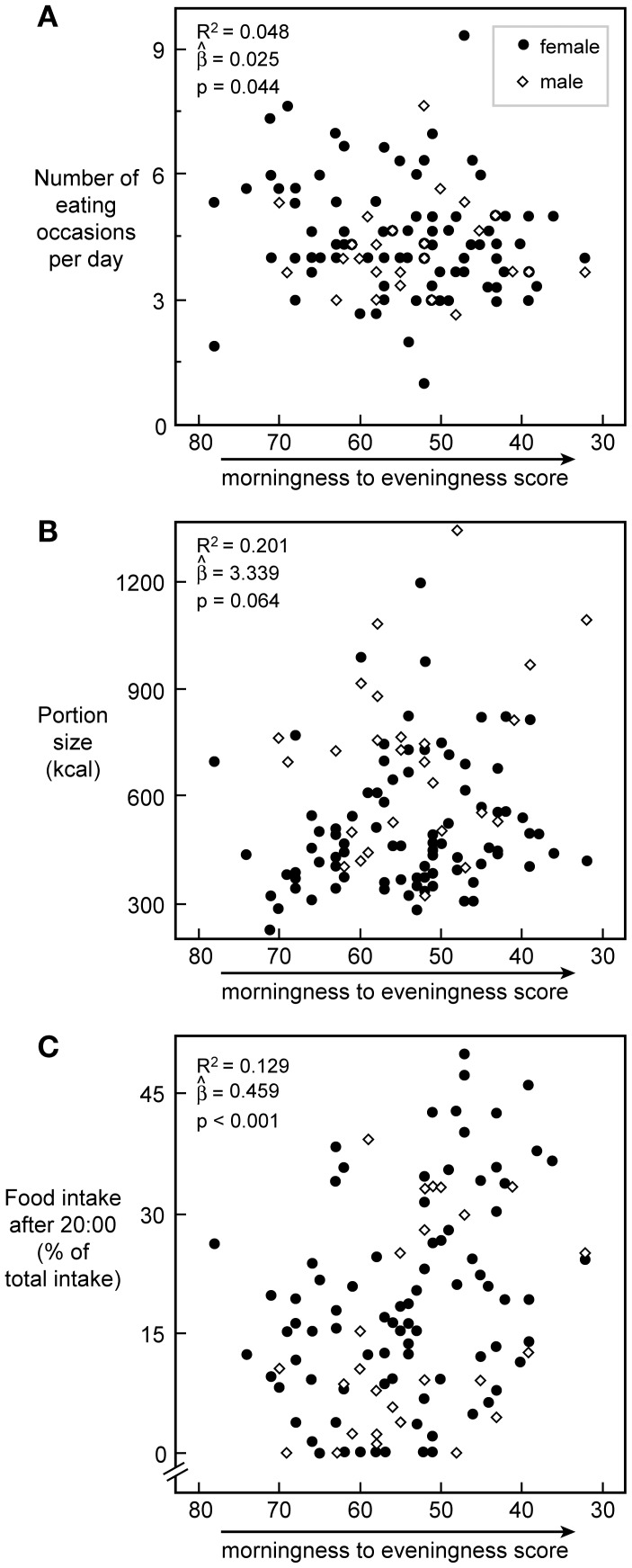
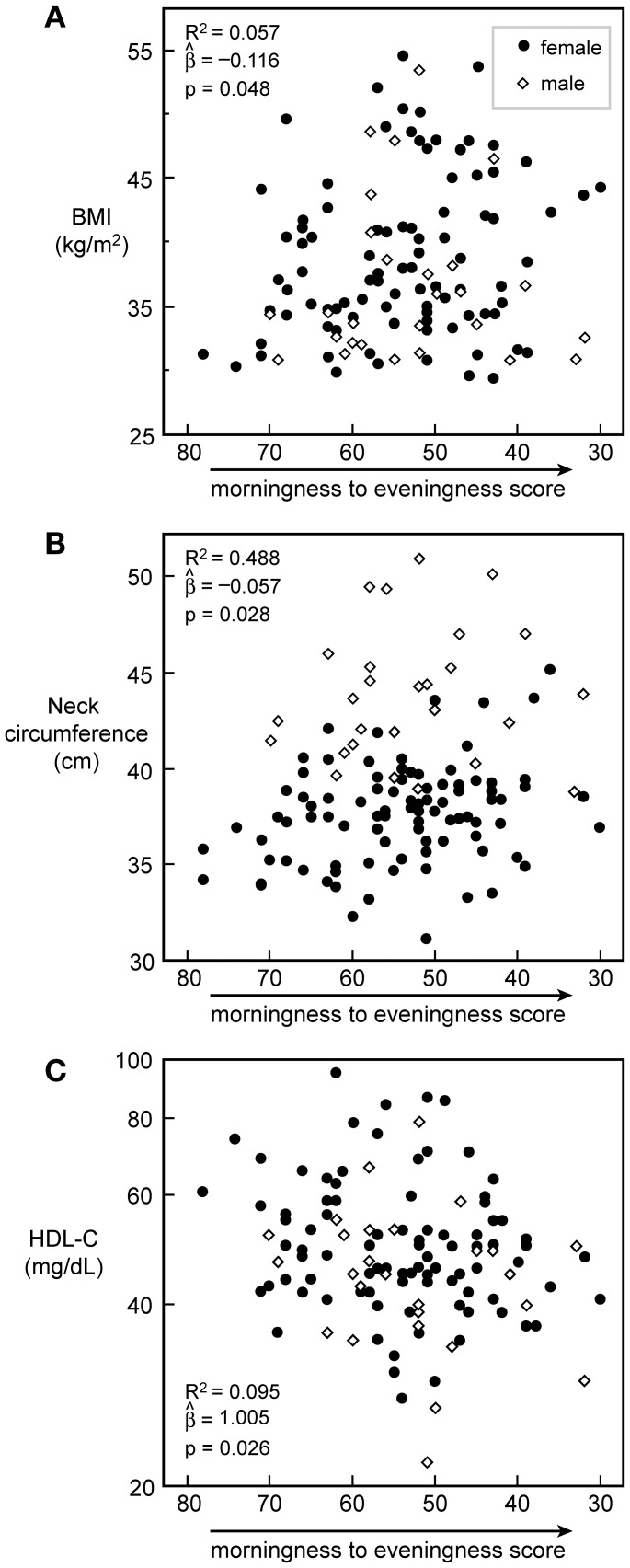
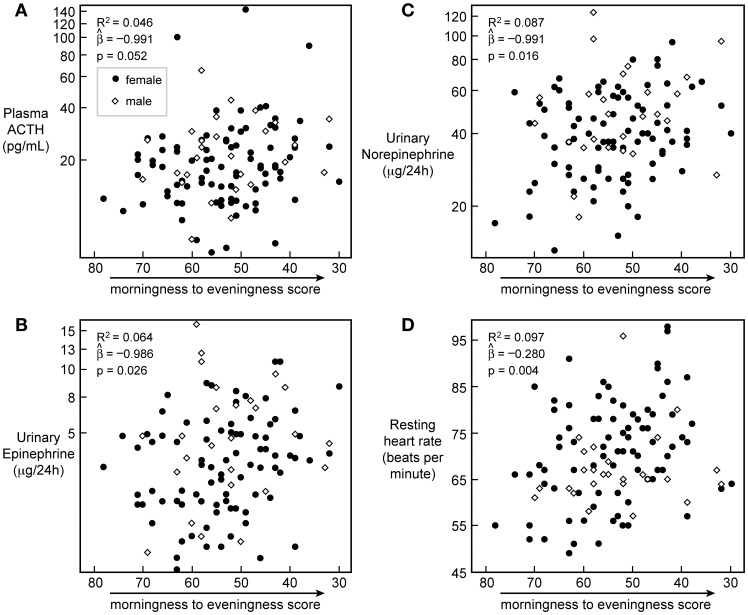
Methodology and principal findings: BASELINE DATA FROM OBESE (BMI: 38.5±6.4 kg/m(2)) and short sleeping (5.8±0.8 h/night by actigraphy) participants (n = 119) of the Sleep Extension Study were analyzed (www.ClinicalTrials.gov, identifier NCT00261898). Assessments included the Horne and Ostberg Morningness-Eveningness questionnaire, a three-day dietary intake diary, a 14-day sleep diary, 14 days of actigraphy, and measurements of sleep apnea. Twenty-four hour urinary free cortisol, 24 h urinary norepinephrine and epinephrine levels, morning plasma ACTH and serum cortisol, fasting glucose and insulin, and lipid parameters were determined. Eveningness was associated with eating later in the day on both working and non-working days. Progression towards eveningness was associated with an increase in BMI, resting heart rate, food portion size, and a decrease in the number of eating occasions and HDL-cholesterol. Evening types had overtly higher 24 h urinary epinephrine and morning plasma ACTH levels, and higher morning resting heart rate than Morning types. In addition, Evening types more often had sleep apnea, independent of BMI or neck circumference.
Conclusions: Eveningness was associated with eating later and a tendency towards fewer and larger meals and lower HDL-cholesterol levels. In addition, Evening types had more sleep apnea and higher stress hormones. Thus, eveningness in obese, chronically sleep-deprived individuals compounds the cardiovascular risk associated with obesity.
Conflict of interest statement
Figures
References
-
- Flegal KM, Carroll MD, Kit BK, Ogden CL (2012) Prevalence and trends in obesity in the distribution of body mass index among US adults, 1999–2010. JAMA 307: 491–497. - PubMed
-
- Cizza G, Skarulis M, Mignot E (2005) A link between short sleep and obesity: building the evidence for causation. Sleep 28: 1217–1220. - PubMed
-
- Roenneberg T, Allebrandt KV, Merrow M, Vetter C (2012) Social jetlag and obesity. Curr Biol 22: 939–943. - PubMed
-
- Vink JM, Groot AS, Kerkhof GA, Boomsma DI (2001) Genetic analysis of morningness and eveningness. Chronobiol Int 18: 809–822. - PubMed
Publication types
MeSH terms
Substances
Associated data
Grants and funding
LinkOut - more resources
Full Text Sources
Other Literature Sources
Medical
