


The effects of calcium channel blockers in the prevention of stroke in adults with hypertension: a meta-analysis of data from 273,543 participants in 31 randomized controlled trials
- PMID: 23483932
- PMCID: PMC3590278
- DOI: 10.1371/journal.pone.0057854
The effects of calcium channel blockers in the prevention of stroke in adults with hypertension: a meta-analysis of data from 273,543 participants in 31 randomized controlled trials
Abstract
Background: Hypertension is a major risk factor for the development of stroke. It is well known that lowering blood pressure decreases the risk of stroke in people with moderate to severe hypertension. However, the specific effects of calcium channel blockers (CCBs) against stroke in patients with hypertension as compared to no treatment and other antihypertensive drug classes are not known.
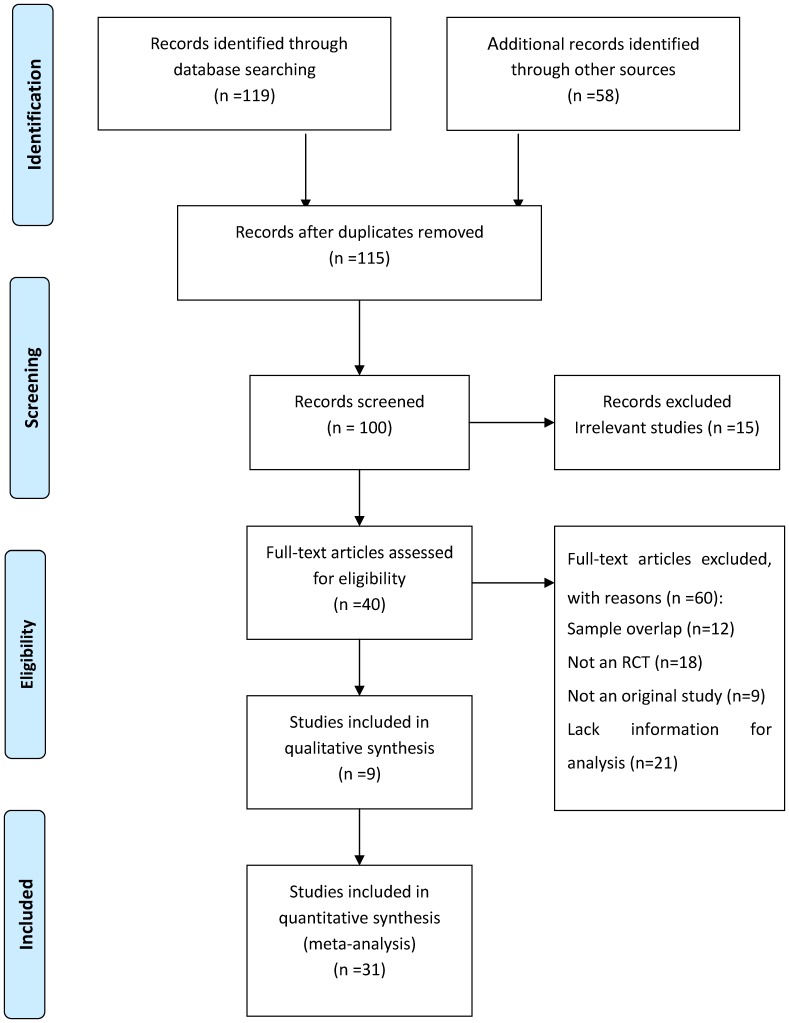
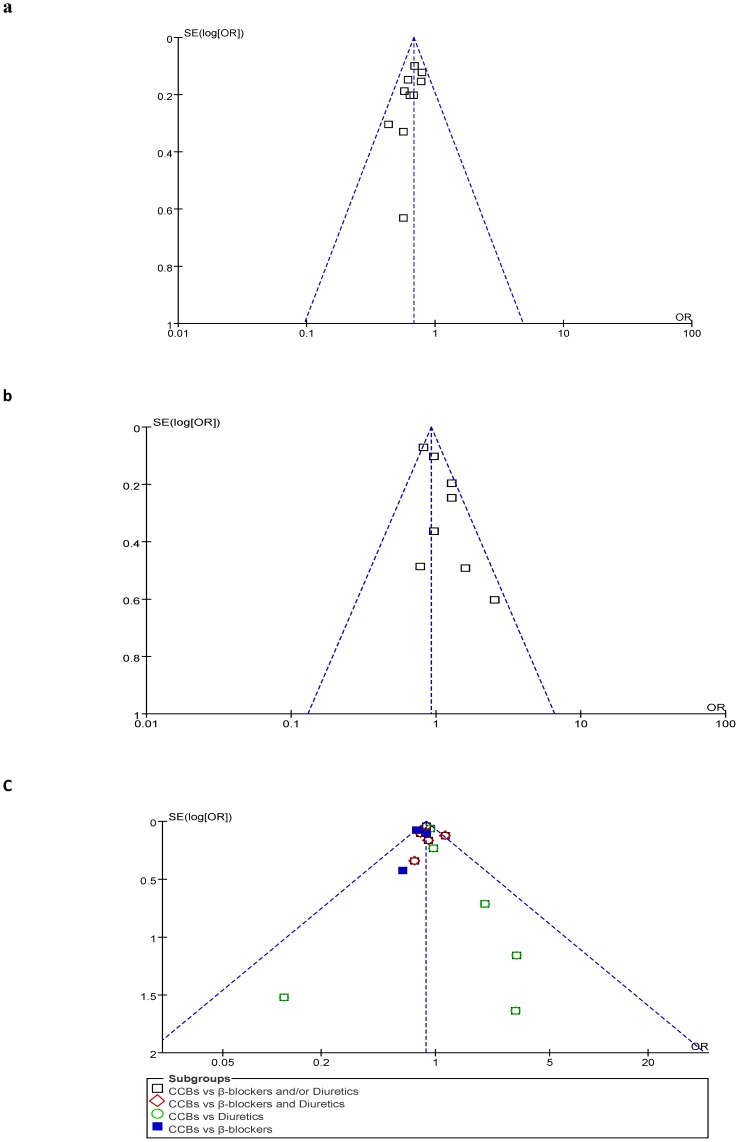
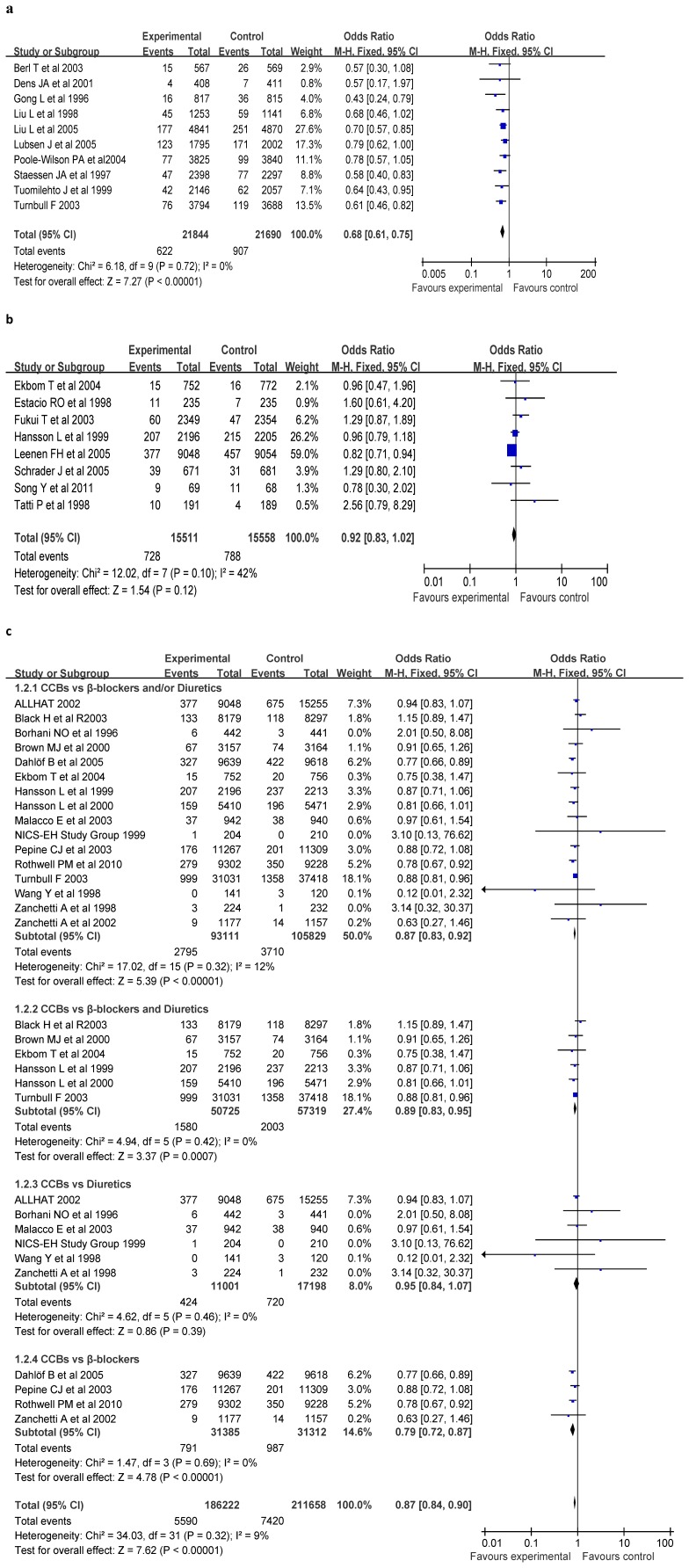
Methods and findings: This systematic review and meta-analysis of randomized controlled trials (RCTs) evaluated CCBs effect on stroke in patients with hypertension in studies of CCBs versus placebo, angiotensin-converting-enzyme inhibitors (ACEIs), β-adrenergic blockers, and diuretics. The PUBMED, MEDLINE, EMBASE, OVID, CNKI, MEDCH, and WANFANG databases were searched for trials published in English or Chinese during the period January 1, 1996 to July 31, 2012. A total of 177 reports were collected, among them 31 RCTs with 273,543 participants (including 130,466 experimental subjects and 143,077 controls) met the inclusion criteria. In these trials a total of 9,550 stroke events (4,145 in experimental group and 5,405 in control group) were reported. CCBs significantly decreased the incidence of stroke compared with placebo (OR = 0.68, 95% CI 0.61-0.75, p<1×10(-5)), β-adrenergic blockers combined with diuretics (OR = 0.89, 95% CI 0.83-0.95, p = 7×10(-5)) and β-adrenergic blockers (OR = 0.79, 95% CI 0.72-0.87, p<1×10(-5)), statistically significant difference was not found between CCBs and ACEIs (OR = 0.92, 95% CI 0.8-1.02, p = 0.12) or diuretics (OR = 0.95, 95% CI 0.84-1.07, p = 0.39).
Conclusion: In a pooled analysis of data of 31 RCTs measuring the effect of CCBs on stroke, CCBs reduced stroke more than placebo and β-adrenergic blockers, but were not different than ACEIs and diuretics. More head to head RCTs are warranted.
Conflict of interest statement
Figures
References
-
- Hamilton M, Thompson EM, Wisniewski TK (1964) The role of blood-pressure control in preventing complications of hypertension. Lancet 1: 235–238. - PubMed
-
- Liu GT, Zeng GM, Hong X (2011) Long-term calcium channel blockers: The best choice of antihypertensive treatment for the Chinese hypertensive population. Zhongguo She Qu Yi Shi 13: 10–11 (in Chinese)..
-
- National Intervention Cooperative Study in Elderly Hypertensives Study Group (1999) Randomized double-blind comparison of a calcium antagonist and a diuretic in elderly hypertensives. Hypertension 34: 1129–1133. - PubMed
-
- Song YY, Yang YL (2011) Antihypertensive effect of levamlodipine besylate and enalapril in the patients with cerebrovascular disorder. Zhongguo Lao Nian Xue Za Zhi 31: 4039–4040 (in Chinese)..
-
- Hansson L, Hedner T, Lund-Johansen P, Kjeldsen SE, Lindholm LH, et al. (2000) Randomised trial of effects of calcium antagonists compared with diuretics and beta-blockers on cardiovascular morbidity and mortality in hypertension: the Nordic Diltiazem (NORDIL) study. Lancet 356: 359–365. - PubMed
Publication types
MeSH terms
Substances
LinkOut - more resources
Full Text Sources
Other Literature Sources
Medical
Miscellaneous
