


Qualification of standard membrane-feeding assay with Plasmodium falciparum malaria and potential improvements for future assays
- PMID: 23483940
- PMCID: PMC3590281
- DOI: 10.1371/journal.pone.0057909
Qualification of standard membrane-feeding assay with Plasmodium falciparum malaria and potential improvements for future assays
Abstract
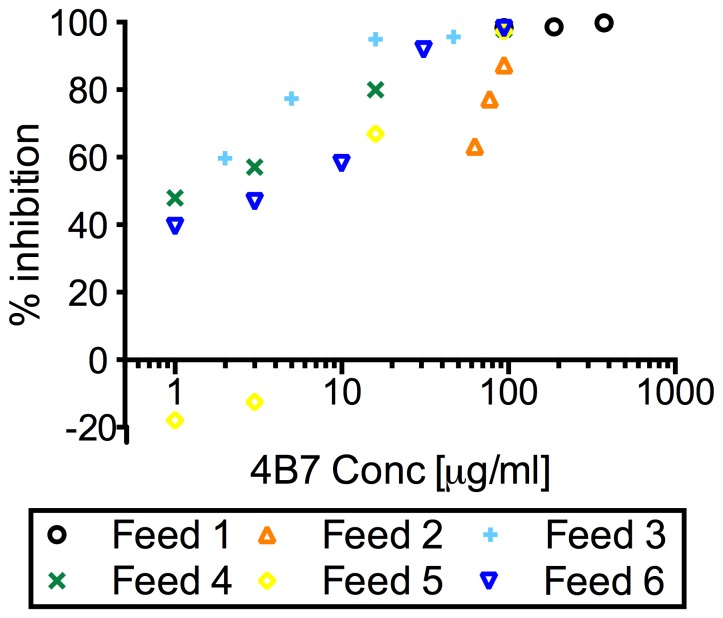
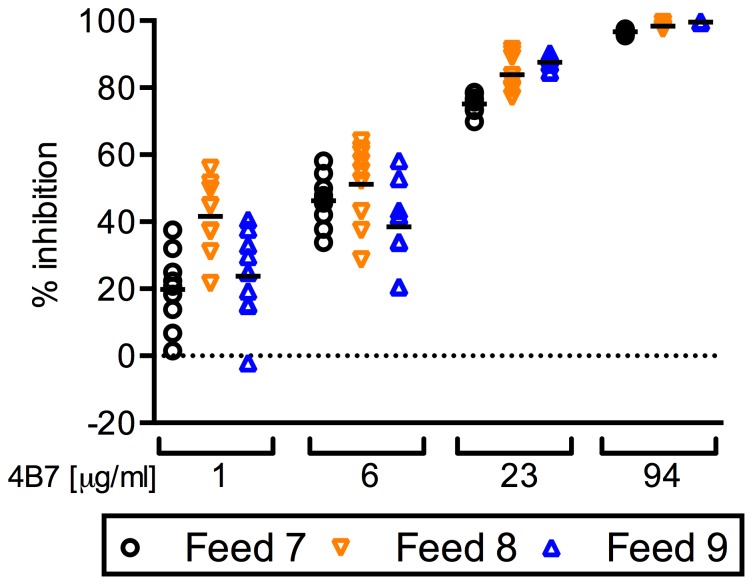
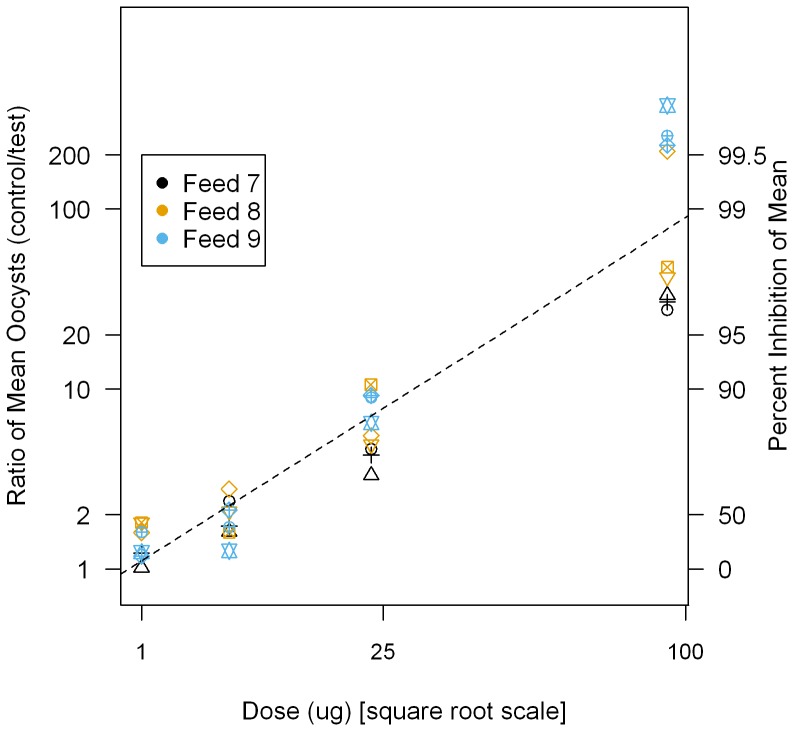
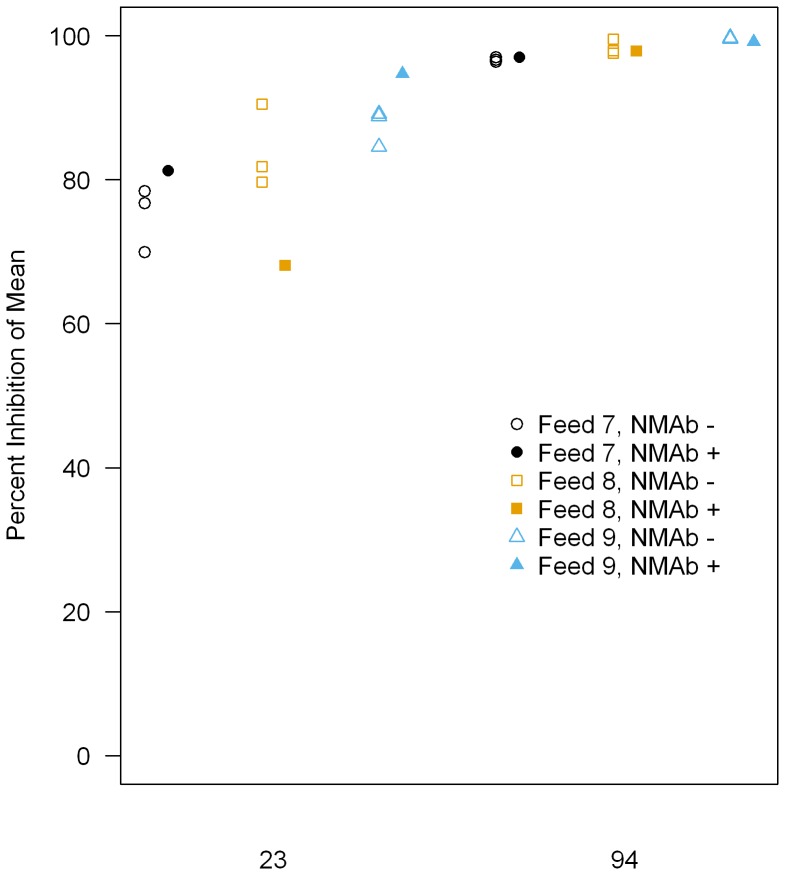
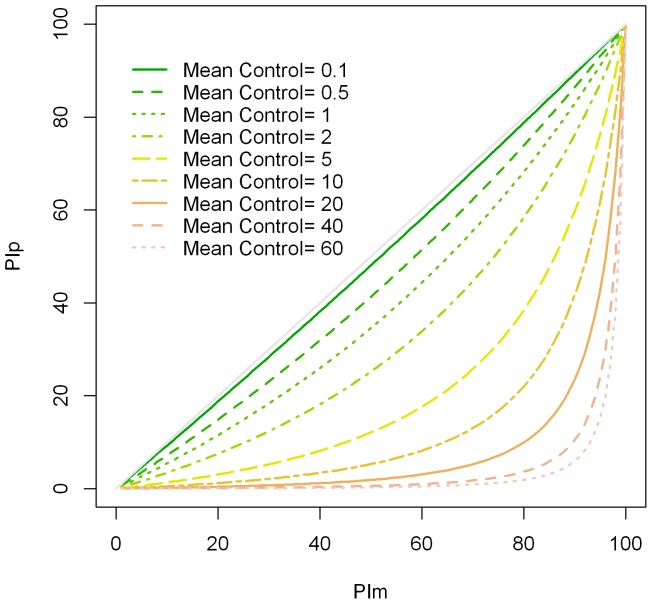
Vaccines that interrupt malaria transmission are of increasing interest and a robust functional assay to measure this activity would promote their development by providing a biologically relevant means of evaluating potential vaccine candidates. Therefore, we aimed to qualify the standard membrane-feeding assay (SMFA). The assay measures the transmission-blocking activity of antibodies by feeding cultured P. falciparum gametocytes to Anopheles mosquitoes in the presence of the test antibodies and measuring subsequent mosquito infection. The International Conference on Harmonisation (ICH) Harmonised Tripartite Guideline Q2(R1) details characteristics considered in assay validation. Of these characteristics, we decided to qualify the SMFA for Precision, Linearity, Range and Specificity. The transmission-blocking 4B7 monoclonal antibody was tested over 6 feeding experiments at several concentrations to determine four suitable concentrations that were tested in triplicate in the qualification experiments (3 additional feeds) to evaluate Precision, Linearity and Range. For Specificity, 4B7 was tested in the presence of normal mouse IgG. We determined intra- and inter-assay variability of % inhibition of mean oocyst intensity at each concentration of 4B7 (lower concentrations showed higher variability). We also showed that % inhibition was dependent on 4B7 concentration and the activity is specific to 4B7. Since obtaining empirical data is time-consuming, we generated a model using data from all 9 feeds and simulated the effects of different parameters on final readouts to improve the assay procedure and analytical methods for future studies. For example, we estimated the effect of number of mosquitoes dissected on variability of % inhibition, and simulated the relationship between % inhibition in oocyst intensity and % inhibition of prevalence of infected mosquitos at different mean oocysts in the control. SMFA is one of the few biological assays used in preclinical and early clinical development of transmission-blocking vaccines, and this study strongly supports its further development and application.
Conflict of interest statement
Figures
References
-
- Murray CJ, Rosenfeld LC, Lim SS, Andrews KG, Foreman KJ, et al. (2012) Global malaria mortality between 1980 and 2010: a systematic analysis. Lancet 379: 413–431. - PubMed
-
- Agnandji ST, Lell B, Soulanoudjingar SS, Fernandes JF, Abossolo BP, et al. (2011) First results of phase 3 trial of RTS,S/AS01 malaria vaccine in African children. N Engl J Med 365: 1863–1875. - PubMed
-
- van der Kolk M, De Vlas SJ, Saul A, van de Vegte-Bolmer M, Eling WM, et al. (2005) Evaluation of the standard membrane feeding assay (SMFA) for the determination of malaria transmission-reducing activity using empirical data. Parasitology 130: 13–22. - PubMed
-
- van der Kolk M, de Vlas SJ, Sauerwein RW (2006) Reduction and enhancement of Plasmodium falciparum transmission by endemic human sera. Int J Parasitol 36: 1091–1095. - PubMed
Publication types
MeSH terms
Substances
Grants and funding
LinkOut - more resources
Full Text Sources
Other Literature Sources
