


Elevated CO2 affects predator-prey interactions through altered performance
- PMID: 23484032
- PMCID: PMC3590170
- DOI: 10.1371/journal.pone.0058520
Elevated CO2 affects predator-prey interactions through altered performance
Abstract
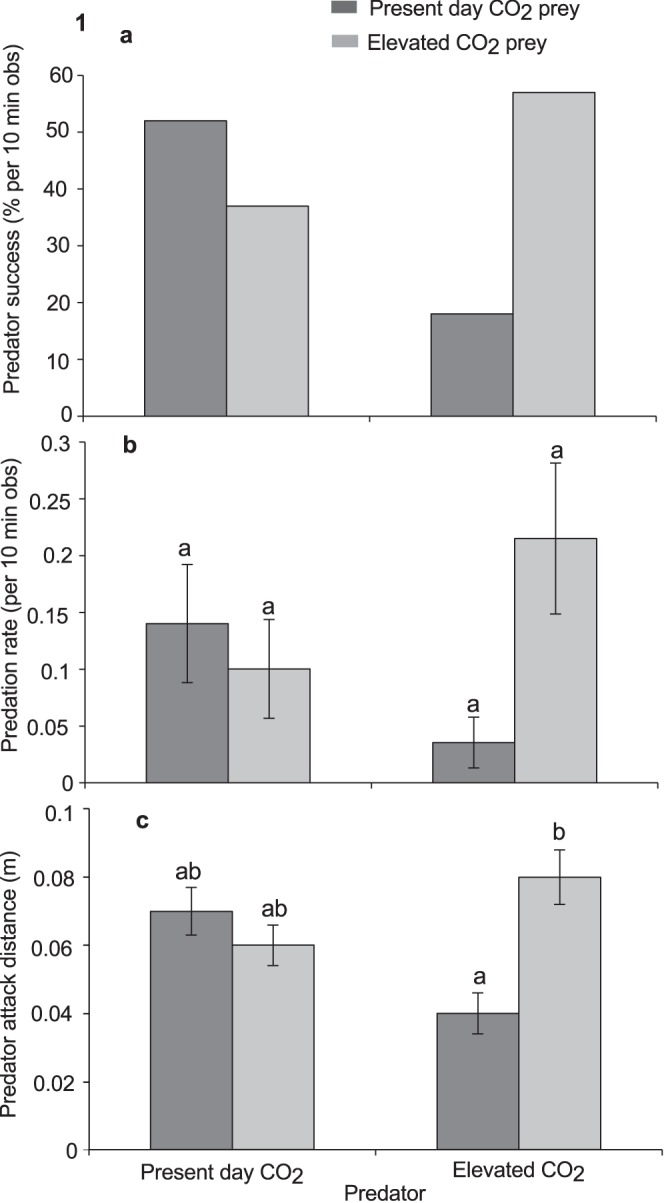
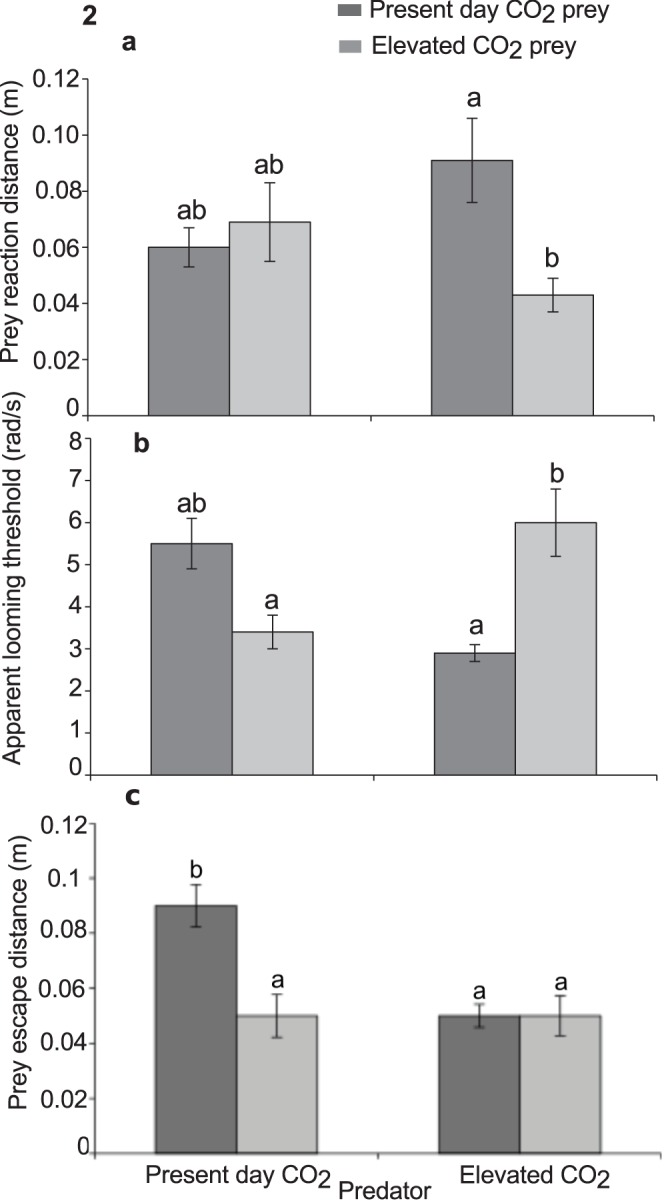
Recent research has shown that exposure to elevated carbon dioxide (CO2) affects how fishes perceive their environment, affecting behavioral and cognitive processes leading to increased prey mortality. However, it is unclear if increased mortality results from changes in the dynamics of predator-prey interactions or due to prey increasing activity levels. Here we demonstrate that ocean pCO2 projected to occur by 2100 significantly effects the interactions of a predator-prey pair of common reef fish: the planktivorous damselfish Pomacentrus amboinensis and the piscivorous dottyback Pseudochromis fuscus. Prey exposed to elevated CO2 (880 µatm) or a present-day control (440 µatm) interacted with similarly exposed predators in a cross-factored design. Predators had the lowest capture success when exposed to elevated CO2 and interacting with prey exposed to present-day CO2. Prey exposed to elevated CO2 had reduced escape distances and longer reaction distances compared to prey exposed to present-day CO2 conditions, but this was dependent on whether the prey was paired with a CO2 exposed predator or not. This suggests that the dynamics of predator-prey interactions under future CO2 environments will depend on the extent to which the interacting species are affected and can adapt to the adverse effects of elevated CO2.
Conflict of interest statement
Figures
References
-
- Lima SL, Dill LM (1990) Behavioral decisions made under the risk of predation: a review and prospectus. Canadian Journal of Zoology 68: 619–640.
-
- Bengtson S (2002) Origins and early evolution of predation. Paleontological Society Papers 8: 289–318.
-
- Planes S, Romans P (2004) Evidence of genetic selection for growth in new recruits of a marine fish. Molecular Ecology 13: 2049–2060. - PubMed
-
- Meinshausen M, Smith SJ, Calvin K, Daniel JS, Kainuma MLT, et al. (2011) The RCP greenhouse gas concentrations and their extensions from 1765 to 2300. Climatic Change 109: 213–241 doi:10.1007/s10584-011-0156-z. - DOI
-
- Bibby R, Cleall-Harding P, Rundle S, Widdicombe S, Spicer J (2007) Ocean acidification disrupts induced defences in the intertidal gastropod Littorina littorea. Biology Letters 3: 699–701 doi:10.1098/rsbl.2007.0457. - DOI - PMC - PubMed
Publication types
MeSH terms
Substances
LinkOut - more resources
Full Text Sources
Other Literature Sources
Research Materials
Miscellaneous
