


The μ-opioid receptor agonist DAMGO presynaptically suppresses solitary tract-evoked input to neurons in the rostral solitary nucleus
- PMID: 23486207
- PMCID: PMC3680801
- DOI: 10.1152/jn.00711.2012
The μ-opioid receptor agonist DAMGO presynaptically suppresses solitary tract-evoked input to neurons in the rostral solitary nucleus
Abstract
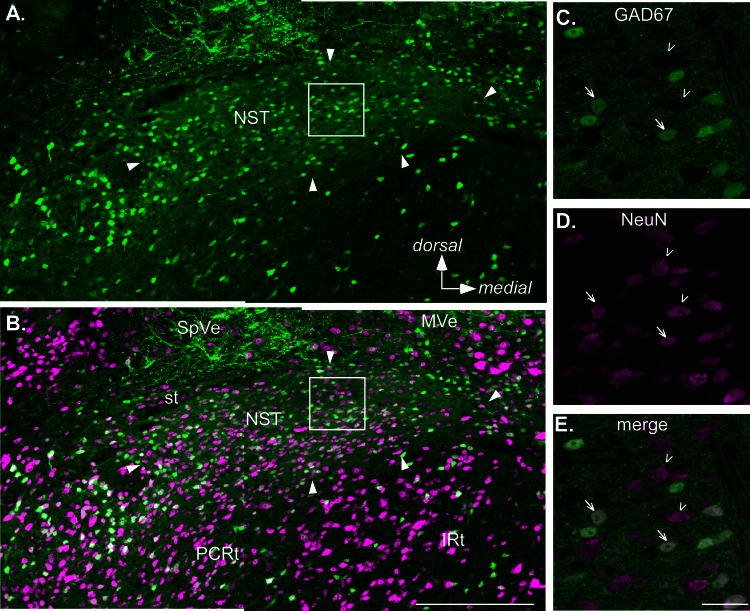
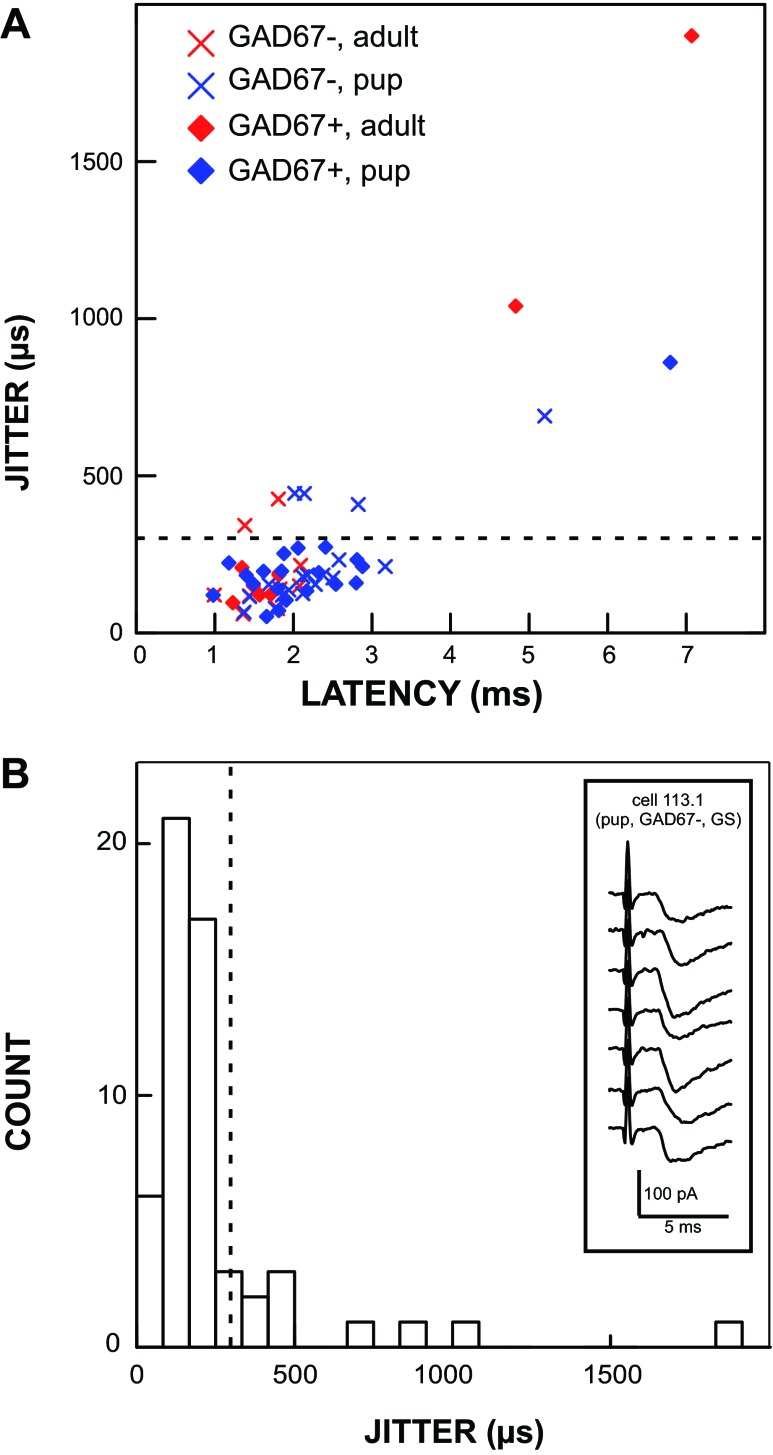
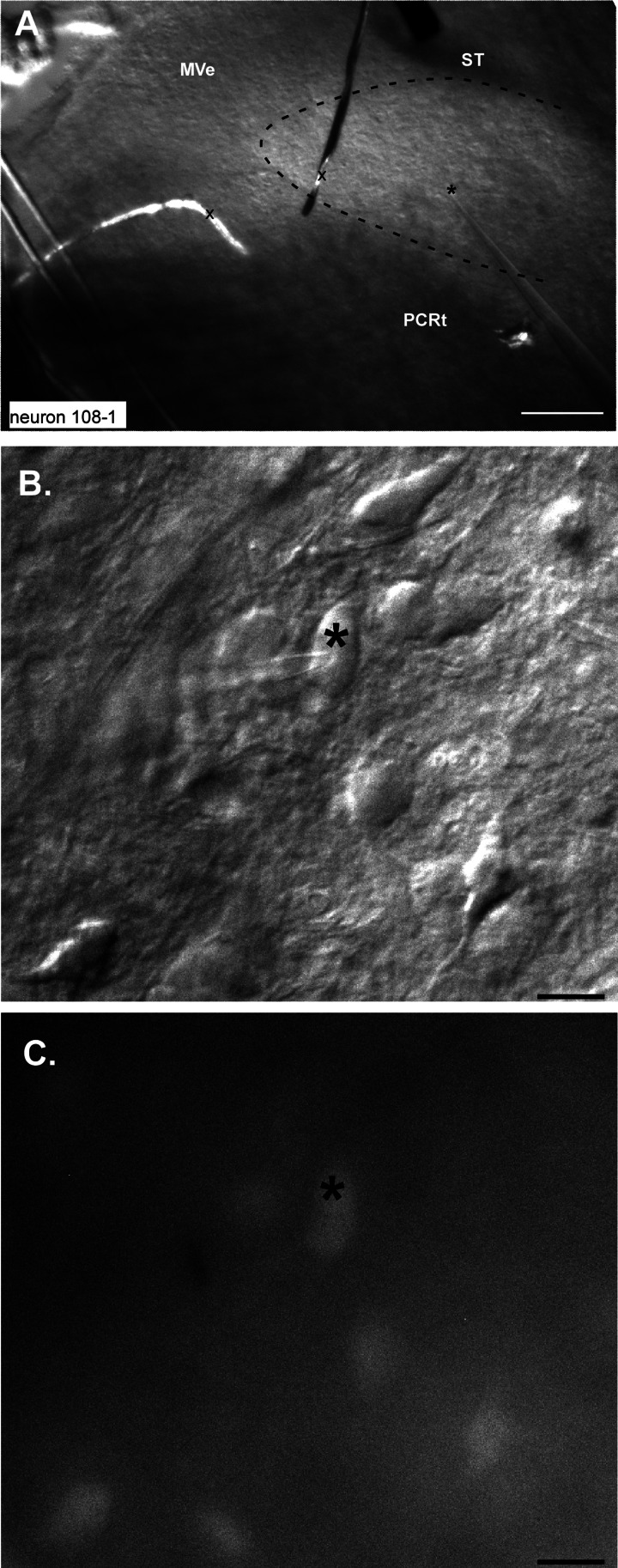
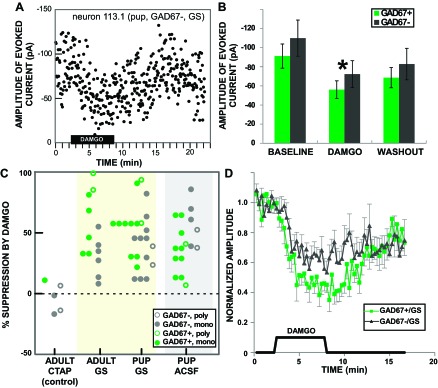
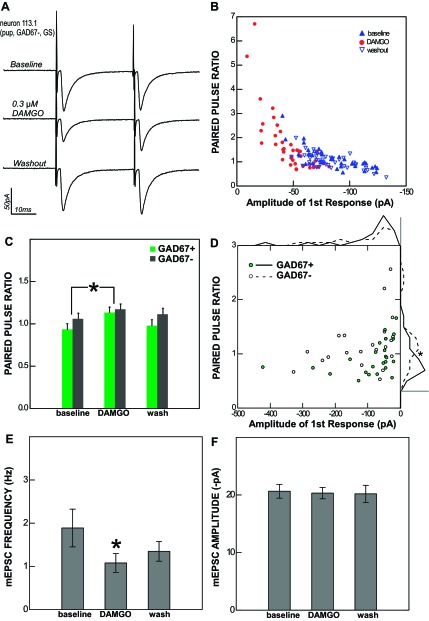
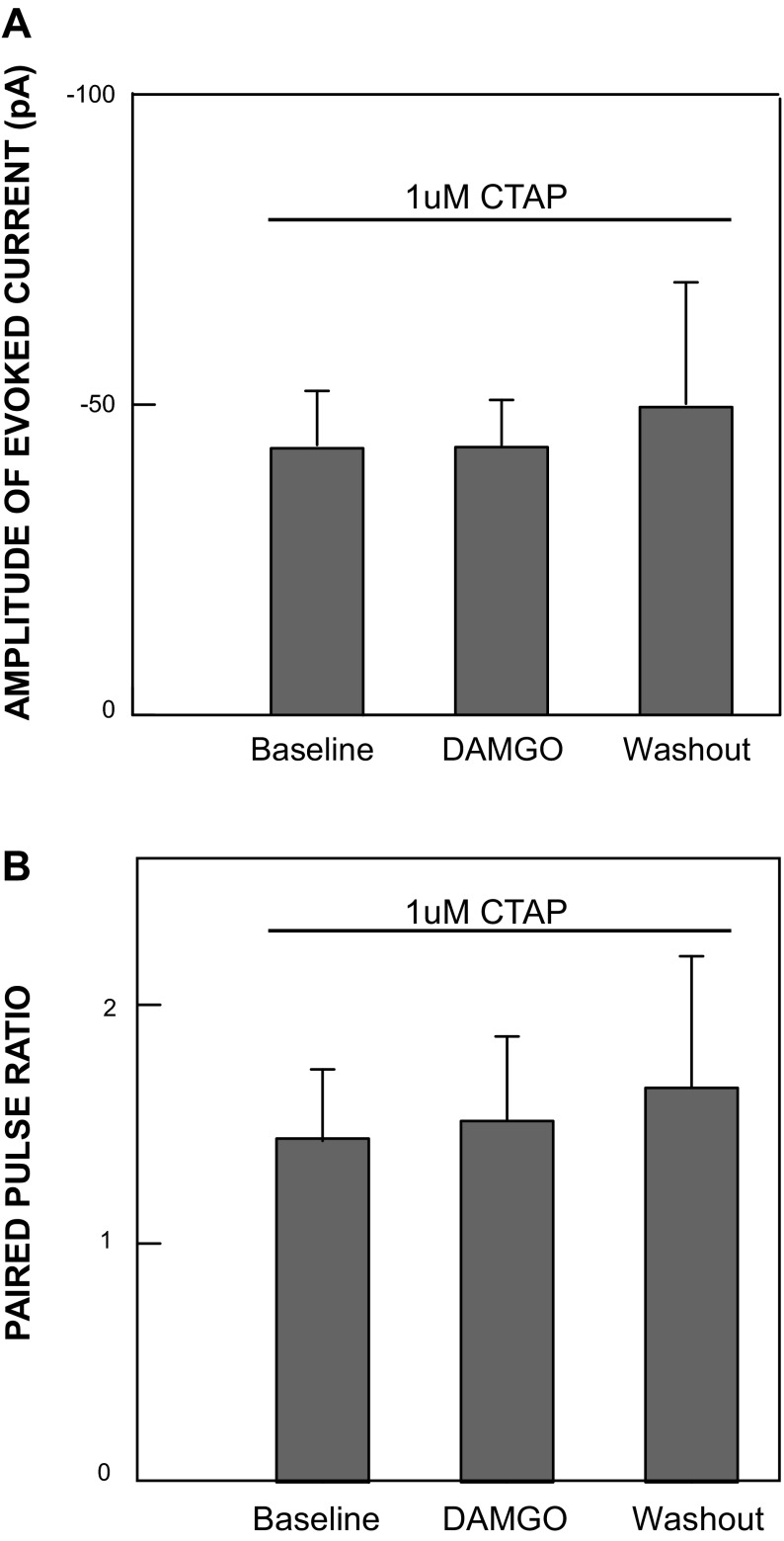
Taste processing in the rostral nucleus of the solitary tract (rNST) is subject to modulatory influences including opioid peptides. Behavioral pharmacological studies suggest an influence of μ-opioid receptors in rNST, but the underlying mechanism is unknown. To determine the cellular site of action, we tested the effects of the μ-opioid receptor agonist DAMGO in vitro. Whole cell patch-clamp recordings were made in brain stem slices from GAD67-GFP knockin mice expressing enhanced green fluorescent protein (EGFP) under the control of the endogenous promoter for GAD67, a synthetic enzyme for GABA. Neuron counts showed that ∼36% of rNST neurons express GABA. We recorded monosynaptic solitary tract (ST)-evoked currents (jitter ≤ 300 μs) in both GAD67-EGFP-positive (GAD67+) and GAD67-EGFP-negative (GAD67-) neurons with equal frequency (25/31; 22/28), but the inputs to the GAD67+ neurons had significantly smaller paired-pulse ratios compared with GAD67- neurons. DAMGO (0.3 μM) significantly suppressed ST-evoked currents in both cell types (mean suppression = 46 ± 3.3% SE), significantly increased the paired-pulse ratio of these currents, and reduced the frequency of spontaneous miniature excitatory postsynaptic currents but did not diminish their amplitude, indicating a presynaptic site of action. Under inhibitory amino acid receptor blockade, DAMGO was significantly more suppressive in GAD67+ neurons (59% reduction) compared with GAD67- neurons (35% reduction), while the reverse was true in normal artificial cerebrospinal fluid (GAD67+: 35% reduction; GAD67-: 57% reduction). These findings suggest that DAMGO suppresses activity in rNST neurons predominantly via a presynaptic mechanism, and that this effect may interact significantly with tonic or evoked inhibitory activity.
Keywords: GABA; GAD67-GFP knockin mouse; disinhibition; taste.
Figures
References
-
- Bailey TW, Appleyard SM, Jin YH, Andresen MC. Organization and properties of GABAergic neurons in solitary tract nucleus (NTS). J Neurophysiol 99: 1712–1722, 2008 - PubMed
-
- Bradley BE. The Role of the Nucleus of the Solitary Tract in Gustatory Processing. Boca Raton, FL: CRC, 2007 - PubMed
-
- Brown RE, McKenna JT, Winston S, Basheer R, Yanagawa Y, Thakkar MM, McCarley RW. Characterization of GABAergic neurons in rapid-eye-movement sleep controlling regions of the brainstem reticular formation in GAD67-green fluorescent protein knock-in mice. Eur J Neurosci 27: 352–363, 2008 - PMC - PubMed
-
- Chen Z, Travers JB. Inactivation of amino acid receptors in medullary reticular formation modulates and suppresses ingestion and rejection responses in the awake rat. Am J Physiol Regul Integr Comp Physiol 285: R68–R83, 2003 - PubMed
Publication types
MeSH terms
Substances
Grants and funding
LinkOut - more resources
Full Text Sources
Other Literature Sources
Molecular Biology Databases
Research Materials
