


Hypothermia-induced neuroprotection is associated with reduced mitochondrial membrane permeability in a swine model of cardiac arrest
- PMID: 23486294
- PMCID: PMC3677114
- DOI: 10.1038/jcbfm.2013.33
Hypothermia-induced neuroprotection is associated with reduced mitochondrial membrane permeability in a swine model of cardiac arrest
Erratum in
- J Cereb Blood Flow Metab. 2014 Mar;34(3):552
Abstract
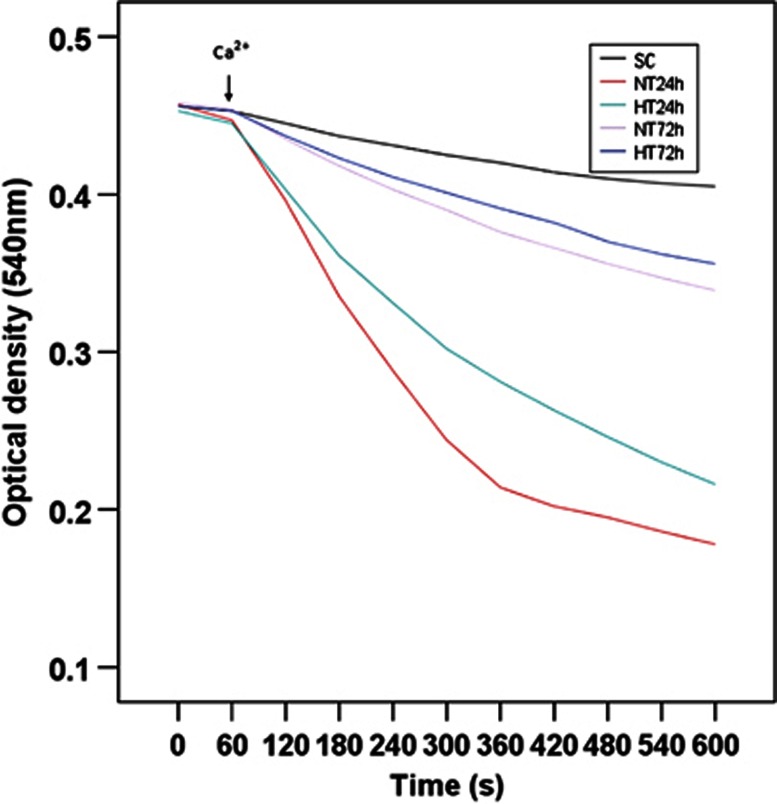
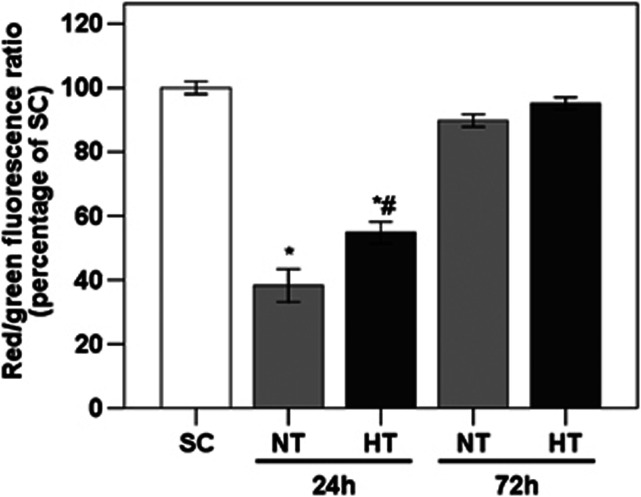
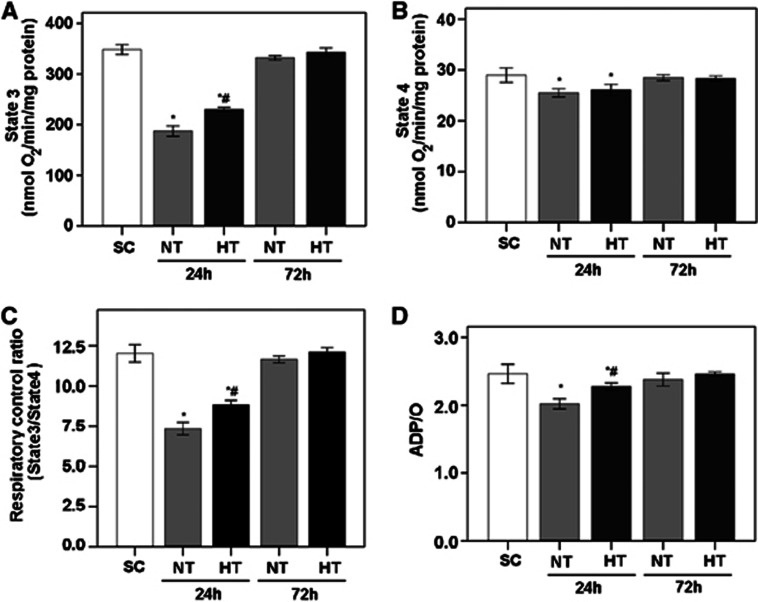
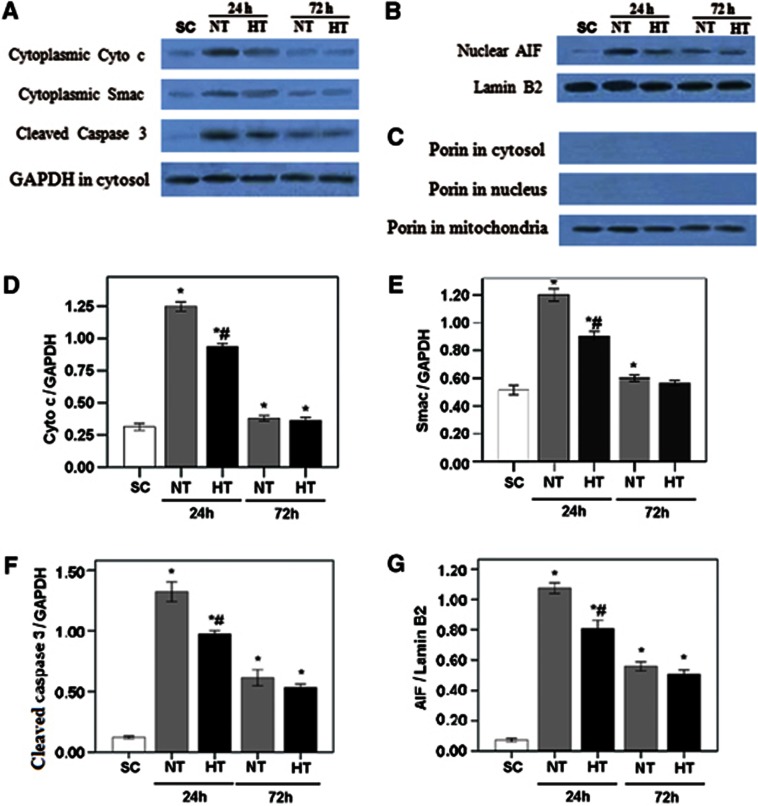
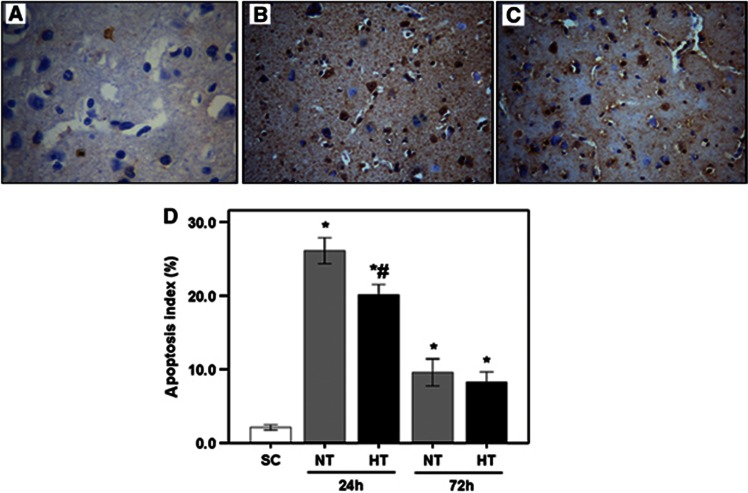
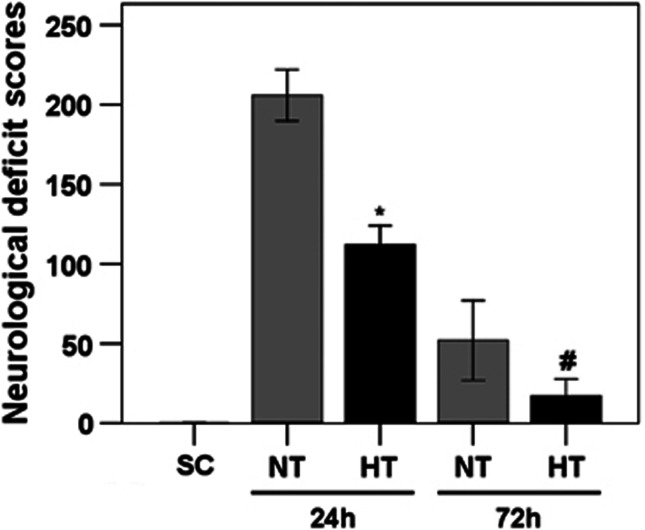
Increasing evidence has shown that mild hypothermia is neuroprotective for comatose patients resuscitated from cardiac arrest, but the mechanism of this protection is not fully understood. The aim of this study was to determine whether prolonged whole-body mild hypothermia inhibits mitochondrial membrane permeability (MMP) in the cerebral cortex after return of spontaneous circulation (ROSC). Thirty-seven inbred Chinese Wuzhishan minipigs were successfully resuscitated after 8 minutes of untreated ventricular fibrillation (VF) and underwent recovery under normothermic (NT) or prolonged whole-body mild hypothermic (HT; 33°C) conditions for 24 or 72 hours. Cerebral samples from the frontal cortex were collected at 24 and 72 hours after ROSC. Mitochondria were isolated by differential centrifugation. At 24 hours, relative to NT, HT was associated with reductions in opening of the mitochondrial permeability transition pore, release of pro-apoptotic substances from mitochondria, caspase 3 cleavage, apoptosis, and neurologic deficit scores, as well as increases in mitochondrial membrane potential and mitochondrial respiration. Together, these findings suggest that mild hypothermia inhibits ischemia-induced increases in MMP, which may provide neuroprotection against cerebral injury after cardiac arrest.
Figures
References
-
- Neumar RW, Nolan JP, Adrie C, Aibiki M, Berg RA, Bottiger BW, et al. Post-cardiac arrest syndrome: epidemiology, pathophysiology, treatment, and prognostication. A consensus statement from the International Liaison Committee on Resuscitation (American Heart Association, Australian and New Zealand Council on Resuscitation, European Resuscitation Council, Heart and Stroke Foundation of Canada, InterAmerican Heart Foundation, Resuscitation Council of Asia, and the Resuscitation Council of Southern Africa); the American Heart Association Emergency Cardiovascular Care Committee; the Council on Cardiovascular Surgery and Anesthesia; the Council on Cardiopulmonary, Perioperative, and Critical Care; the Council on Clinical Cardiology; and the Stroke Council. Circulation. 2008;118:2452–2483. - PubMed
-
- Polderman KH. Induced hypothermia and fever control for prevention and treatment of neurological injuries. Lancet. 2008;371:1955–1969. - PubMed
Publication types
MeSH terms
Substances
LinkOut - more resources
Full Text Sources
Other Literature Sources
Medical
Research Materials
