


Activation of the sympathetic nervous system mediates hypophagic and anxiety-like effects of CB₁ receptor blockade
- PMID: 23487769
- PMCID: PMC3607008
- DOI: 10.1073/pnas.1218573110
Activation of the sympathetic nervous system mediates hypophagic and anxiety-like effects of CB₁ receptor blockade
Abstract
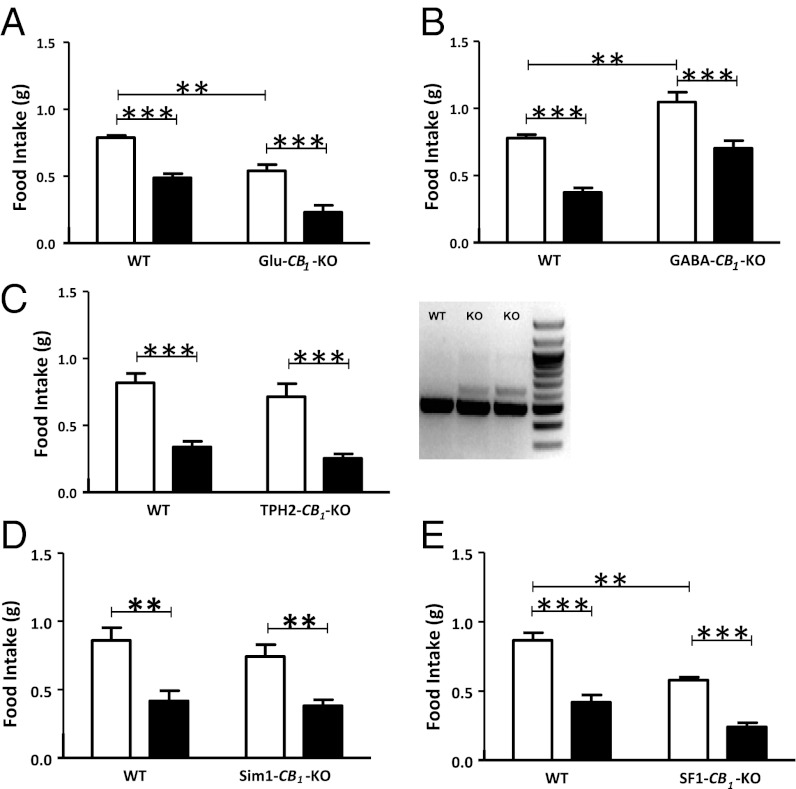
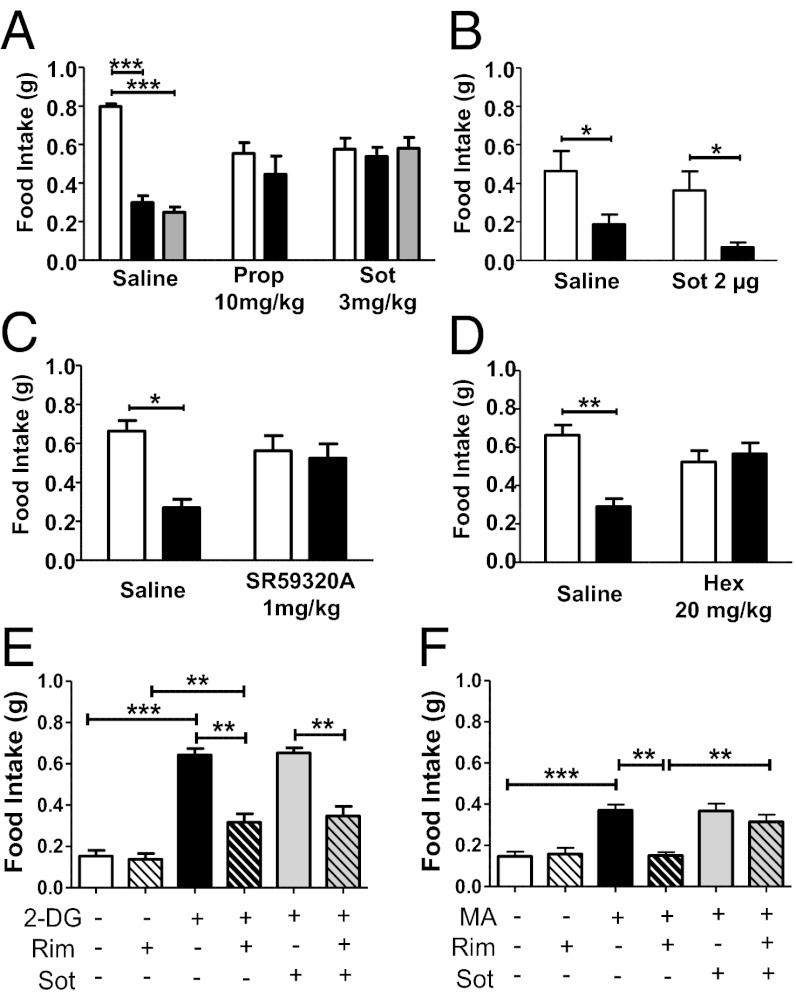
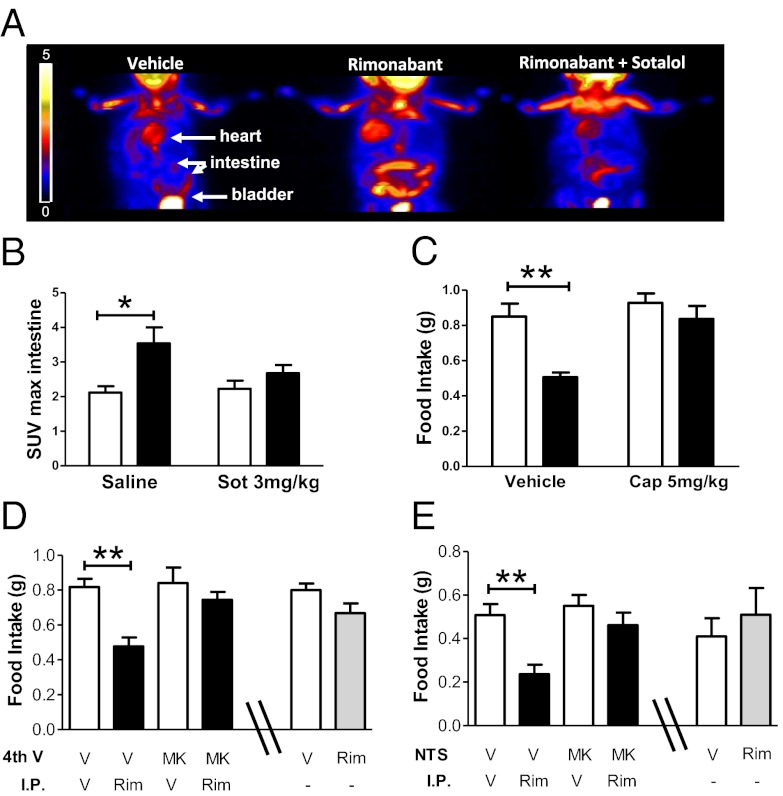
Complex interactions between periphery and the brain regulate food intake in mammals. Cannabinoid type-1 (CB1) receptor antagonists are potent hypophagic agents, but the sites where this acute action is exerted and the underlying mechanisms are not fully elucidated. To dissect the mechanisms underlying the hypophagic effect of CB1 receptor blockade, we combined the acute injection of the CB1 receptor antagonist rimonabant with the use of conditional CB1-knockout mice, as well as with pharmacological modulation of different central and peripheral circuits. Fasting/refeeding experiments revealed that CB1 receptor signaling in many specific brain neurons is dispensable for the acute hypophagic effects of rimonabant. CB1 receptor antagonist-induced hypophagia was fully abolished by peripheral blockade of β-adrenergic transmission, suggesting that this effect is mediated by increased activity of the sympathetic nervous system. Consistently, we found that rimonabant increases gastrointestinal metabolism via increased peripheral β-adrenergic receptor signaling in peripheral organs, including the gastrointestinal tract. Blockade of both visceral afferents and glutamatergic transmission in the nucleus tractus solitarii abolished rimonabant-induced hypophagia. Importantly, these mechanisms were specifically triggered by lipid-deprivation, revealing a nutrient-specific component acutely regulated by CB1 receptor blockade. Finally, peripheral blockade of sympathetic neurotransmission also blunted central effects of CB1 receptor blockade, such as fear responses and anxiety-like behaviors. These data demonstrate that, independently of their site of origin, important effects of CB1 receptor blockade are expressed via activation of peripheral sympathetic activity. Thus, CB1 receptors modulate bidirectional circuits between the periphery and the brain to regulate feeding and other behaviors.
Conflict of interest statement
The authors declare no conflict of interest.
Figures

References
-
- Berthoud HR, Morrison C. The brain, appetite, and obesity. Annu Rev Psychol. 2008;59:55–92. - PubMed
-
- Pagotto U, Marsicano G, Cota D, Lutz B, Pasquali R. The emerging role of the endocannabinoid system in endocrine regulation and energy balance. Endocr Rev. 2006;27(1):73–100. - PubMed
-
- Bellocchio L, et al. Bimodal control of stimulated food intake by the endocannabinoid system. Nat Neurosci. 2010;13(3):281–283. - PubMed
-
- Di Marzo V, et al. Leptin-regulated endocannabinoids are involved in maintaining food intake. Nature. 2001;410(6830):822–825. - PubMed
Publication types
MeSH terms
Substances
Grants and funding
LinkOut - more resources
Full Text Sources
Other Literature Sources
Medical
