Review
. 2013 Mar 26;52(12):2050-67.
doi: 10.1021/bi4000113. Epub 2013 Mar 14.

Fundamental challenges in mechanistic enzymology: progress toward understanding the rate enhancements of enzymes

Affiliations
Review

Fundamental challenges in mechanistic enzymology: progress toward understanding the rate enhancements of enzymes

Daniel Herschlag et al. Biochemistry. .

Abstract

Enzymes are remarkable catalysts that lie at the heart of biology, accelerating chemical reactions to an astounding extent with extraordinary specificity. Enormous progress in understanding the chemical basis of enzymatic transformations and the basic mechanisms underlying rate enhancements over the past decades is apparent. Nevertheless, it has been difficult to achieve a quantitative understanding of how the underlying mechanisms account for the energetics of catalysis, because of the complexity of enzyme systems and the absence of underlying energetic additivity. We review case studies from our own work that illustrate the power of precisely defined and clearly articulated questions when dealing with such complex and multifaceted systems, and we also use this approach to evaluate our current ability to design enzymes. We close by highlighting a series of questions that help frame some of what remains to be understood, and we encourage the reader to define additional questions and directions that will deepen and broaden our understanding of enzymes and their catalysis.


Figures
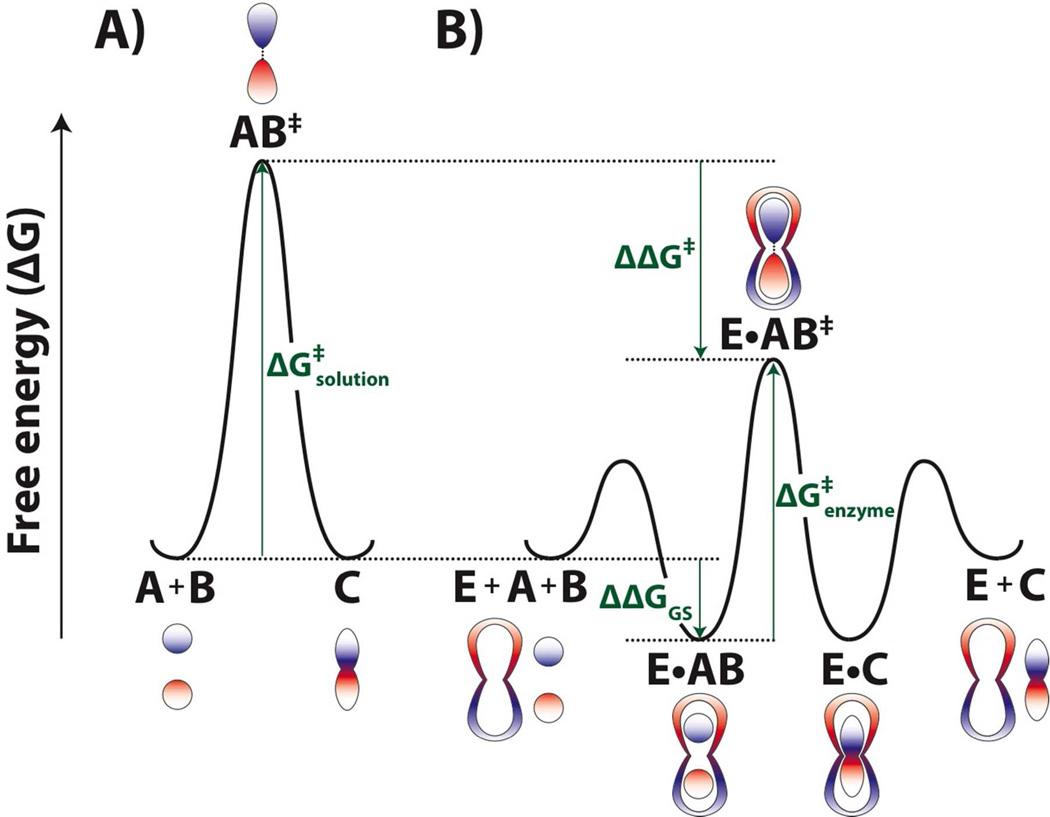
Figure 1
Figure 1. Hypothetical free energy profiles illustrating enzyme-transition state complementarity and selective stabilization of the transition state by an enzyme relative to the ground state
A) Free energy profile for an uncatalyzed reaction. Changes in electrostatics and geometry as the reaction proceeds are shown with different colors and shapes. B) Free energy profile for the same reaction but now catalyzed by an enzyme. The enzyme positions the substrates with respect to another, and electrostatic and shape complementarity of the enzyme to the transition state, shown here schematically, renders interactions between the enzyme and the transition state more favorable than those between the enzyme and the ground state (ΔΔG > ΔΔGGS). Thus, the barrier to reaction on the enzyme is smaller than in solution (ΔGenzyme<ΔGsolution).
Figure 2
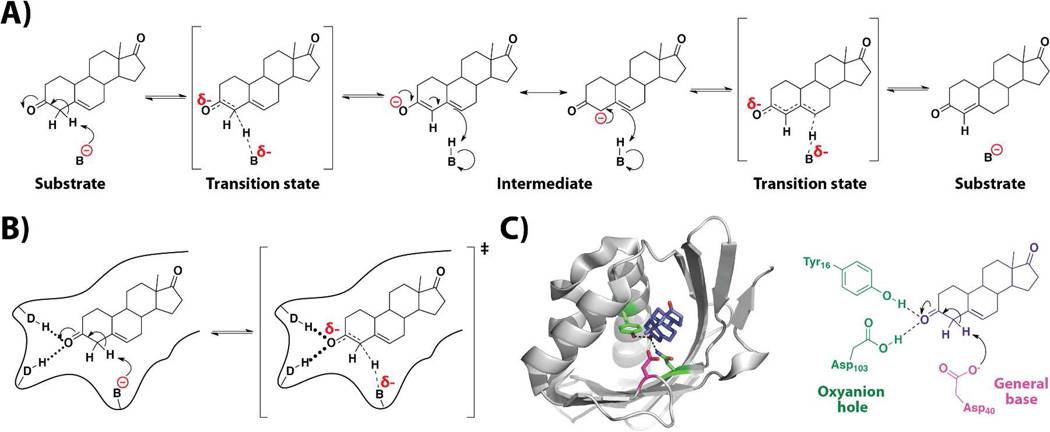
Figure 2. Chemical mechanism of the reaction catalyzed by ketosteroid isomerase (KSI)
A) Reaction scheme. B) Expected active site features of an enzyme that catalyzes this reaction, including a general base (B), hydrogen bond donors (D–H), and a binding pocket (black outline). C) Structure of KSI bound to a product (4-androstene-3,17-dione, purple) and a schematic representation with a general base Asp40 (magenta) and an oxyanion hole formed by the side chains of Tyr16 and Asp103 (green) (PDB ID = 3NHX).
Figure 3
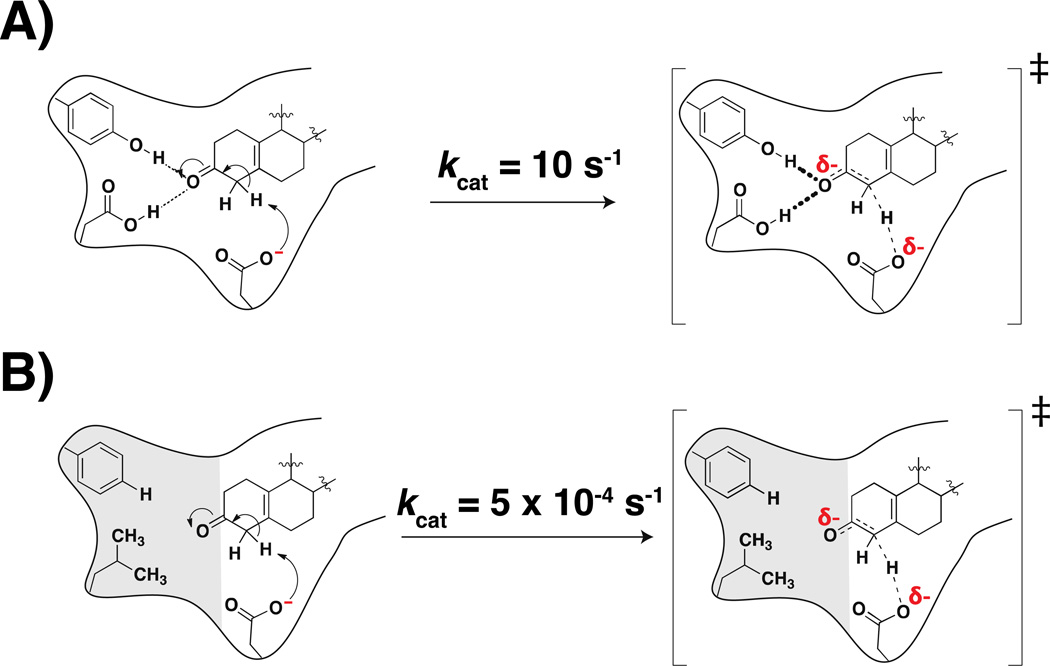
Figure 3. Schematic of the effect of conservative mutations to the oxyanion hole on KSI catalysis
A) The wild-type KSI oxyanion hole has two hydrogen bond donors that stabilize the incipient oxyanion. B) Conservative mutations to the oxyanion hole replace the hydrogen bond donors with hydrophobic groups. Values are from (76).
Figure 4
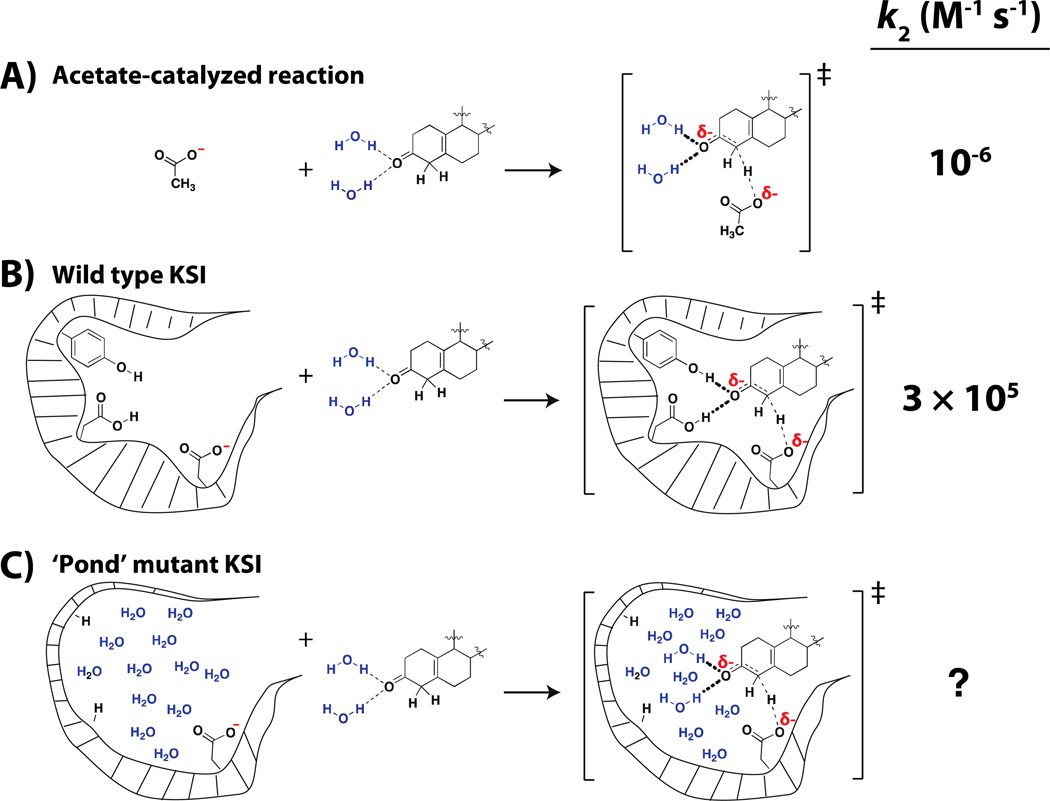
Figure 4. Evaluating the catalytic contribution from the KSI oxyanion hole
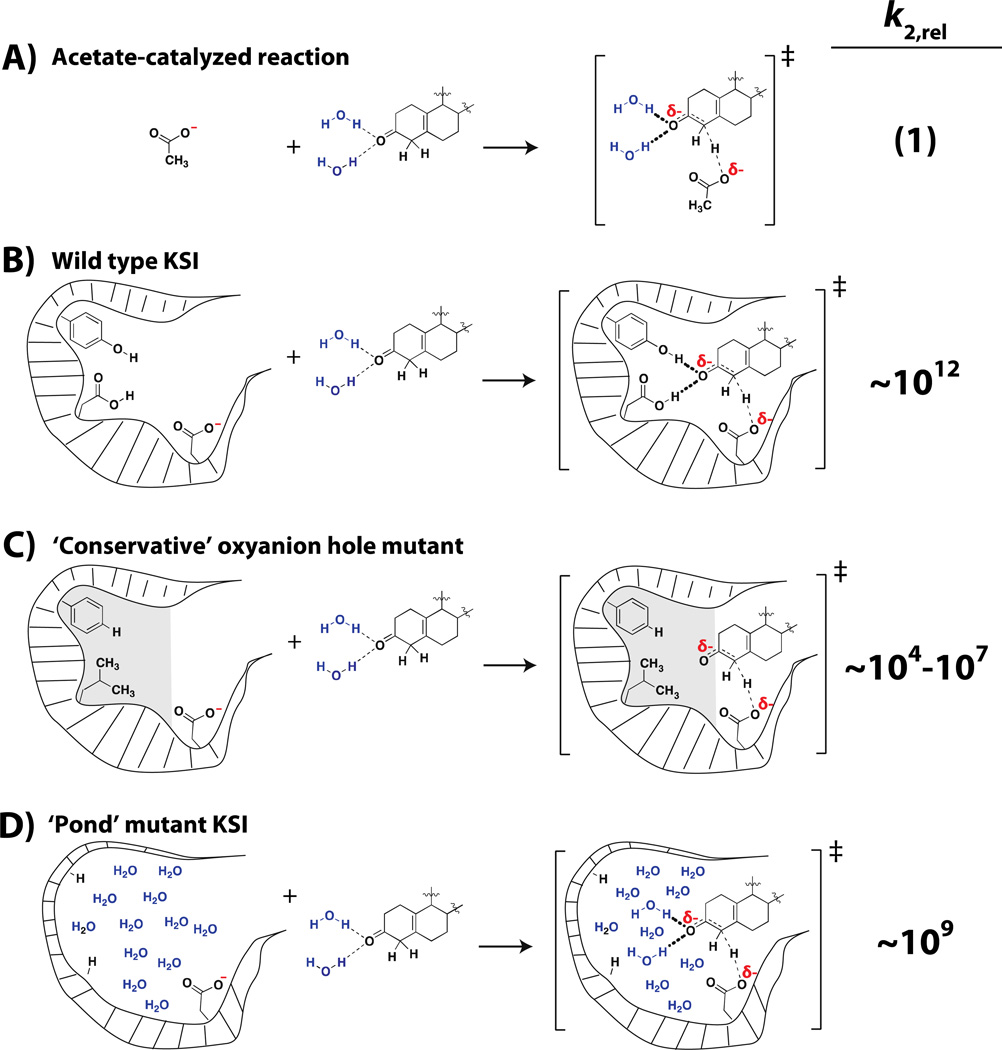
A) The second-order reaction between acetate and substrate in solution (75). B) The second-order reaction between wild-type KSI, which also uses a base with the same chemical reactivity as acetate, and substrate. Relative to the acetate-catalyzed reaction, wild-type KSI provides ~1012 fold catalysis (76). C) The second-order reaction between a ‘pond’ version of KSI, where the oxyanion hole has been replaced by an aqueous environment.
Figure 5
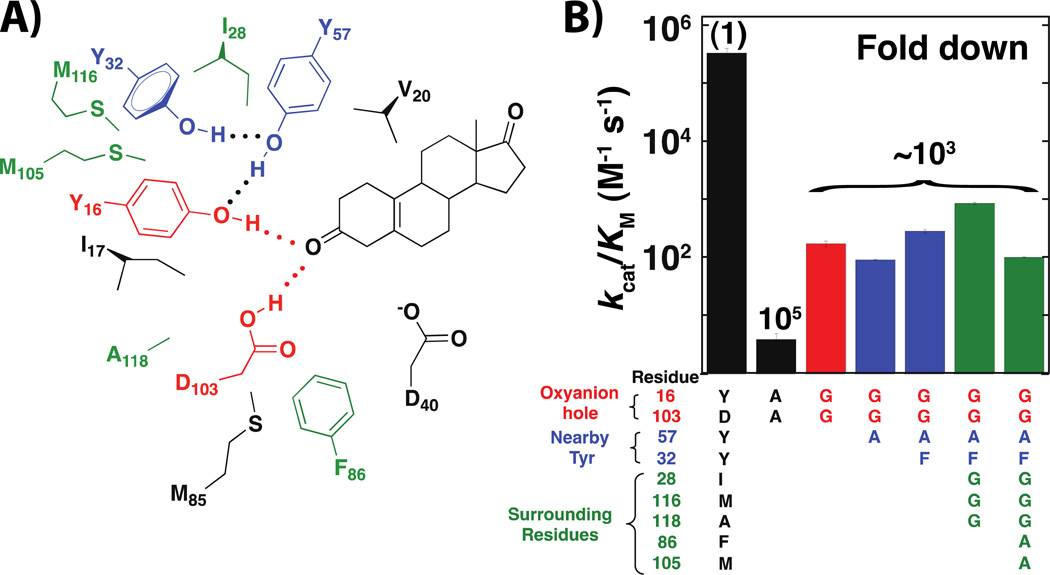
Figure 5. ‘Excavating’ the KSI oxyanion hole to evaluate its catalytic contribution
A) Schematic of residues in and around the oxyanion hole, with the oxyanion hole residues shown in red, nearby tyrosine residues that could potentially replace the oxyanion hole donors shown in blue, and other residues surrounding the oxyanion hole shown in green. B) Rate effects from ‘excavating’ the oxyanion hole, with bars colored as in panel A from (76).
Figure 6
Figure 6. Rate enhancement relative to the acetate-catalyzed reaction provided by different KSI variants
A) The second-order reaction between acetate and substrate in solution. B) The second-order reaction between wild-type KSI and substrate. C) The second-order reaction between KSI with ‘conservative’ mutations to the oxyanion hole that replace the hydrogen bond donors with a hydrophobic environment. The rate enhancement provided depends on the particular mutant and substrate used (67, 69, 76). D) The second-order reaction between substrate and a version of KSI where the oxyanion hole has been replaced with an aqueous environment (76).
Figure 7
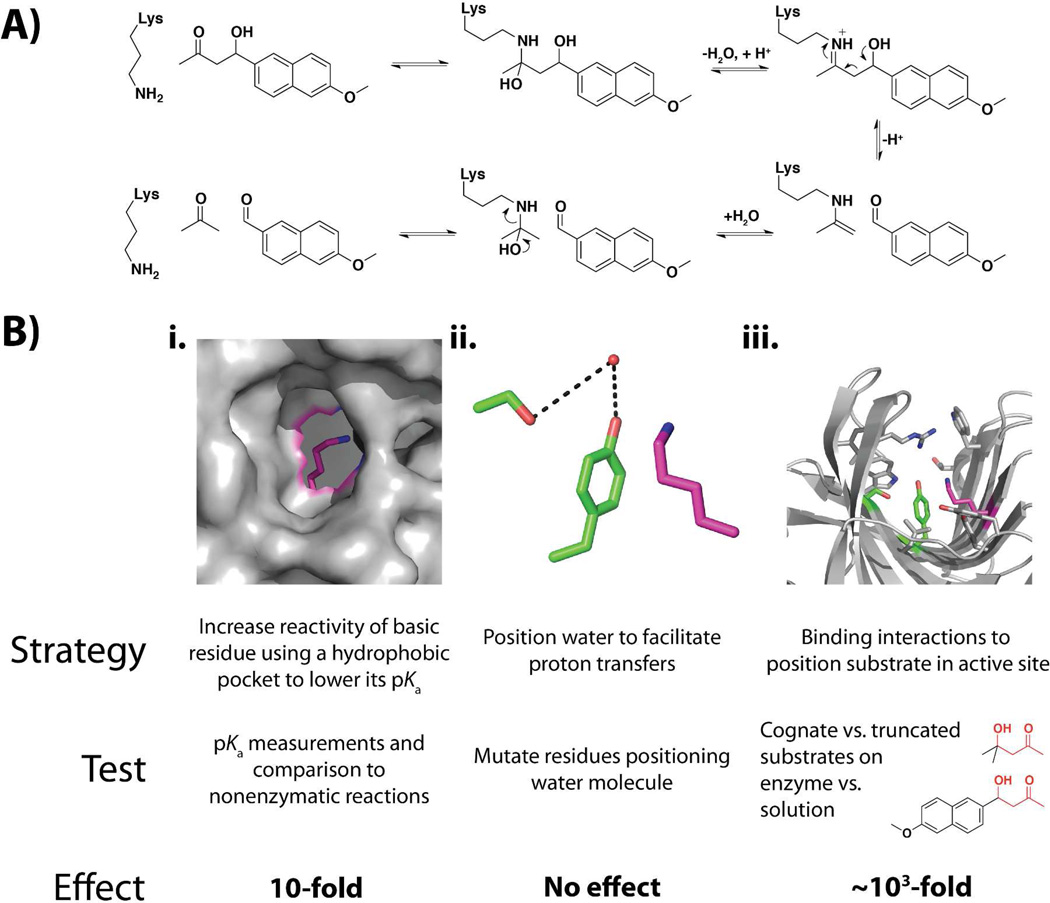
Figure 7. Evaluating a computationally designed retroaldolase
A) Reaction schematic with some proton transfers omitted for brevity. B) Strategies that were a part of the computational design and results from evaluating each of their catalytic contributions. The active site lysine is shown in magenta, the residues positioning water are shown in green, and residues in the binding pocket are shown in grey. Results are from (120).

References

    1. de Réaumur RAF. Sur la digestion des oiseaux, second mémoire: De la mannière dont elle se fait dans l'estomac des oiseaux de proie. Acad R Sci. (Paris) de l'Année 1752, Mém. Math. Phys. tirè des Regist. 1761;2:701–743.
    1. Spallanzani L. Translated from the Italian of the Abbe Spallanzani. London: J. Murray; 1784. Dissertations relative to the natural history of animals and vegetables.
    1. Friedmann HC. Enzymes: benchmark Papers in biochemistry. Stroudsburg: Hutchinson Ross Publishing Company; 1981. pp. 6–151.
    1. Buchner E. Alkoholische gährung ohne hefezellen. Ber. Dt. Chem. Ges. 1897;30:117–124.
    1. Sumner JB. The isolation and crystallization of the enzyme urease. J. Biol. Chem. 1926;69:435–441.

Publication types

LinkOut - more resources