


Iodine status in pregnant women in the National Children's Study and in U.S. women (15-44 years), National Health and Nutrition Examination Survey 2005-2010
- PMID: 23488982
- PMCID: PMC3752509
- DOI: 10.1089/thy.2013.0012
Iodine status in pregnant women in the National Children's Study and in U.S. women (15-44 years), National Health and Nutrition Examination Survey 2005-2010
Abstract
Background: This report presents iodine data from National Health and Nutrition Examination Survey (NHANES) and from a sample of pregnant women in the National Children's Study (NCS) Vanguard Study.
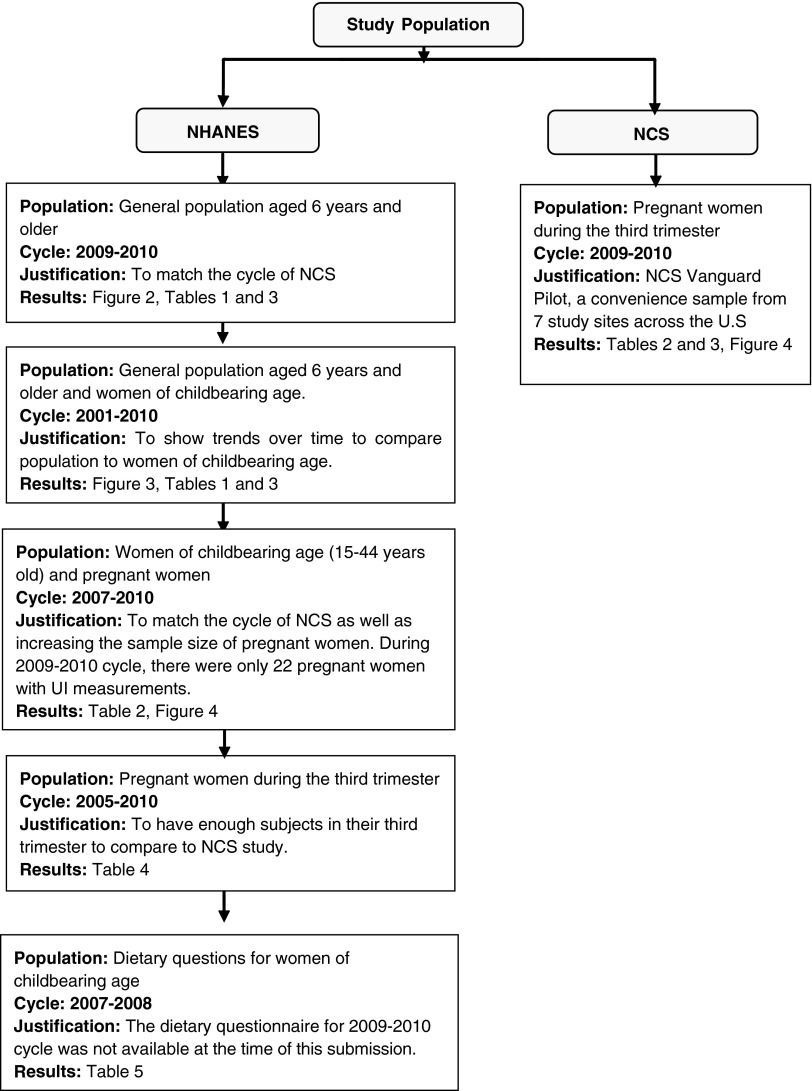
Methods: Urinary iodine (UI) was measured in a one third subsample of NHANES 2005-2006 and 2009-2010 participants and in all 2007-2008 participants age 6 years and older. These measurements are representative of the general U.S. population. UI was also measured in a convenience sample of 501 pregnant women enrolled in the NCS initial Vanguard Study from seven study sites across the United States.
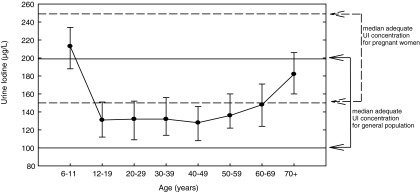
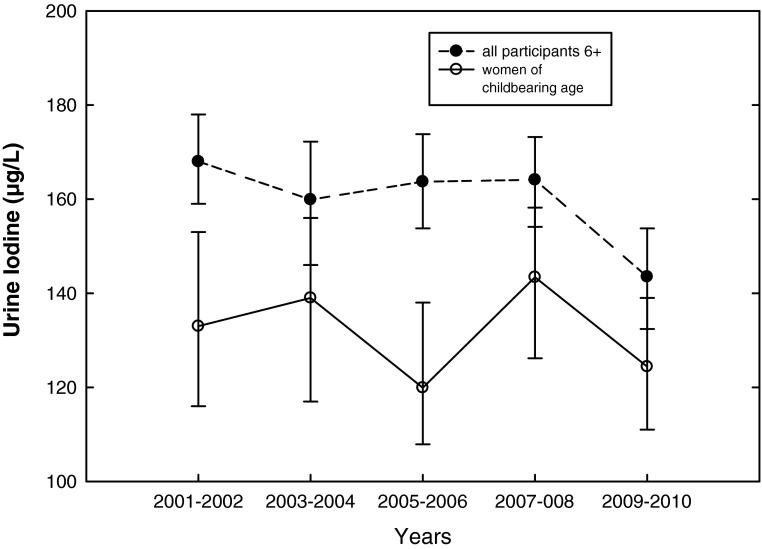
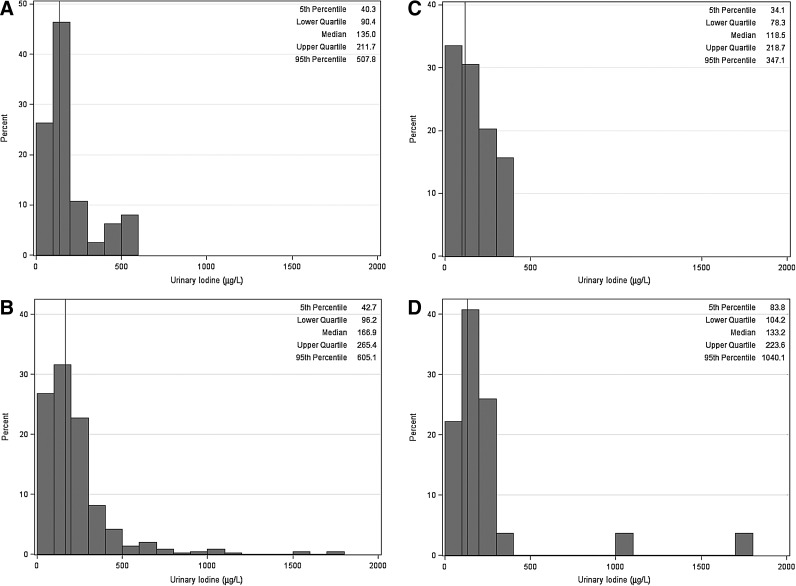
Results: NHANES median UI concentration in 2009-2010 (144 μg/L) was significantly lower than in 2007-2008 (164 μg/L). Non-Hispanic blacks had the lowest UI concentrations (131 μg/L) compared with non-Hispanic whites or Hispanics (147 and 148 μg/L, respectively). The median for all pregnant women in NHANES 2005-2010 was less than adequate (129 μg/L), while third trimester women had UI concentrations that were adequate (median UI 172 μg/L). Third trimester women participating in the NCS similarly had an adequate level of iodine intake, with a median UI concentration of 167 μg/L. Furthermore, NCS median UI concentrations varied by geographic location.
Conclusions: Dairy, but not salt, seafood, or grain consumption, was significantly positively associated with median UI concentration in women of childbearing age. Pregnant women in their third trimester in the NHANES 2005-2010 had adequate median UI concentrations, but pregnant women in NHANES who were in their first or second trimesters had median UI concentrations that were less than adequate. Non-Hispanic black pregnant women from both the NHANES 2005-20010 and the NCS consistently had lower UI median concentrations than non-Hispanic whites or Hispanics.
Figures
Comment in
-
The state of U.S. Iodine nutrition: how can we ensure adequate iodine for all?Thyroid. 2013 Aug;23(8):924-5. doi: 10.1089/thy.2013.0295. Thyroid. 2013. PMID: 23691971 No abstract available.
References
-
- Andersson M. Karumbunathan V. Zimmermann MB. Global iodine status in 2011 and trends over the past decade. J Nutr. 2012;142:744–750. - PubMed
-
- Hetzel B. Iodine deficiency disorders (IDD) and their eradication. Lancet. 1983;322:1126–1129. - PubMed
-
- Hetzel BS. Delange F. Dunn JT. Ling J. Mannar V. Pandav C. Oxford University Press; Delhi: 2004. Towards the global elimination of brain damage due to iodine deficiency.
-
- Bleichrodt N. Born M. A meta analysis of research on iodine, its relationship to cognitive development. In: Stanbury J, editor. The Damaged Brain of Iodine Deficiency. Cognizant Communication; New York: 1994. pp. 187–191.
-
- Murray CW. Egan SK. Kim H. Beru N. Bolger PM. US Food and Drug Administration's total diet study: dietary intake of perchlorate and iodine. J Expo Sci Environ Epidemiol. 2008;18:571–580. - PubMed
Publication types
MeSH terms
Substances
Grants and funding
LinkOut - more resources
Full Text Sources
Other Literature Sources
Medical
