


Vitamin d and the risk of uterine fibroids
- PMID: 23493030
- PMCID: PMC5330388
- DOI: 10.1097/EDE.0b013e31828acca0
Vitamin d and the risk of uterine fibroids
Abstract
Background: Uterine leiomyomata (also known as fibroids) are benign tumors of uterine smooth muscle that are characterized by overproduction of extracellular matrix. Fibroids are the leading indication for hysterectomy in the United States. The active metabolite of vitamin D has been shown to inhibit cell proliferation and extracellular matrix production in fibroid tissue culture and to reduce fibroid volume in the Eker rat. No previous study has examined whether vitamin D is related to fibroid status in women.
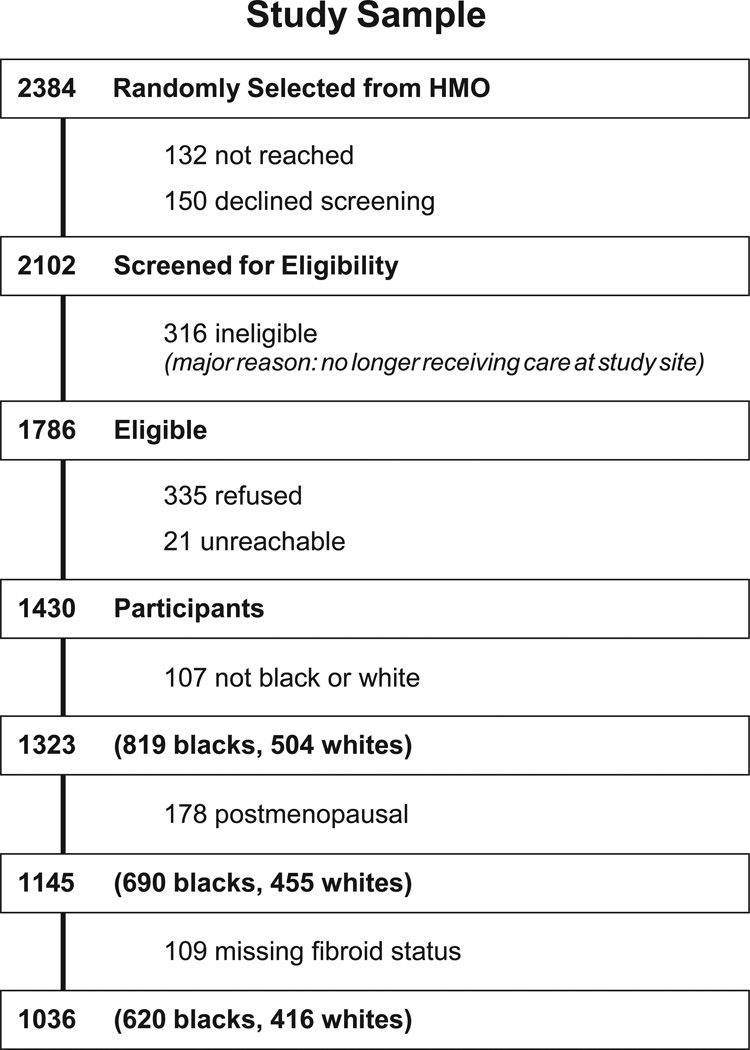
Methods: The National Institute of Environmental Health Sciences Uterine Fibroid Study enrolled randomly selected 35- to 49-year-old women who were members of an urban health plan during 1996-1999. Fibroid status was determined by ultrasound screening of premenopausal women (620 blacks, 416 whites). Vitamin D status was assessed in stored plasma by radioimmunoassay of 25-hydroxyvitamin D (25(OH)D) and questionnaire data on sun exposure. Associations were evaluated with logistic regression, controlling for potential confounders.
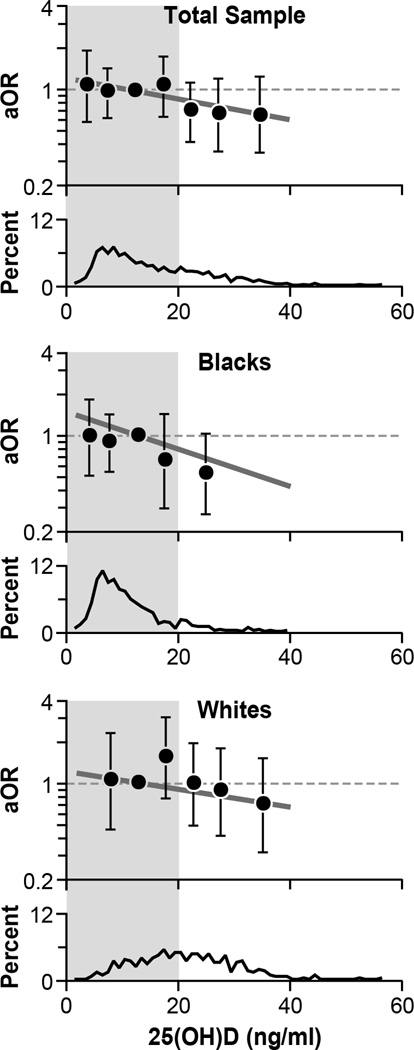
Results: Only 10% of blacks and 50% of whites had levels of 25(OH)D regarded as sufficient (>20 ng/ml). Women with sufficient vitamin D had an estimated 32% lower odds of fibroids compared with those with vitamin D insufficiency (adjusted odds ratio [aOR] = 0.68, 95% confidence interval [CI] = 0.48-0.96). The association was similar for blacks and whites. Self-reported sun exposure ≥ 1 hour per day (weather permitting) was also associated with reduced odds of fibroids (aOR = 06. [0.4-0.9]), with no evidence of heterogeneity by ethnicity.
Conclusions: The consistency of findings for questionnaire and biomarker data, the similar patterns seen in blacks and whites, and the biological plausibility provide evidence that sufficient vitamin D is associated with a reduced risk of uterine fibroids.
Conflict of interest statement
None
Figures
References
-
- Stewart EA. Uterine fibroids. Lancet. 2001;357(9252):293–298. - PubMed
-
- Schwartz SM, Marshall LM. Uterine Leiomyomata. In: Goldman MB, Hatch MC, editors. Women and Health. San Diego, California: Acadmic Press; 2000. pp. 240–252.
-
- Schwartz SM, Marshall LM, Baird DD. Epidemiologic contributions to understanding the etiology of uterine leiomyomata. Environ Health Perspect. 2000;108(Suppl 5):821–827. - PubMed
-
- Farquhar CM, Steiner CA. Hysterectomy rates in the United States 1990-1997. Obstet Gynecol. 2002;99(2):229–234. - PubMed
Publication types
MeSH terms
Substances
Grants and funding
LinkOut - more resources
Full Text Sources
Other Literature Sources
Medical
