


Comparison of Enzymatic Method Rapid Yeast Plus System with RFLP-PCR for Identification of Isolated Yeast from Vulvovaginal Candidiasis
- PMID: 23493663
- PMCID: PMC3586841
Comparison of Enzymatic Method Rapid Yeast Plus System with RFLP-PCR for Identification of Isolated Yeast from Vulvovaginal Candidiasis
Abstract
Objectives: To compare two identification methods, i.e., restriction fragment length polymorphism (RFLP)-PCR analysis and enzymatic method Rapid TM Yeast Plus System to identify different species causing vulvovaginal candidiasis (VVC).
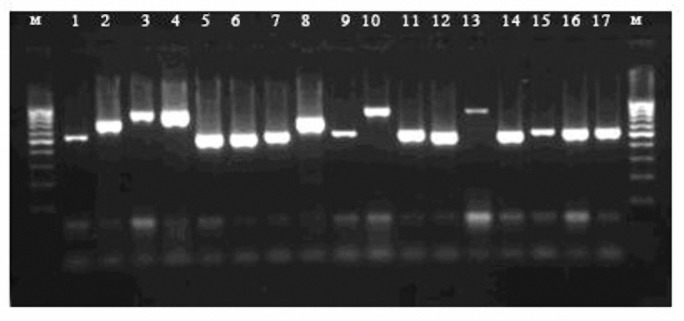
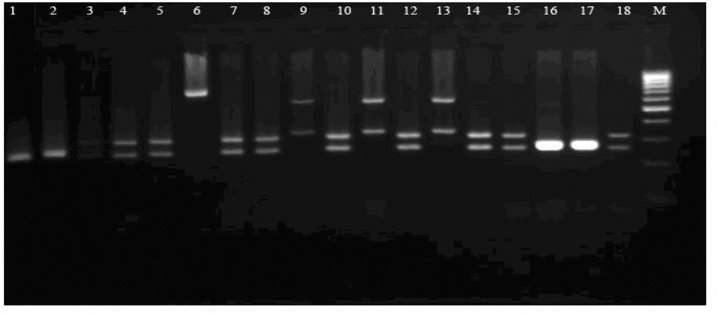
Materials and methods: Vaginal discharges of women who had attended the gynecology outpatient clinic of Mobini Hospital in Sabzevar, Iran were collected using cotton swabs and were cultured on Sabouraud dextrose agar. Isolated yeasts were identified by germ-tube testing and Rapid TM Yeast Plus System (Remel USA). For molecular identification, the isolated DNA was amplified with ITS1 and ITS4 universal primers and PCR products digested with the enzyme HpaІІ followed by agarose gel electrophoresis. Epidemiological and clinical features of women with respect to identified species were also evaluated.
Results: Out of 231 subjects enrolled, 62 VVC cases were detected. The isolated species were identified as follows: Candida albicans, 24 (38.7%), C. glabrata, 15 (24.2%), C. kefyr, 13 (21.0%) C. krusei, 9 (14.5%), and Saccharomyces cerevisiae, 1 (1.6%) by RFLP-PCR method; whereas findings by Rapid TM Yeast Plus System were C. albicans, 24 (38.7%), C. glabrata, 5 (8%), C. kefyr, 11 (17.7%) C. krusei, 2 (3.2%), S. cerevisiae, 9 (14.5%), and C. tropicalis, 6 (9.6%) as well as other nonpathogenic yeasts, 4 (6.9%).
Conclusion: Statistical comparison showed that there is no significant difference in identification of C. albicans by the two methods; although, in this study, it was not true about other species of yeasts. A correlation between clinical and laboratory findings is important as it enables us to administer an appropriate treatment on time.
Keywords: Candida; Iran; RFLP; Vulvovaginal candidiasis.
Figures
References
-
- Chapple A, Hassell K, Nicolson M, Cantrill J. 'You don’t really feel you can function normally’: women’s perceptions and personal management of vaginal thrush. J Reprod Infant Psychol. 2000;18:309–319.
-
- Sobel JD. Vaginitis. N Engl J Med. 1997;337:1896–1903. - PubMed
-
- Fischer P, Addison L. Diagnosis of Candida vaginitis. J Fam Pract. 1985;20:19–20. - PubMed
-
- Geiger AM, Foxman B. Risk factors for vulvovaginal candidiasis: a case-control study among university students. Epidemiology. 1996;7:182–187. - PubMed
LinkOut - more resources
Full Text Sources