


Egg consumption modulates HDL lipid composition and increases the cholesterol-accepting capacity of serum in metabolic syndrome
- PMID: 23494579
- PMCID: PMC3869568
- DOI: 10.1007/s11745-013-3780-8
Egg consumption modulates HDL lipid composition and increases the cholesterol-accepting capacity of serum in metabolic syndrome
Abstract
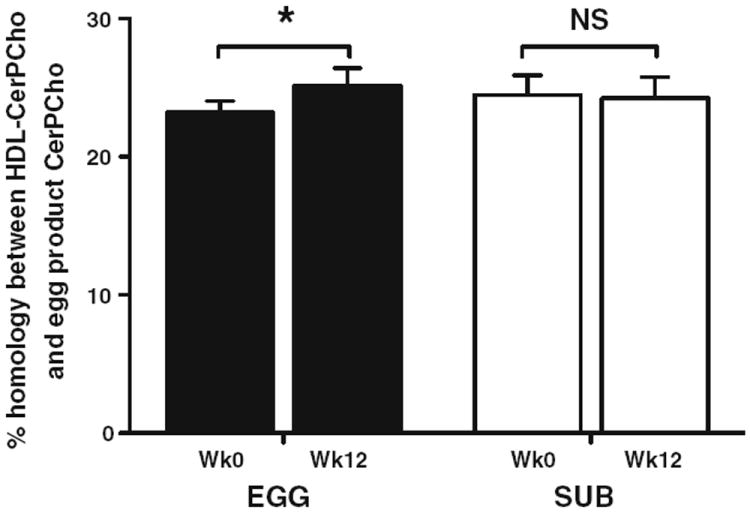
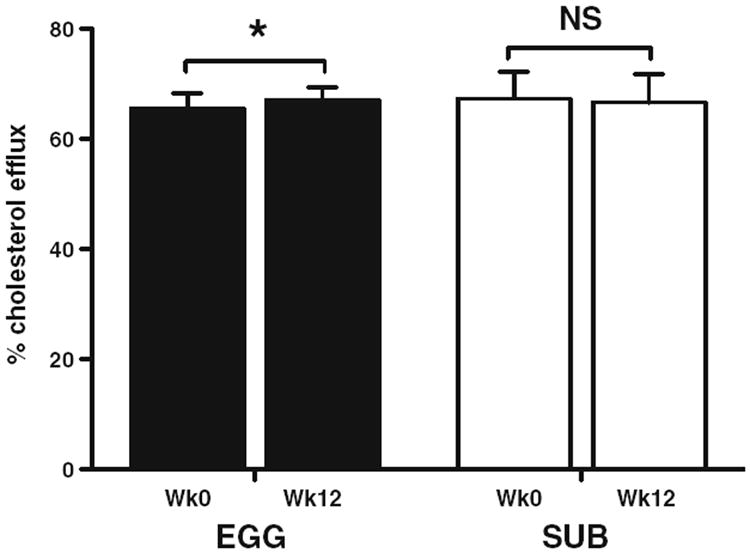
We recently demonstrated that daily whole egg consumption during moderate carbohydrate restriction leads to greater increases in plasma HDL-cholesterol (HDL-C) and improvements in HDL profiles in metabolic syndrome (MetS) when compared to intake of a yolk-free egg substitute. We further investigated the effects of this intervention on HDL composition and function, hypothesizing that the phospholipid species present in egg yolk modulate HDL lipid composition to increase the cholesterol-accepting capacity of subject serum. Men and women classified with MetS were randomly assigned to consume either three whole eggs (EGG, n = 20) per day or the equivalent amount of egg substitute (SUB, n = 17) throughout a 12-week moderate carbohydrate-restricted (25-30 % of energy) diet. Relative to other HDL lipids, HDL-cholesteryl ester content increased in all subjects, with greater increases in the SUB group. Further, HDL-triacylglycerol content was reduced in EGG group subjects with normal baseline plasma HDL-C, resulting in increases in HDL-CE/TAG ratios in both groups. Phospholipid analysis by mass spectrometry revealed that HDL became enriched in phosphatidylethanolamine in the EGG group, and that EGG group HDL better reflected sphingomyelin species present in the whole egg product at week 12 compared to baseline. Further, macrophage cholesterol efflux to EGG subject serum increased from baseline to week 12, whereas no changes were observed in the SUB group. Together, these findings suggest that daily egg consumption promotes favorable shifts in HDL lipid composition and function beyond increasing plasma HDL-C in MetS.
Conflict of interest statement
Figures
References
Publication types
MeSH terms
Substances
Grants and funding
LinkOut - more resources
Full Text Sources
Other Literature Sources
Medical
