. 2013 Mar 7:13:60.
doi: 10.1186/1471-2393-13-60.

A community perspective on the role of fathers during pregnancy: a qualitative study

Affiliations

A community perspective on the role of fathers during pregnancy: a qualitative study

Amina P Alio et al. BMC Pregnancy Childbirth. .

Abstract

Background: Defining male involvement during pregnancy is essential for the development of future research and appropriate interventions to optimize services aiming to improve birth outcomes.

Study aim: To define male involvement during pregnancy and obtain community-based recommendations for interventions to improve male involvement during pregnancy.

Methods: We conducted focus groups with mothers and fathers from the National Healthy Start Association program in order to obtain detailed descriptions of male involvement activities, benefits, barriers, and proposed solutions for increasing male involvement during pregnancy. The majority of participants were African American parents.

Results: The involved "male" was identified as either the biological father, or, the current male partner of the pregnant woman. Both men and women described the ideal, involved father or male partner as present, accessible, available, understanding, willing to learn about the pregnancy process and eager to provide emotional, physical and financial support to the woman carrying the child. Women emphasized a sense of "togetherness" during the pregnancy. Suggestions included creating male-targeted prenatal programs, enhancing current interventions targeting females, and increasing healthcare providers' awareness of the importance of men's involvement during pregnancy.

Conclusions: Individual, family, community, societal and policy factors play a role in barring or diminishing the involvement of fathers during pregnancy. Future research and interventions should target these factors and their interaction in order to increase fathers' involvement and thereby improve pregnancy outcomes.


Figures
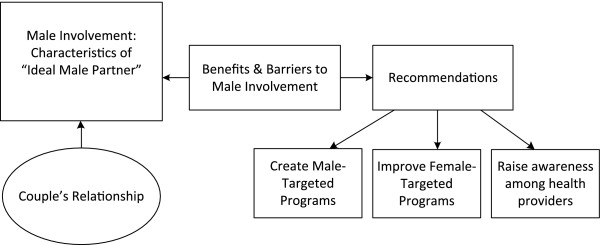
Figure 1
Figure 1
Focus group data categories. This flow chart demonstrates the major categories into which the focus group data was demarcated and the relationship between the categories. Categories were derived from the grouping of major themes and constructed via consensus amongst authors and community partners to more efficiently organize the data for analysis.
Figure 2
Figure 2
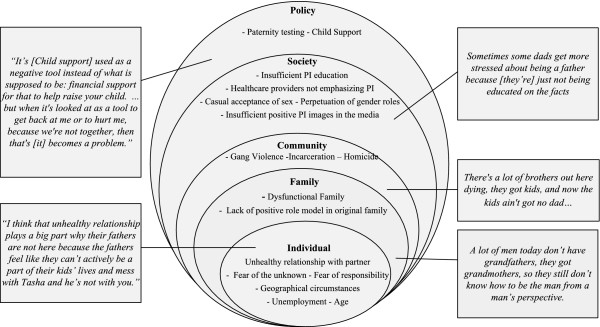
Barriers to fathers’ involvement during pregnancy. In this figure we dissect the barriers to father’s involvement by levels in the socioecological model. Within in each sphere of influence starting from the individual and extending out towards the policy level, detail is provided about the potential barriers categorized at this level as revealed in the focus group data. Actual quotes from participants are inserted at each level to provide examples.
Figure 3
Figure 3
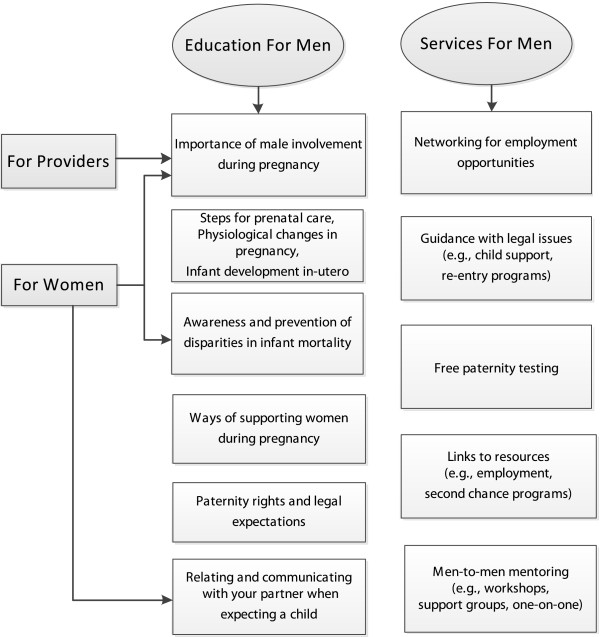
Recommendations for programs aimed at improving pregnancy outcomes by increasing male involvement. Recommendations were provided throughout the focus group data and focused mainly on education for men and the services that should be provided to promote ideal paternal involvement. Included were suggestions for education and/or services targeting women and service providers.
Figure 4
Figure 4
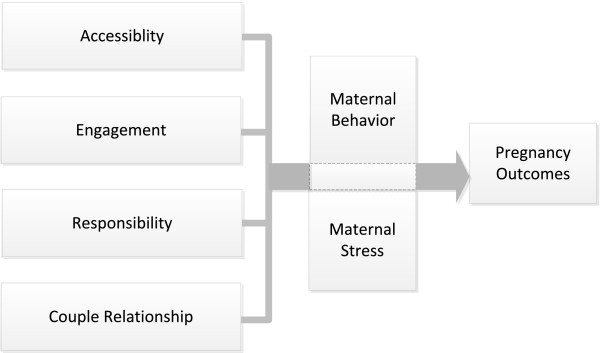
Model for fathers’ involvement during pregnancy. The model conceptualizes the 4 components of a proposed framework for paternal involvement during pregnancy. The model reflects similar elements to Lamb’s theory of paternal involvement in childhood (accessibility, responsibility, engagement). In pregnancy, the extent of these fundamental characteristics is mediated by the nature of the relationship between the mother and the male involved.

References

    1. Alio AP, Kornosky JL, Mbah AK, Marty PJ, Salihu HM. The impact of paternal involvement on feto-infant morbidity among whites, blacks and hispanics. Matern Child Health J. 2010;14(5):735–741. doi: 10.1007/s10995-009-0482-1. - DOI - PubMed
    1. Alio AP, Mbah AK, Kornosky JL, Wathington D, Marty PJ, Salihu HM. Assessing the impact of paternal involvement on racial/ethnic disparities in infant mortality rates. J Community Health. 2011;36(1):63–68. doi: 10.1007/s10900-010-9280-3. - DOI - PubMed
    1. Ghosh J, Wilhelm M, Dunkel-Schetter C, Lombardi C, Ritz B. Paternal support and preterm birth, and the moderation of effects of chronic stress: a study in Los Angeles County mothers. Arch Womens Ment Health. 2010;13(4):327–338. doi: 10.1007/s00737-009-0135-9. - DOI - PMC - PubMed
    1. Ngui E, Cortright A, Blair K. An investigation of paternity status and other factors associated with racial and ethnic disparities in birth outcomes in milwaukee, wisconsin. Matern Child Health J. 2009;13(4):467–478. doi: 10.1007/s10995-008-0383-8. - DOI - PubMed
    1. Alio AP, Bond MJ, Padilla YC, Heidelbaugh JJ, Lu M, Parker WJ. Addressing policy barriers to paternal involvement during pregnancy. Matern Child Health J. 2011;15(4):425–430. doi: 10.1007/s10995-011-0781-1. - DOI - PubMed

Publication types

LinkOut - more resources