


Increases in alcohol consumption in women and elderly groups: evidence from an epidemiological study
- PMID: 23497391
- PMCID: PMC3720280
- DOI: 10.1186/1471-2458-13-207
Increases in alcohol consumption in women and elderly groups: evidence from an epidemiological study
Abstract
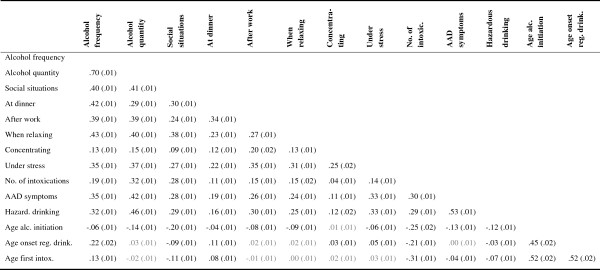
Background: In most Western countries, alcohol consumption continues to increase, specifically among women and older adults. Insight into these trends may aid intervention strategies. Here we present data on alcohol consumption by age and sex as well as associations between alcohol use and demographic lifestyle/traits. The data are from a large (N>16,000) population-based Dutch sample, ascertained based on the presence of twins in the family.
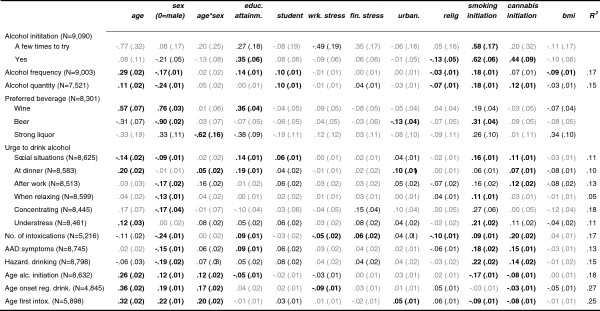
Methods: A set of 16 indicators of normative and problematic alcohol use was assessed in participants of the Netherlands Twin Register between 2009-2012 (ages 18-97; 6,052 men; 10,535 women). Alcohol consumption and demographic/lifestyle traits, including educational attainment, work-related/financial stress, urbanization, religiousness, smoking/cannabis initiation, and BMI were described by age and sex. Associations were examined by regressing aspects of alcohol use on age, sex, their interaction, and demographic/lifestyle variables.
Results: Age, sex, and initiation of cigarette and cannabis use were the most important predictors of alcohol use. Frequency of alcohol use was lowest between 18-25 years, with 3.2% of men and .6% of women drinking 6-7 times/week, and highest above age 65 years, with 30.6-32.7% of men and 20.2-22.0% of women drinking 6-7 times/week. Women consumed the lowest quantities of alcohol between 25-45 years, with a 5.7-5.9% prevalence of excessive drinking (>14 glasses/week), and the largest quantities between 55-65 years (15.5% excessive drinkers). Age at alcohol initiation, onset of regular drinking, and first alcohol intoxication were lowest between ages 18-25 years and highest above age 65 years. Among older participants, men initiated alcohol use and regular drinking earlier, and had lower age at first intoxication than women, but among young adults, no sex differences were observed.
Conclusions: Alcohol consumption was high in the elderly Dutch population, especially among women. Alcohol initiation, onset of regular drinking, and first alcohol intoxication occur at increasingly younger ages, and the previous gap between men and women in age at alcohol initiation, onset of regular drinking, and first alcohol intoxication has closed almost entirely. Heavy alcohol use was most strongly predicted by older age, sex (male), and initiation of smoking and cannabis use.
Figures
References
-
- European Commission. EU citizen’s attitudes towards alcohol. Brussels: European Commission; 2010.
-
- Anderson P, Møller L, Galea G. Alcohol in the European Union: Consumption, harm and policy approaches. Copenhagen: WHO Regional Office for Europe; 2012.
-
- WHO-HFA. European health for all database. http://data.euro.who.int/hfadb/
-
- WHO. Global Status Report on Alcohol and Health 2011. Geneva, Switzerland: World Health Organization; 2011.
-
- van Rooij AJ, Schoenmakers TM, van de Mheen D. Nationaal Prevalentie Onderzoek Middelengebruik 2009: De kerncijfers [National Prevalence Study on Substance Use 2009: Core Statistics] Rotterdam, the Netherlands: IVO; 2011. p. 13.
Publication types
MeSH terms
Substances
Grants and funding
LinkOut - more resources
Full Text Sources
Other Literature Sources
Medical
Miscellaneous
