


Drug-related emergency department visits by elderly patients presenting with non-specific complaints
- PMID: 23497667
- PMCID: PMC3601989
- DOI: 10.1186/1757-7241-21-15
Drug-related emergency department visits by elderly patients presenting with non-specific complaints
Abstract
Background: Since drug-related emergency department (ED) visits are common among older adults, the objectives of our study were to identify the frequency of drug-related problems (DRPs) among patients presenting to the ED with non-specific complaints (NSC), such as generalized weakness and to evaluate responsible drug classes.
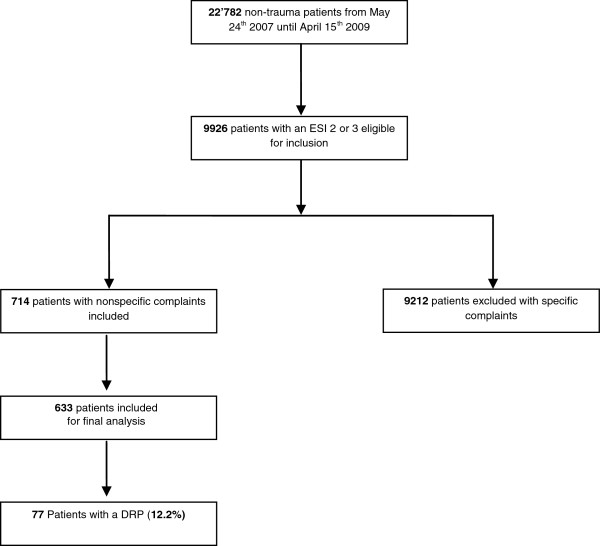
Methods: Delayed type cross-sectional diagnostic study with a prospective 30 day follow-up in the ED of the University Hospital Basel, Switzerland. From May 2007 until April 2009, all non-trauma patients presenting to the ED with an Emergency Severity Index (ESI) of 2 or 3 were screened and included, if they presented with non-specific complaints. After having obtained complete 30-day follow-up, two outcome assessors reviewed all available information, judged whether the initial presentation was a DRP and compared their judgment with the initial ED diagnosis. Acute morbidity ("serious condition") was allocated to individual cases according to predefined criteria.
Results: The study population consisted of 633 patients with NSC. Median age was 81 years (IQR 72/87), and the mean Charlson comorbidity index was 2.5 (IQR 1/4). DRPs were identified in 77 of the 633 cases (12.2%). At the initial assessment, only 40% of the DRPs were correctly identified. 64 of the 77 identified DRPs (83%) fulfilled the criteria "serious condition". Polypharmacy and certain drug classes (thiazides, antidepressants, benzodiazepines, anticonvulsants) were associated with DRPs.
Conclusion: Elderly patients with non-specific complaints need to be screened systematically for drug-related problems.
Trial registration: ClinicalTrials.gov: NCT00920491.
Figures
References
-
- Gurwitz JH, Field TS, Harrold LR, Rothschild J, Debellis K, Seger AC, Cadoret C, Fish LS, Garber L, Kelleher M. Incidence and preventability of adverse drug events among older persons in the ambulatory setting. JAMA: The Journal of the American Medical Association. 2003;289(9):1107–1116. doi: 10.1001/jama.289.9.1107. - DOI - PubMed
MeSH terms
Substances
Associated data
LinkOut - more resources
Full Text Sources
Other Literature Sources
Medical
Molecular Biology Databases
Miscellaneous
