Review
. 2013 Mar 14;152(6):1324-43.
doi: 10.1016/j.cell.2013.02.043.

Epigenetics of reprogramming to induced pluripotency

Affiliations
Review

Epigenetics of reprogramming to induced pluripotency

Bernadett Papp et al. Cell. .

Abstract

Reprogramming to induced pluripotent stem cells (iPSCs) proceeds in a stepwise manner with reprogramming factor binding, transcription, and chromatin states changing during transitions. Evidence is emerging that epigenetic priming events early in the process may be critical for pluripotency induction later. Chromatin and its regulators are important controllers of reprogramming, and reprogramming factor levels, stoichiometry, and extracellular conditions influence the outcome. The rapid progress in characterizing reprogramming is benefiting applications of iPSCs and is already enabling the rational design of novel reprogramming factor cocktails. However, recent studies have also uncovered an epigenetic instability of the X chromosome in human iPSCs that warrants careful consideration.


Figures

Figure 1
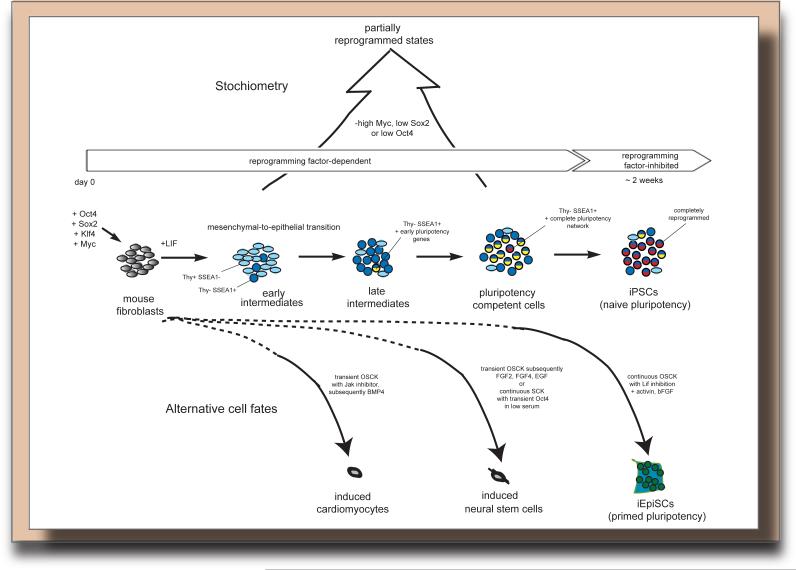
Figure 1. The generation of iPSCs is a multistep process that can be modulated by extracellular cues and reprogramming factor levels
Known events occurring in early, middle and late phases during the OSKM-mediated reprogramming of mouse embryonic fibroblasts to iPSCs are depicted. During the final emergence of fully reprogrammed iPSCs, the so-called “reprogramming-competent cells” are inhibited by the continued expression of the factors. The reprogramming process can be preferentially trapped in partially reprogrammed states when certain reprogramming factor levels and/or stoichiometry's are employed (top), or can be redirected to a different cell fate, without going through the pluripotent state, by changing culture/growth factor conditions and OSKM expression timing (bottom).
Figure 2
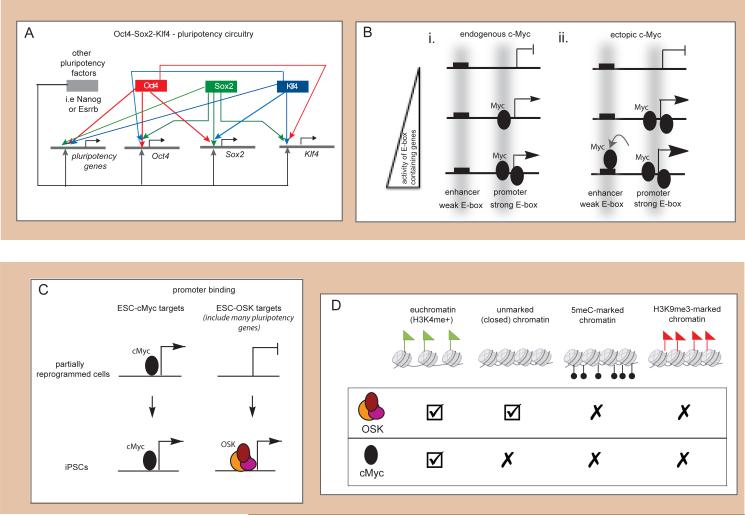
Figure 2. Features of OSKM in ESCs and during reprogramming
(A) In ESCs, Oct4, Sox2, and Klf4 bind their own and each others promoters and enhancers, as well as those of many additional ESC-specific (pluripotency) genes. Further contributing to the pluripotency circuitry, many of these ESC-specific genes are also bound by various additional pluripotency regulators including Nanog and Esrrb, such that ESC-specific enhancers represent hotspots of pluripotency transcription factor binding. (B) (i) In ESCs (and many other cell types), cMyc targets most actively transcribed genes at the core promoter by binding high-affinity E-box sequences and functions by enhancing transcriptional elongation. Expression levels correlate with cMyc occupancy. (ii) Upon overexpression, cMyc does not appear to regulate new target genes, but amplifies the existing gene expression pattern by binding the same genes but now at elevated levels and occupying additional, low affinity E-box-like sequences in both the core promoter and enhancer regions of these genes. (C) Scheme illustrating different contributions of the reprogramming factors to the late phase of reprogramming, highlighting separable engagement of OSK and cMyc during reprogramming. Many genes occupied by cMyc in ESCs/iPSCs are already bound by this transcription factor and expressed in partially reprogrammed cells, which represent a late reprogramming intermediate. By contrast, OSK bind the promoter regions of many of their ESC-specific target genes only late in reprogramming, accompanying their transcriptional upregulation. This is particularly obvious for those genes that are co-bound by OSK in their promoter region in ESCs. (D) Chromatin can affect the ability of transcription factors to bind to their DNA motifs, which is thought to explain why most transcription factors bind to only a small subset of their recognition motifs in the genome. Here, we summarize the chromatin preferences of the four reprogramming factors early in reprogramming.
Figure 3
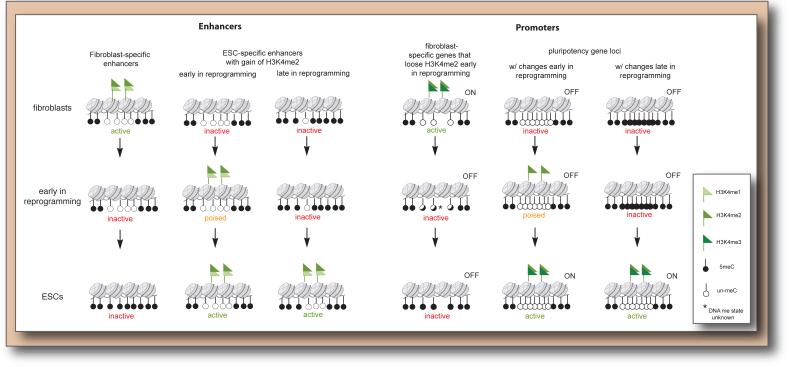
Figure 3. Chromatin dynamics during reprogramming
Many fibroblast-specific promoters and enhancers are decommissioned early in reprogramming (after 24-48 hours of reprogramming factor expression) by loss of active H3K4 methylation marks but appear to gain DNA methylation only late in reprogramming. ESC-specific enhancers and promoters can be divided into at least two groups – those with dramatic changes in histone modifications already early in reprogramming, long before their transcriptional activation, and those that undergo histone modification changes only much later in the process. One key difference between these groups appears to be the DNA methylation state. For example, the first group includes many pluripotency genes with CpG-dense promoter elements (indicated by higher density of circles) that are hypomethylated in fibroblasts.
Figure 4
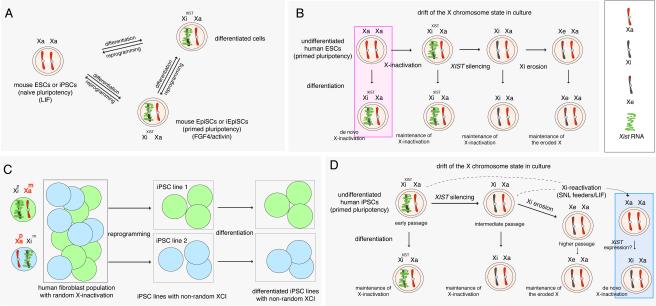
Figure 4. X chromosome states in mouse and human pluripotent cells
(A) X chromosome inactivation and reactivation cycle in the mouse system, highlighting the relationship between naïve and primed pluripotency and the associated X-inactivation states. Xa=active X chromosome, Xi=inactive X chromosome. (B) Hierarchy of X chromosome states in female human ESCs during long-term culture. Xe=eroded Xi. The box marks the only X-chromosome state that allows de-novo X-inactivation upon induction of differentiation. (C) Xi-reactivation does not occur when female human somatic cells are reprogrammed to primed iPSCs. While fibroblasts are mosaic for which X is inactivated (Xp=paternal X; Xm=maternal X), each early passage iPSC line carries the X-inactivation state of the differentiated cell that initiated the reprogramming event. This state is subsequently maintained upon differentiation. (D) As in (B), but for the hierarchy of X chromosome states in female human iPSCs during long-term culture.
Figure 5
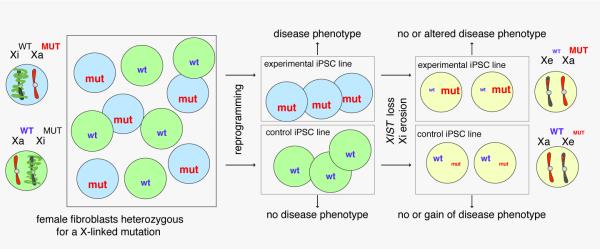
Figure 5. Effects of X chromosome instability on disease modeling
Reprogramming of differentiated cells from females heterozygous for an X-linked mutation results in iPSC lines that either express the mutant or the wildtype allele from the Xa at early passage due to non-random X-inactivation. These cell lines represent pairs of experimental and control cells ideal for modeling X-linked disease on an isogenic background. However, upon XIST loss and Xi erosion, the allele from the Xi can become re-expressed, resulting in the loss or modulation of the disease phenotype.

References

    1. Adams CC, Workman JL. Binding of disparate transcriptional activators to nucleosomal DNA is inherently cooperative. Mol Cell Biol. 1995;15:1405–1421. - PMC - PubMed
    1. Ang YS, Tsai SY, Lee DF, Monk J, Su J, Ratnakumar K, Ding J, Ge Y, Darr H, Chang B, et al. Wdr5 mediates self-renewal and reprogramming via the embryonic stem cell core transcriptional network. Cell. 2011;145:183–197. - PMC - PubMed
    1. Anguera MC, Sadreyev R, Zhang Z, Szanto A, Payer B, Sheridan SD, Kwok S, Haggarty SJ, Sur M, Alvarez J, et al. Molecular signatures of human induced pluripotent stem cells highlight sex differences and cancer genes. Cell Stem Cell. 2012;11:75–90. - PMC - PubMed
    1. Anokye-Danso F, Trivedi CM, Juhr D, Gupta M, Cui Z, Tian Y, Zhang Y, Yang W, Gruber PJ, Epstein JA, et al. Highly Efficient miRNA-Mediated Reprogramming of Mouse and Human Somatic Cells to Pluripotency. Cell Stem Cell. 2011;8:376–388. - PMC - PubMed
    1. Beato M, Eisfeld K. Transcription factor access to chromatin. Nucleic Acids Res. 1997;25:3559–3563. - PMC - PubMed

Publication types