


Assessment and stability of early learning abilities in preterm and full-term infants across the first two years of life
- PMID: 23500166
- PMCID: PMC3628416
- DOI: 10.1016/j.ridd.2013.02.010
Assessment and stability of early learning abilities in preterm and full-term infants across the first two years of life
Abstract
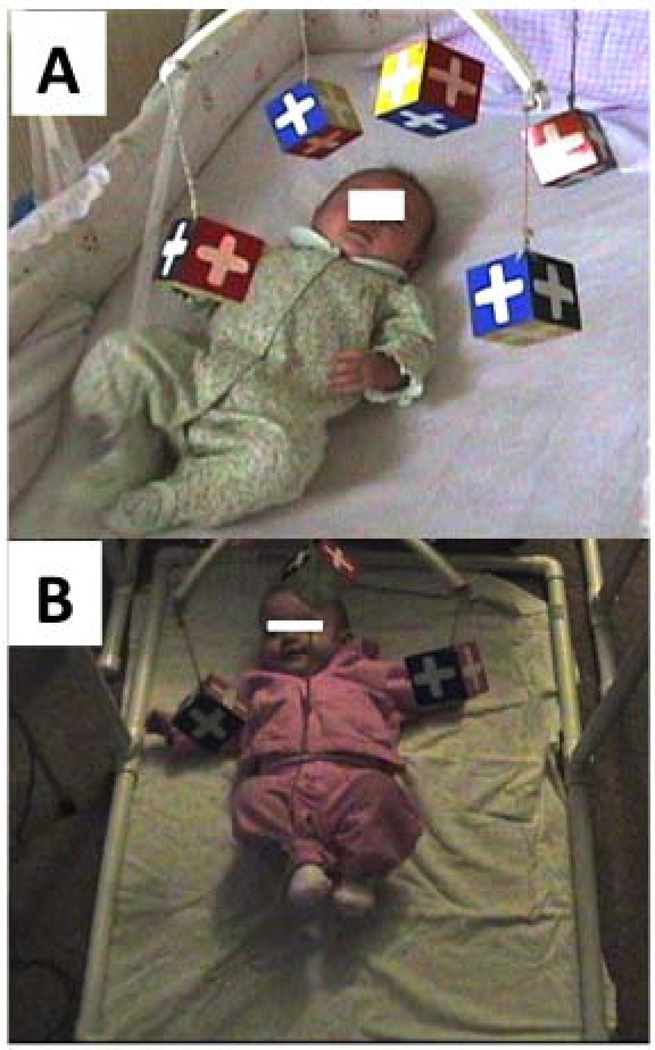
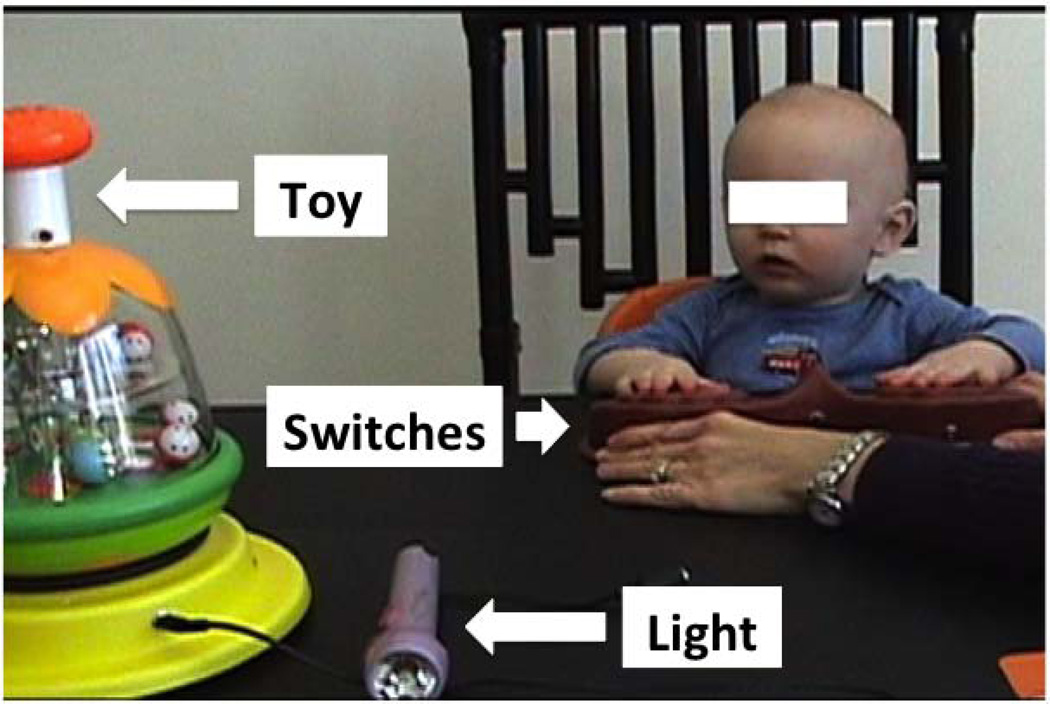
Infants born preterm have increased risk for learning disabilities yet we lack assessments to successfully detect these disabilities in early life. We followed 23 full-term and 29 preterm infants from birth through 24 months to assess for differences in and stability of learning abilities across time. Measures included the Bayley-III cognitive subscale, the mobile paradigm assessment, and a means-end learning assessment. Preterm infants had poorer performance on measures of cognition and learning across the first two years of life. Learning performance at 3-4 months was consistent with learning performance at 12-24 months of age. At 3-4 months, the mobile paradigm had better sensitivity and predictive values for predicting 24-month cognitive delays on the Bayley-III than did the Bayley-III itself. At 12-18 months, the means-end learning assessment had better sensitivity than the Bayley-III for identifying 24-month cognitive delays on the Bayley-III. The results suggest that: (1) infants born preterm may demonstrate learning differences as early as the first few months of life, (2) learning differences identified in the first months of life are likely to persist throughout the second year of life, and (3) learning assessments that measure how infants and toddlers use their typical behaviors to problem-solve to control external events may be more effective than traditional standardized assessment tools for detecting early learning delays.
Copyright © 2013 Elsevier Ltd. All rights reserved.
Figures
References
-
- Bayley N. Bayley Scales of Infant Development. 3rd edition ed. San Antonio, TX: The Psychological Corporation; 2006.
-
- Crnic KA, Ragozin AS, Greenberg MT, Robinson NM, Basham RB. Social interaction and developmental competence of preterm and full-term infants during the 1st year of life. Child Development. 1983;54(5):1199–1210. - PubMed
-
- Disabilities, C. o. C. W. Identifying infants and young children with developmental disorders in the medical home: An algorith for developmental surveillance and screening. Pediatrics. 2006;118(1):405–420. - PubMed
-
- Dutta T. Evaluation of the Kinect (TM) sensor for 3-D kinematic measurement in the workplace. Applied Ergonomics. 2012;43(4):645–649. - PubMed
-
- Flynn JR. Massive IQ gains in 14 nations: What IQ tests really measure. Psychological Bulletin. 1987;101:171–191.
Publication types
MeSH terms
Grants and funding
LinkOut - more resources
Full Text Sources
Other Literature Sources
Medical
