Molecular detection and characterization of tick-borne pathogens in dogs and ticks from Nigeria
- PMID: 23505591
- PMCID: PMC3591325
- DOI: 10.1371/journal.pntd.0002108
Molecular detection and characterization of tick-borne pathogens in dogs and ticks from Nigeria
Abstract
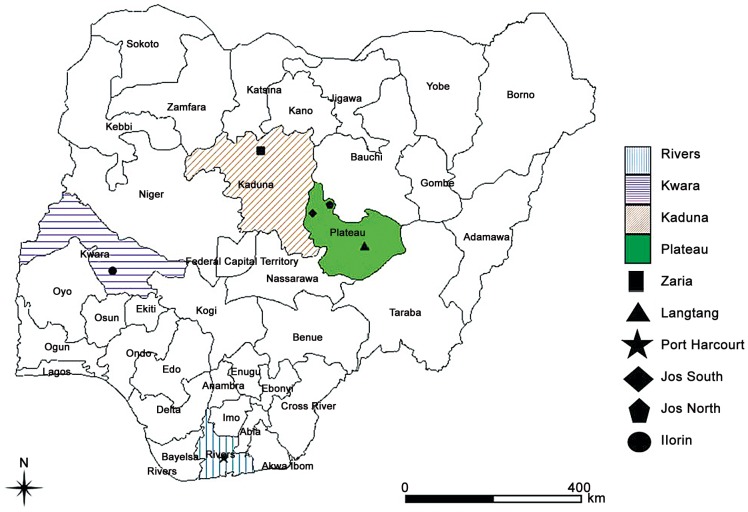
Background: Only limited information is currently available on the prevalence of vector borne and zoonotic pathogens in dogs and ticks in Nigeria. The aim of this study was to use molecular techniques to detect and characterize vector borne pathogens in dogs and ticks from Nigeria.
Methodology/principal findings: Blood samples and ticks (Rhipicephalus sanguineus, Rhipicephalus turanicus and Heamaphysalis leachi) collected from 181 dogs from Nigeria were molecularly screened for human and animal vector-borne pathogens by PCR and sequencing. DNA of Hepatozoon canis (41.4%), Ehrlichia canis (12.7%), Rickettsia spp. (8.8%), Babesia rossi (6.6%), Anaplasma platys (6.6%), Babesia vogeli (0.6%) and Theileria sp. (0.6%) was detected in the blood samples. DNA of E. canis (23.7%), H. canis (21.1%), Rickettsia spp. (10.5%), Candidatus Neoehrlichia mikurensis (5.3%) and A. platys (1.9%) was detected in 258 ticks collected from 42 of the 181 dogs. Co- infections with two pathogens were present in 37% of the dogs examined and one dog was co-infected with 3 pathogens. DNA of Rickettsia conorii israelensis was detected in one dog and Rhipicephalus sanguineus tick. DNA of another human pathogen, Candidatus N. mikurensis was detected in Rhipicephalus sanguineus and Heamaphysalis leachi ticks, and is the first description of Candidatus N. mikurensis in Africa. The Theileria sp. DNA detected in a local dog in this study had 98% sequence identity to Theileria ovis from sheep.
Conclusions/significance: The results of this study indicate that human and animal pathogens are abundant in dogs and their ticks in Nigeria and portray the potential high risk of human exposure to infection with these agents.
Conflict of interest statement
The authors have declared that no competing interest exist.
Figures
References
-
- Shaw SE, Michael JD, Richard JB, Breitschwerdt EB (2001) Tick-borne infectious diseases of dogs. Trends Parasitol 17: 74–80. - PubMed
-
- Hillyard PD (1996) Diseases carried by ticks in NW Europe: their medical and veterinary importance. In: Barnes, RSK, Coles, JH, eds. Ticks of North-West Europe. ynopses of the British Fauna (New Series). FSC Publications, 22–23
-
- Otranto D, Dantas-Torres F, Breitschwerdt EB (2009) Managing canine vector borne diseases of zoonotic concern: part one. Trends Parasitol 25: 157–163. - PubMed
MeSH terms
Associated data
- Actions
- Actions
- Actions
- Actions
- Actions
- Actions
- Actions
- Actions
- Actions
- Actions
- Actions
- Actions
- Actions
- Actions
- Actions
- Actions
- Actions
- Actions
- Actions
- Actions
- Actions
- Actions
- Actions
- Actions
- Actions
- Actions
- Actions
- Actions
- Actions
- Actions
- Actions
- Actions
- Actions
- Actions
- Actions
- Actions
- Actions
- Actions
- Actions
- Actions
- Actions
- Actions
- Actions
- Actions
- Actions
- Actions
- Actions
- Actions
- Actions
- Actions
- Actions
- Actions
- Actions
- Actions
- Actions
- Actions
- Actions
- Actions
- Actions
- Actions
- Actions
- Actions
- Actions
- Actions
- Actions
- Actions
- Actions
- Actions
- Actions
- Actions
- Actions
- Actions
- Actions
- Actions
- Actions
- Actions
- Actions
- Actions
- Actions
- Actions
- Actions
LinkOut - more resources
Full Text Sources
Other Literature Sources
Medical
Molecular Biology Databases
Miscellaneous