


High affinity binding of an engineered, modular peptide to bone tissue
- PMID: 23506396
- PMCID: PMC3670755
- DOI: 10.1021/mp300662r
High affinity binding of an engineered, modular peptide to bone tissue
Abstract
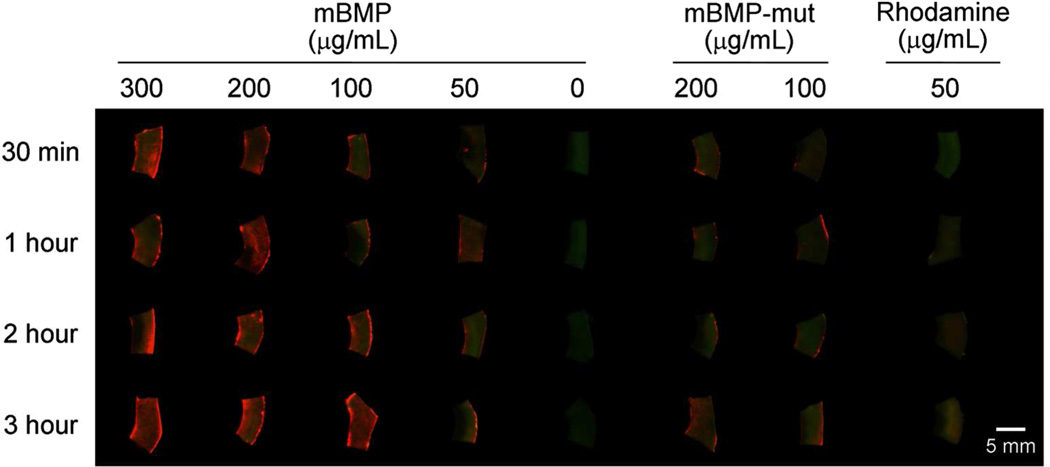
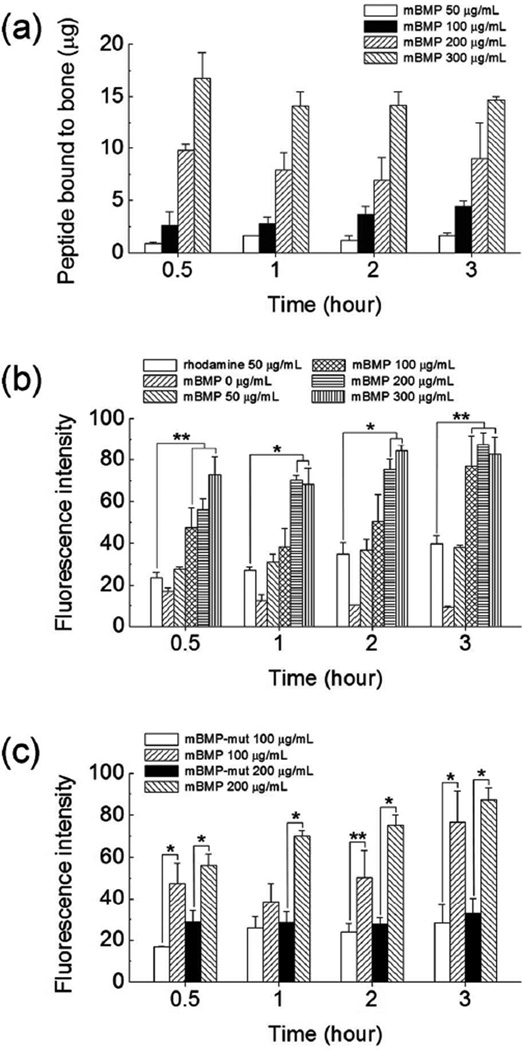
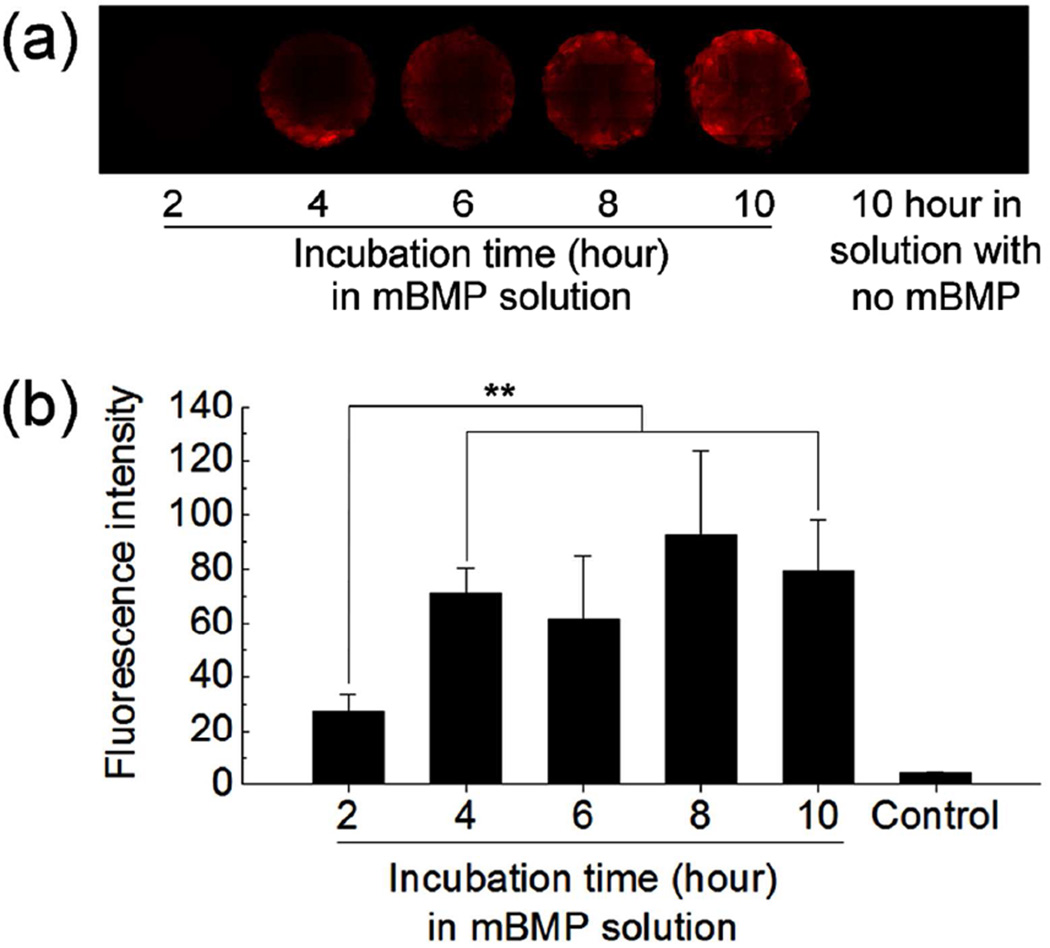
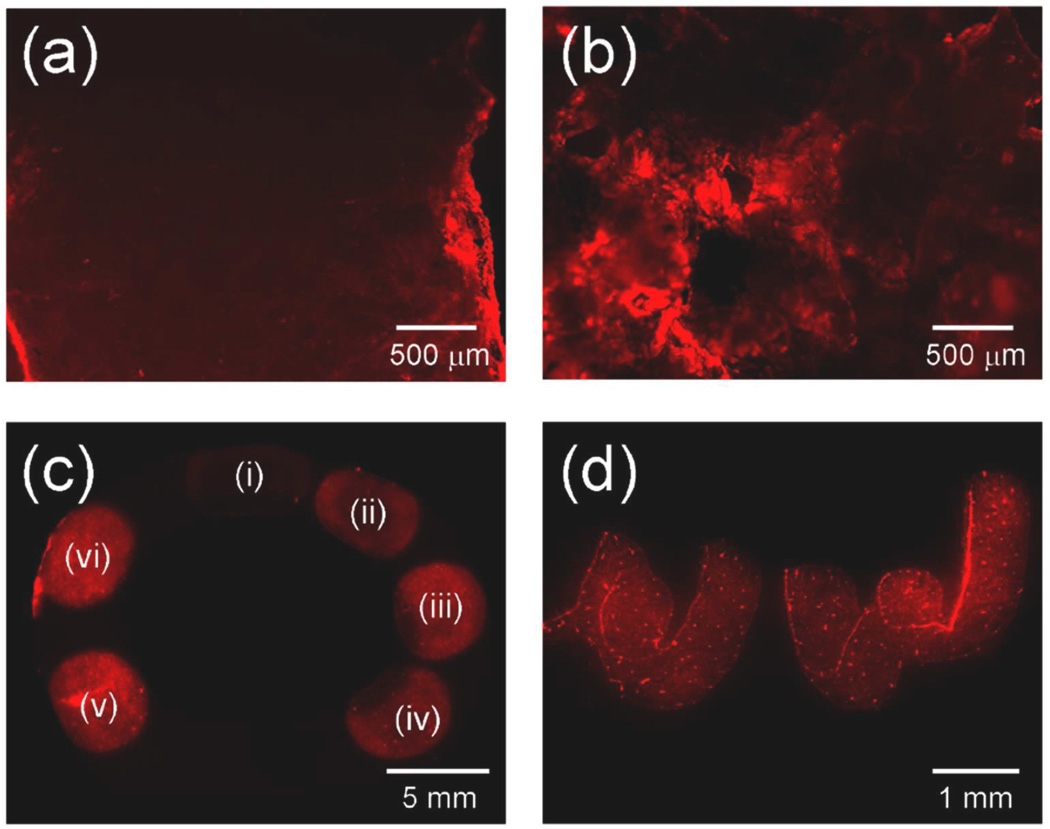
Bone grafting procedures have become common due in part to a global trend of population aging. Native bone graft is a popular choice when compared to various synthetic bone graft substitutes, owing to superior biological activity. Nonetheless, the insufficient ability of bone allograft to induce new bone formation and the insufficient remodeling of native bone grafts call for osteoinductive factors during bone repair, exemplified by recombinant human bone morphogenetic protein 2 (rhBMP2). We previously developed a modular bone morphogenetic peptide (mBMP) to address complications associated with the clinical use of rhBMP2 as a bone graft substitute. The mBMP is designed to strongly bind to hydroxyapatite, the main inorganic component of bone and teeth, and to provide pro-osteogenic properties analogous to rhBMP2. Our previous in vivo animal studies showed that mBMP bound to hydroxyapatite-coated orthopedic implants with high affinity and stimulated new bone formation. In this study, we demonstrate specific binding of mBMP to native bone grafts. The results show that mBMP binds with high affinity to both cortical and trabecular bones, and that the binding is dependent on the mBMP concentration and incubation time. Importantly, efficient mBMP binding is also achieved in an ex vivo bone bioreactor where bone tissue is maintained viable for several weeks. In addition, mBMP binding can be localized with spatial control on native bone tissue via simple methods, such as dip-coating, spotting, and direct writing. Taken together with the pro-osteogenic activity of mBMP established in previous bone repair models, these results suggest that mBMP may promote bone healing when coated on native bone grafts in a clinically compatible manner.
Figures
References
-
- Giannoudis PV, Dinopoulos H, Tsiridis E. Bone substitutes: an update. Injury. 2005;36:S20–S27. - PubMed
-
- Jahangir AA, Nunley RM, Mehta S, Sharan A Washington Health Policy Fellows. Bone graft substitutes in orthopaedic surgery. AAOS Now. 2008 Jan; http://www.aaos.org/news/aaosnow/jan08/reimbursement2.asp.
-
- Moore D. [Accessed Sep 30, 2012];Bone grafting. http://www.orthobullets.com/basic-science/9011/bone-grafting.
-
- Greenwald AS, Boden SD, Goldberg VM, Khan Y, Laurencin CT, Rosier RN. Bone-graft substitutes: Facts, fictions, and applications. J. Bone Joint Surg. Am. 2001;83A:98–103. - PubMed
-
- Dinopoulos H, Dimitriou R, Giannoudis PV. Bone graft substitutes: What are the options? Surg. J. R. Coll. Surg. Edinb. Irel. 2012;10:230–239. - PubMed
Publication types
MeSH terms
Substances
Grants and funding
LinkOut - more resources
Full Text Sources
Other Literature Sources
Miscellaneous
