Myocardial ischemia caused by paroxysmal supraventricular tachycardia in a patient with anomalous origin of right coronary artery arising from left sinus of valsalva
- PMID: 23508331
- PMCID: PMC3596660
- DOI: 10.4070/kcj.2013.43.2.123
Myocardial ischemia caused by paroxysmal supraventricular tachycardia in a patient with anomalous origin of right coronary artery arising from left sinus of valsalva
Abstract
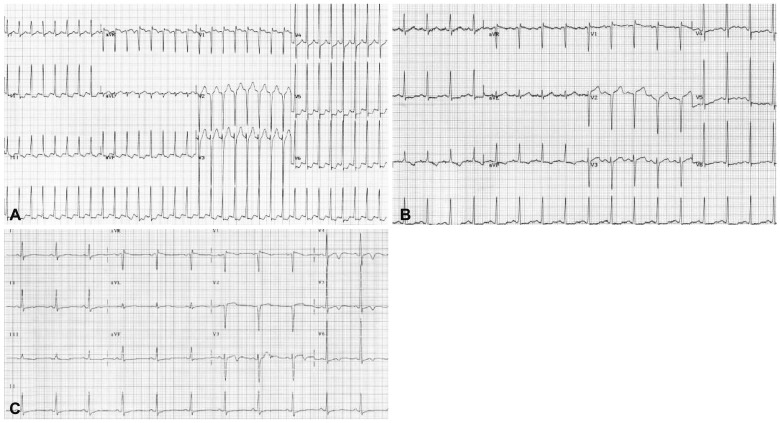
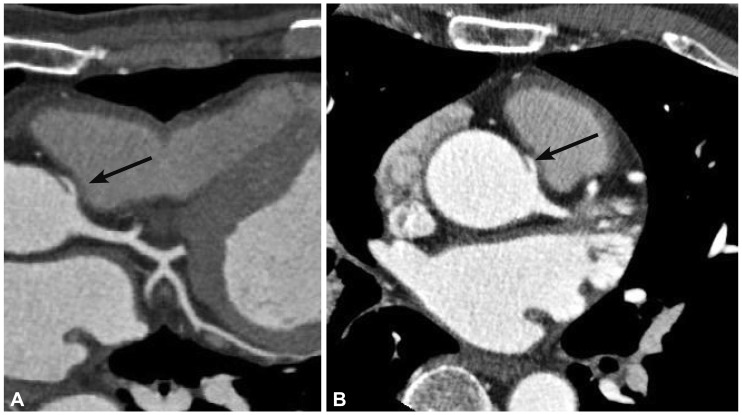
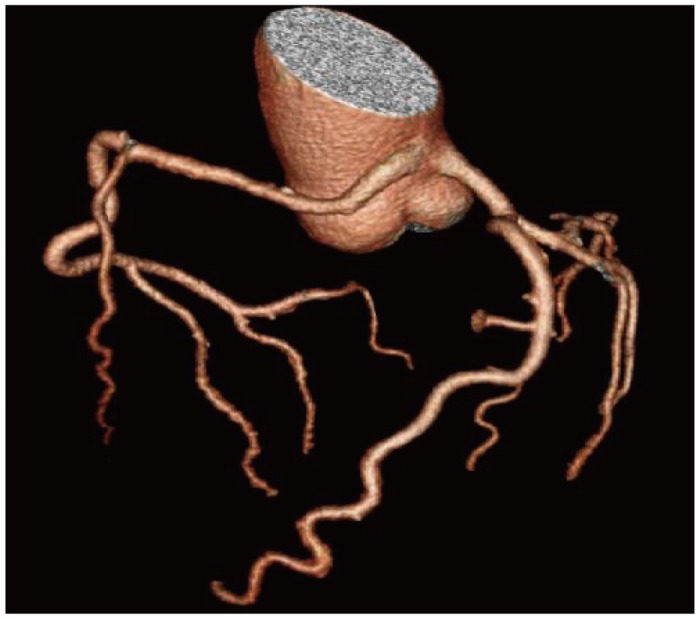
Anomalous origin of a coronary artery is rare and does not generally lead to myocardial infarction and paroxysmal supraventricular tachycardia (PSVT). We report an uncommon case of anomalous origin of the right coronary artery (RCA) originating from the left sinus of Valsalva with PSVT and myocardial ischemia. A 58-year-old man presented with PSVT. After arrhythmia subsided, electrocardiogram showed ST and T wave abnormalities, and transient cardiac enzymes were found to be elevated. Coronary CT angiography confirmed that there was anomalous origin of the RCA originating from the left sinus of Valsalva and no intracoronary stenotic lesion. He was managed with conservative treatment, having no symptoms on clinical follow-up for 4 years.
Keywords: Coronary vessel anomalies; Multidetector computed tomography; Myocardial ischemia; Tachycardia, paroxysmal.
Conflict of interest statement
The authors have no financial conflicts of interest.
Figures
References
-
- Kimbiris D, Iskandrian AS, Segal BL, Bemis CE. Anomalous aortic origin of coronary arteries. Circulation. 1978;58:606–615. - PubMed
-
- Yamanaka O, Hobbs RE. Coronary artery anomalies in 126,595 patients undergoing coronary arteriography. Cathet Cardiovasc Diagn. 1990;21:28–40. - PubMed
-
- Angelini P, Velasco JA, Flamm S. Coronary anomalies: incidence, pathophysiology, and clinical relevance. Circulation. 2002;105:2449–2454. - PubMed
-
- Kim JS, Lee JM, Yoon HJ, et al. A case of coronary vessel anomaly of the left circumflex artery originating from the right coronary artery with variant angina. Korean Circ J. 2004;34:711–714.
-
- Vincelj J, Todorović N, Marusić P, Puksić S. Anomalous origin of the left coronary artery from the right sinus of Valsalva in a 62-year-old woman with unstable angina pectoris: a case report. Int J Cardiol. 2010;142:e35–e37. - PubMed
LinkOut - more resources
Full Text Sources
Other Literature Sources