


ZnuD, a potential candidate for a simple and universal Neisseria meningitidis vaccine
- PMID: 23509142
- PMCID: PMC3676005
- DOI: 10.1128/IAI.01312-12
ZnuD, a potential candidate for a simple and universal Neisseria meningitidis vaccine
Abstract
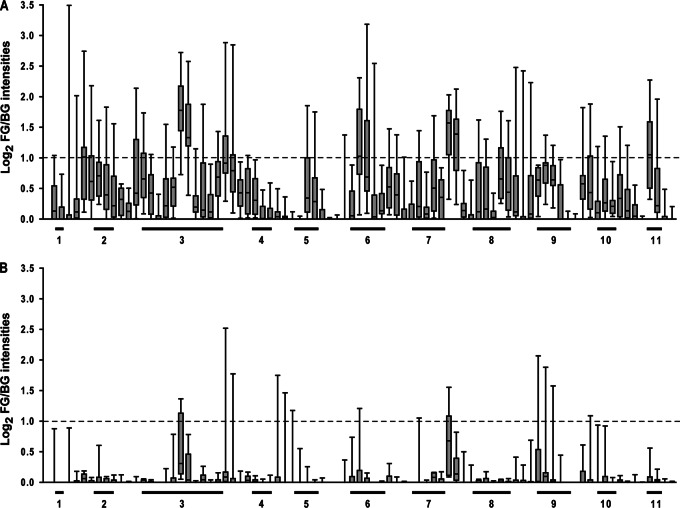
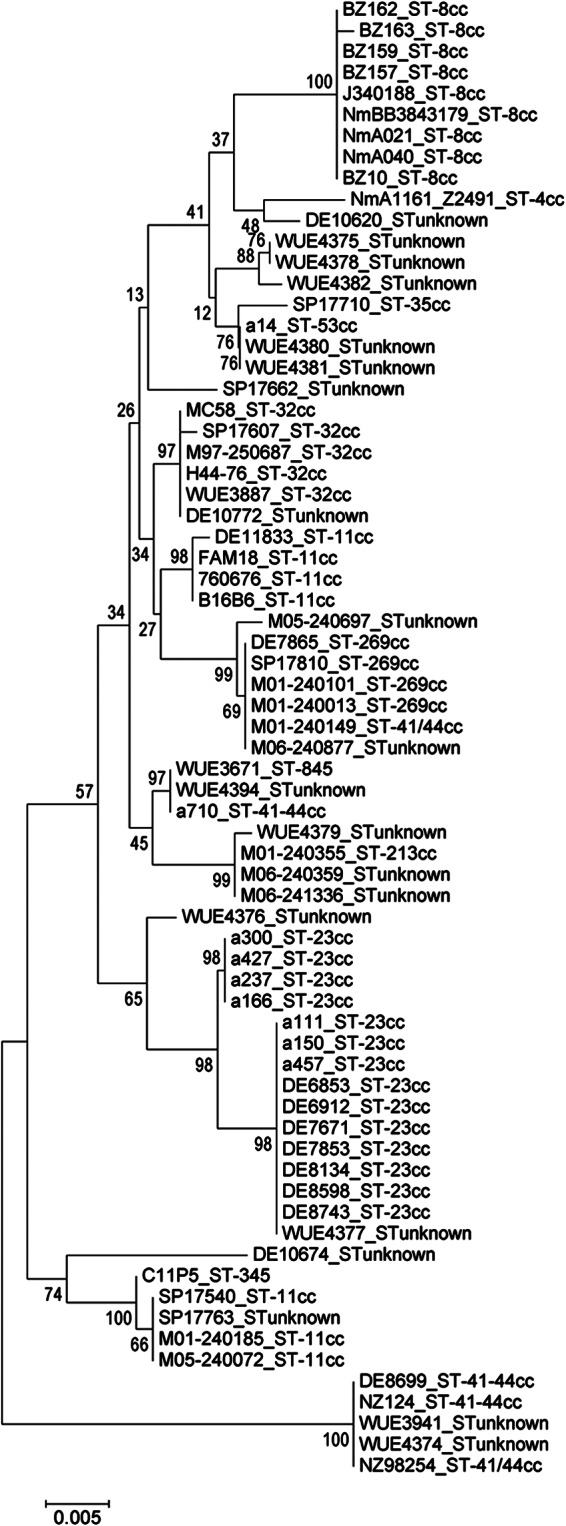
Neisseria meningitidis serogroup B (MenB) is a major cause of bacterial sepsis and meningitis, with the highest disease burden in young children. Available vaccines are based on outer membrane vesicles (OMVs) obtained from wild-type strains. However, particularly in toddlers and infants, they confer protection mostly against strains expressing the homologous protein PorA, a major and variable outer membrane protein. In the quest for alternative vaccine antigens able to provide broad MenB strain coverage in younger populations, but potentially also across all age groups, ZnuD, a protein expressed under zinc-limiting conditions, may be considered a promising candidate. Here, we have investigated the potential value of ZnuD and show that it is a conserved antigen expressed by all MenB strains tested except for some strains of clonal complex ST-8. In mice and guinea pigs immunized with ZnuD-expressing OMVs, antibodies were elicited that were able to trigger complement-mediated killing of all the MenB strains and serogroup A, C, and Y strains tested when grown under conditions of zinc limitation. ZnuD is also expressed during infection, since anti-ZnuD antibodies were detected in sera from patients. In conclusion, we confirm the potential of ZnuD-bearing OMVs as a component of an effective MenB vaccine.
Figures



References
-
- Finne J, Leinonen M, Mäkelä PH. 1983. Antigenic similarities between brain components and bacteria causing meningitis. Implications for vaccine development and pathogenesis. Lancet 322:355–357 - PubMed
-
- Nedelec J, Boucraut J, Garnier JM, Bernard D, Rougon G. 1990. Evidence for autoimmune antibodies directed against embryonic neural cell adhesion molecules (N-CAM) in patients with group B meningitis. J. Neuroimmunol. 29:49–56 - PubMed
-
- Frasch CE, van Alphen L, Holst J, Poolman JT, Rosenqvist E. 2001. Outer membrane protein vesicle vaccines for meningococcal disease, p 81–107 In Pollard AJ, Maiden MCJ. (ed), Meningococcal vaccines: methods and protocols. Humana Press, Totowa, NJ - PubMed
-
- Holst J, Martin D, Arnold R, Huergo CC, Oster P, O'Hallahan J, Rosenqvist E. 2009. Properties and clinical performance of vaccines containing outer membrane vesicles from Neisseria meningitidis. Vaccine 27:B3–B12 doi:10.1016/j.vaccine.2009.04.071 - DOI - PubMed
-
- Czumbel I. 2011. The epidemiology of invasive meningococcal disease in Europe, 2008 and 2009, p 3. Abstr. 11th Congr. Eur. Meningococcal Dis. Soc., Ljubljana, Slovenia, 18 to 20 May 2011
Publication types
MeSH terms
Substances
LinkOut - more resources
Full Text Sources
Other Literature Sources
Medical
