


Brazilian propolis: a natural product that improved the fungicidal activity by blood phagocytes
- PMID: 23509737
- PMCID: PMC3591169
- DOI: 10.1155/2013/541018
Brazilian propolis: a natural product that improved the fungicidal activity by blood phagocytes
Abstract
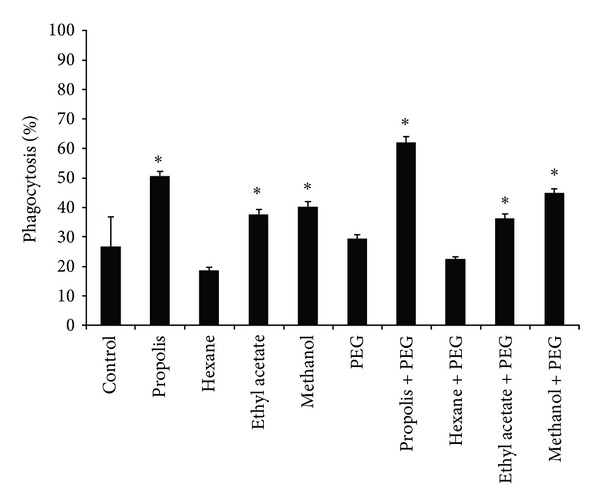
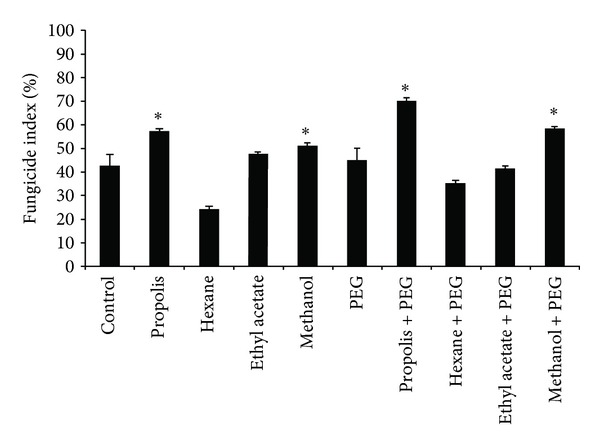
Natural product incorporation into microcarriers increases the bioavailability of these compounds, consequently improving their therapeutic properties. Natural products, particularly those from bees such as propolis, are widely used in popular medicine. Propolis is a powerful treatment for several diseases. In this context, the present study evaluated the effect of propolis Scaptotrigona sp. and its fractions, alone or adsorbed to polyethylene glycol (PEG) microspheres, on the activity of human phagocytes against Candida albicans. The results show that propolis exerts a stimulatory effect on these cells to assist in combating the fungus, especially as the crude extract is compared with the fractions. However, when incorporated into microspheres, these properties were significantly potentiated. These results suggest that propolis adsorbed onto PEG microspheres has immunostimulatory effects on phagocytes in human blood. Therefore, propolis may potentially be an additional natural product that can be used for a variety of therapies.
Figures
References
-
- Myers SP, Cheras PA. The other side of the coin: safety of complementary and alternative medicine. Medical Journal of Australia. 2004;181(4):222–225. - PubMed
-
- Hyodo I, Amano N, Eguchi K, et al. Nationwide survey on complementary and alternative medicine in cancer patients in Japan. Journal of Clinical Oncology. 2005;23(12):2645–2654. - PubMed
-
- Bankova VS, De Castro SL, Marcucci MC. Propolis: recent advances in chemistry and plant origin. Apidologie. 2000;31(1):3–15.
-
- Castaldo S, Capasso F. Propolis, an old remedy used in modern medicine. Fitoterapia. 2002;73(1):S1–S6. - PubMed
-
- Burdock GA. Review of the biological properties and toxicity of bee propolis (propolis) Food and Chemical Toxicology. 1998;36(4):347–363. - PubMed
Publication types
MeSH terms
Substances
LinkOut - more resources
Full Text Sources
Other Literature Sources
