Association of γδ T cells with disease severity and mortality in septic patients
- PMID: 23515014
- PMCID: PMC3647746
- DOI: 10.1128/CVI.00752-12
Association of γδ T cells with disease severity and mortality in septic patients
Abstract
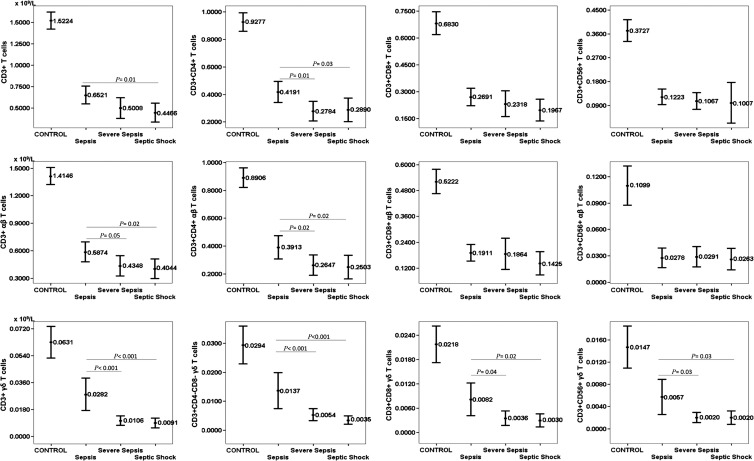
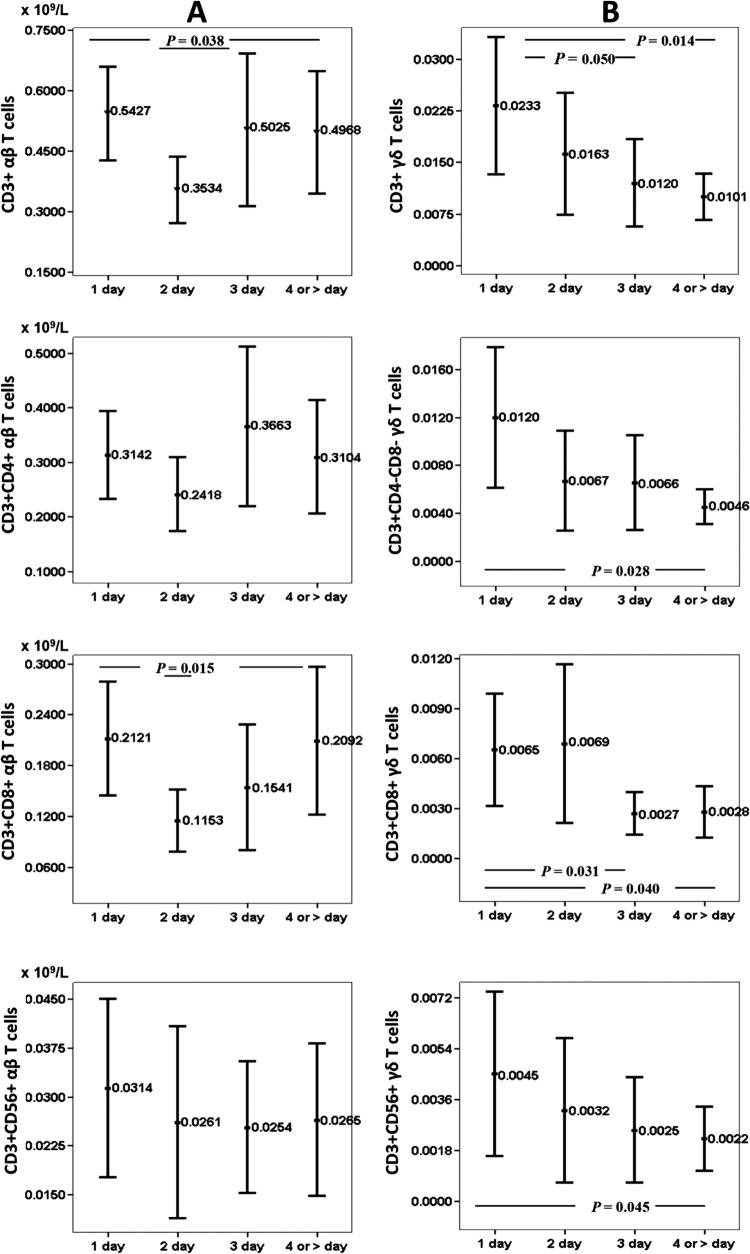
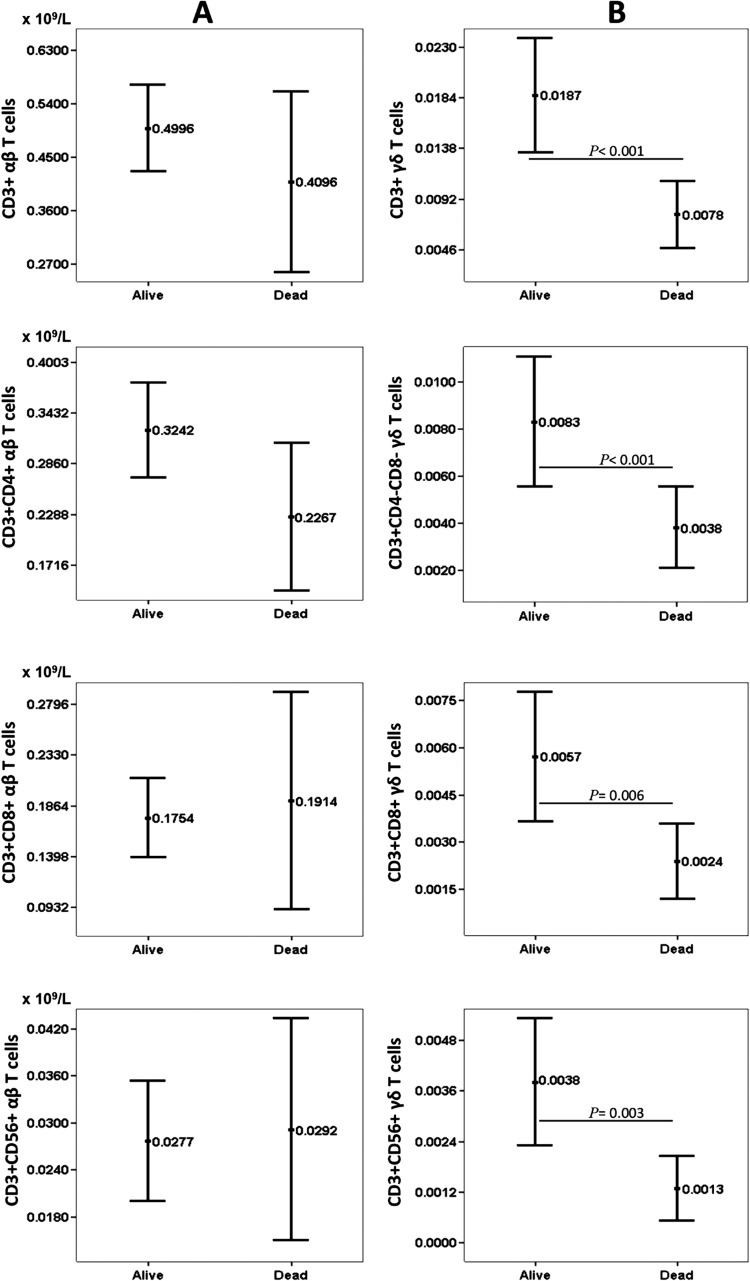
Gamma-delta T cells are the most abundant of all epithelial-resident lymphocytes and are considered a first line of defense against pathogens in the mucosa. Our objective was to confirm the reduction in γδ T cell subsets and its relationship with mortality in patients with sepsis. We studied 135 patients with sepsis attended in the emergency department and intensive care unit of two hospitals and compared them with a similar control group of healthy subjects. The αβ and γδ T cell subsets were determined via flow cytometry according to the stage of the sepsis and its relationship with mortality. All the lymphocyte subsets were reduced with respect to the corresponding subsets in the control group. All the γδ T cell populations decreased significantly as the septic picture worsened. Furthermore, γδ T cells showed decreases at days 2, 3, and 4 from the start of sepsis. Twenty-six patients with sepsis died (19.3%). The γδ T cells, specifically, the CD3(+) CD56(+) γδ T cells, were significantly reduced in those septic patients who died. Our results indicate that, during sepsis, γδ T cells show the largest decrease and this reduction becomes more intense when the septic process becomes more severe. Mortality was associated with a significant decrease in γδ T cells.
Figures
References
-
- Angus DC, Linde-Zwirble WT, Lidicker J, Clermont G, Carcillo J, Pinsky MR. 2001. Epidemiology of severe sepsis in the United States: analysis of incidence, outcome, and associated costs of care. Crit. Care Med. 29:1303–1310 - PubMed
-
- Martín GS, Mannino DM, Eaton S, Moss M. 2003. The epidemiology of sepsis in the United States from 1979 through 2000. N. Engl. J. Med. 348:1546–1554 - PubMed
-
- Andreu-Ballester JC, Ballester F, González Sánchez A, Almela Quilis A, Colomer Rubio E, Peñarroja Otero C. 2008. Epidemiology of sepsis in the Valencian Community (Spain), 1995-2004. Infect. Control Hosp. Epidemiol. 29:630–634 - PubMed
-
- Rivers EP, Nguyen HB, Amponsah D. 2003. Sepsis: a landscape from the emergency department to the intensive care unit. Crit. Care Med. 31:968–969 - PubMed
-
- Strehlow MC, Emond SD, Shapiro NI, Pelletier AJ, Camargo CA., Jr 2006. National study of emergency department visits for sepsis, 1992 to 2001. Ann. Emerg. Med. 48:326–331 - PubMed
MeSH terms
Substances
LinkOut - more resources
Full Text Sources
Other Literature Sources
Medical
Research Materials