


Bioengineered 3D human kidney tissue, a platform for the determination of nephrotoxicity
- PMID: 23516613
- PMCID: PMC3597621
- DOI: 10.1371/journal.pone.0059219
Bioengineered 3D human kidney tissue, a platform for the determination of nephrotoxicity
Erratum in
- PLoS One. 2013;8(10). doi:10.1371/annotation/fb32f1b8-7397-40be-bbf9-b80e67763043
Abstract
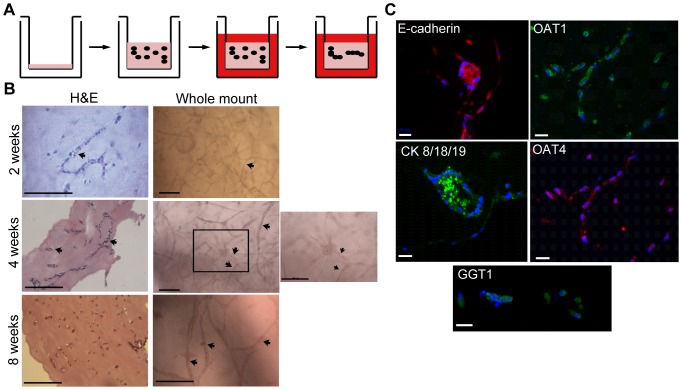
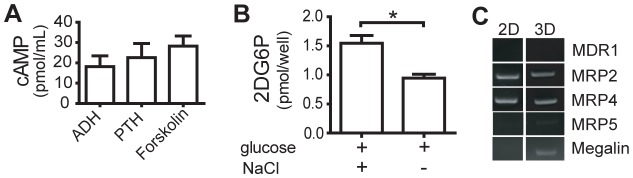
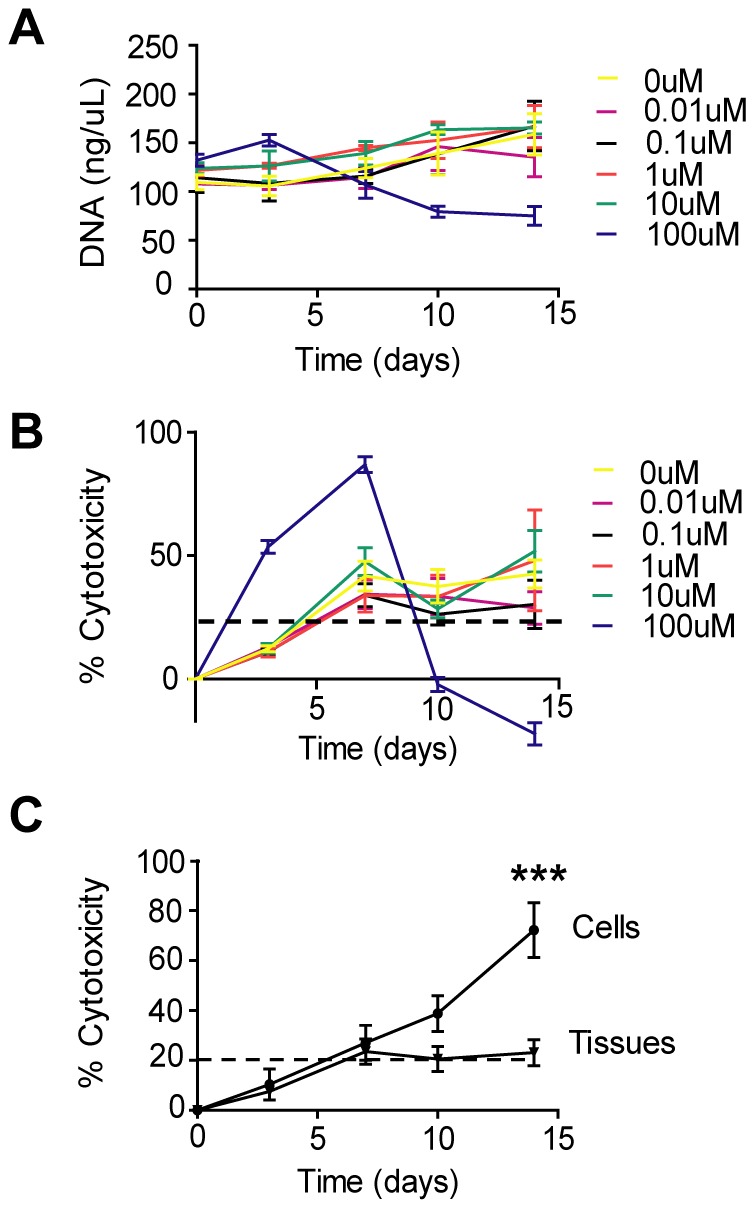
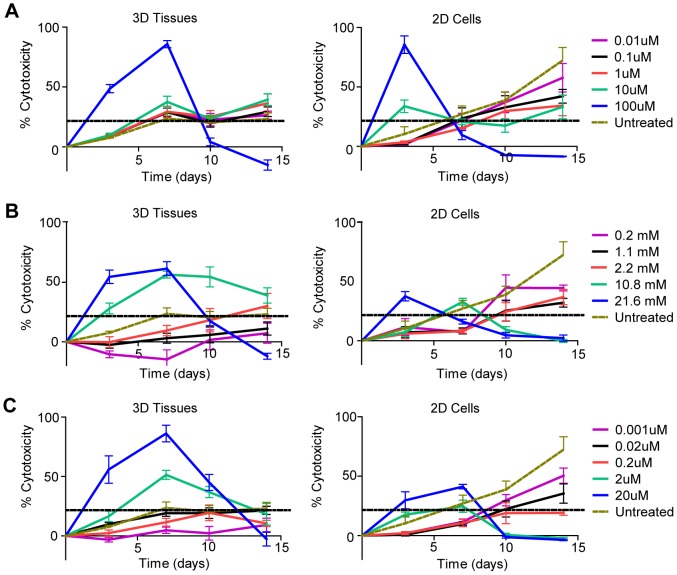
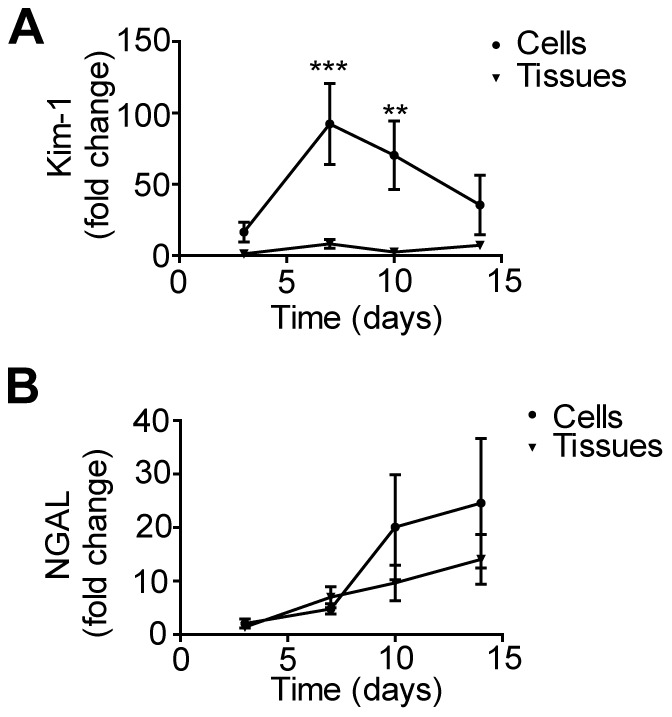
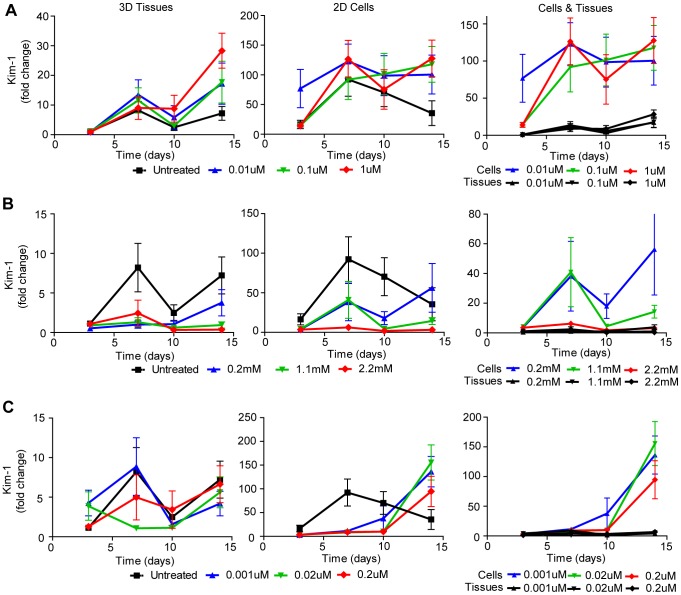
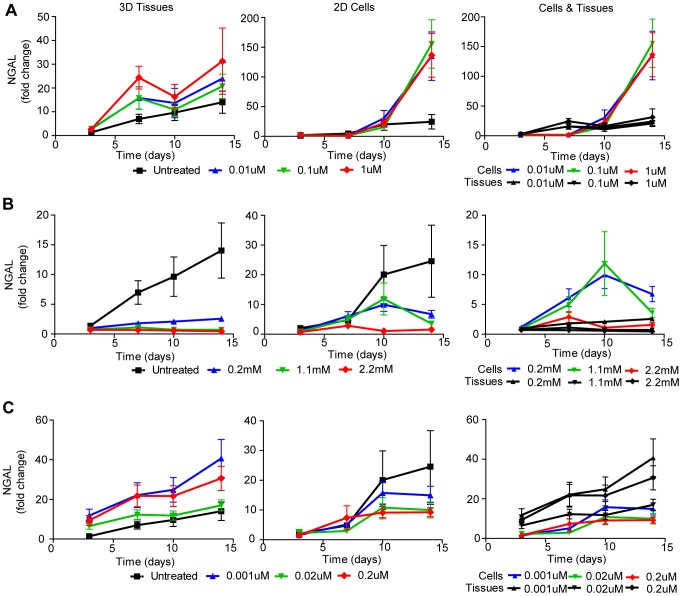
The staggering cost of bringing a drug to market coupled with the extremely high failure rate of prospective compounds in early phase clinical trials due to unexpected human toxicity makes it imperative that more relevant human models be developed to better predict drug toxicity. Drug-induced nephrotoxicity remains especially difficult to predict in both pre-clinical and clinical settings and is often undetected until patient hospitalization. Current pre-clinical methods of determining renal toxicity include 2D cell cultures and animal models, both of which are incapable of fully recapitulating the in vivo human response to drugs, contributing to the high failure rate upon clinical trials. We have bioengineered a 3D kidney tissue model using immortalized human renal cortical epithelial cells with kidney functions similar to that found in vivo. These 3D tissues were compared to 2D cells in terms of both acute (3 days) and chronic (2 weeks) toxicity induced by Cisplatin, Gentamicin, and Doxorubicin using both traditional LDH secretion and the pre-clinical biomarkers Kim-1 and NGAL as assessments of toxicity. The 3D tissues were more sensitive to drug-induced toxicity and, unlike the 2D cells, were capable of being used to monitor chronic toxicity due to repeat dosing. The inclusion of this tissue model in drug testing prior to the initiation of phase I clinical trials would allow for better prediction of the nephrotoxic effects of new drugs.
Conflict of interest statement
Figures



References
-
- Dimasi JA, Hansen RW, Grabowski HG (2003) The price of innovation: new estimates of drug development costs. J Health Econ 22: 151–85. - PubMed
-
- Food and Drug Administration. (2004) Innovation or Stagnation: Challenge and opportunity on the critical path to new medical products.
-
- Pannu N, Nadim MK (2008) An overview of drug-induced acute kidney injury. Crit Care Med 36: S216–S223. - PubMed
-
- Chen JC, Stevens JL, Trifillis AL, Jones TW (1990) Renal cysteine conjugate beta-lyase-mediated toxicity studied with primary cultures of human proximal tubular cells. Toxicol Appl Pharmacol 103: 463–473. - PubMed
Publication types
MeSH terms
Substances
Grants and funding
LinkOut - more resources
Full Text Sources
Other Literature Sources
Miscellaneous
