


Paradoxical association of enhanced cholesterol efflux with increased incident cardiovascular risks
- PMID: 23520163
- PMCID: PMC3743250
- DOI: 10.1161/ATVBAHA.113.301373
Paradoxical association of enhanced cholesterol efflux with increased incident cardiovascular risks
Abstract
Objective: Diminished cholesterol efflux activity of apolipoprotein B (apoB)-depleted serum is associated with prevalent coronary artery disease, but its prognostic value for incident cardiovascular events is unclear. We investigated the relationship of cholesterol efflux activity with both prevalent coronary artery disease and incident development of major adverse cardiovascular events (death, myocardial infarction, or stroke).
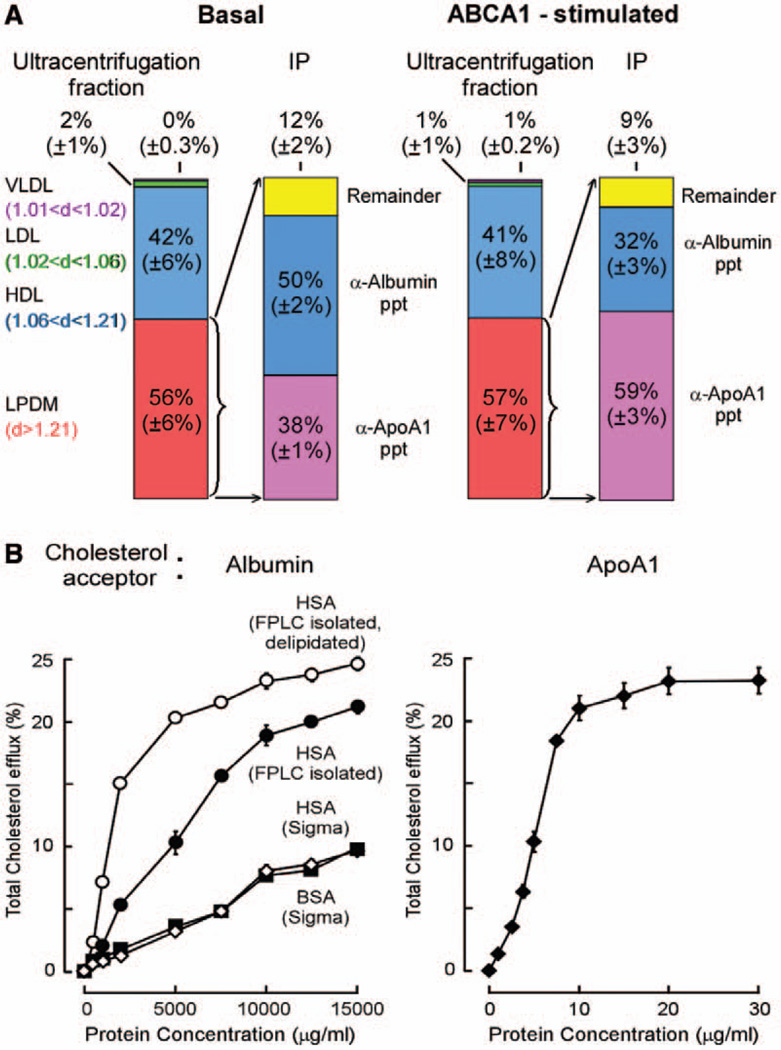
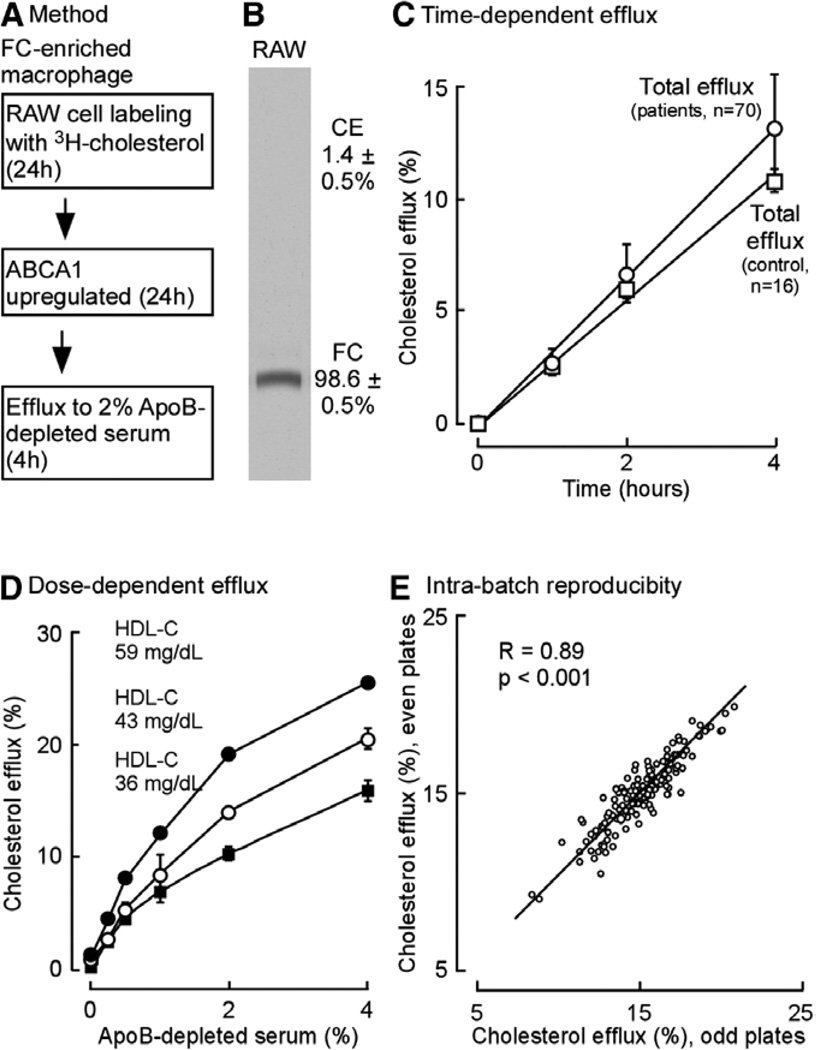
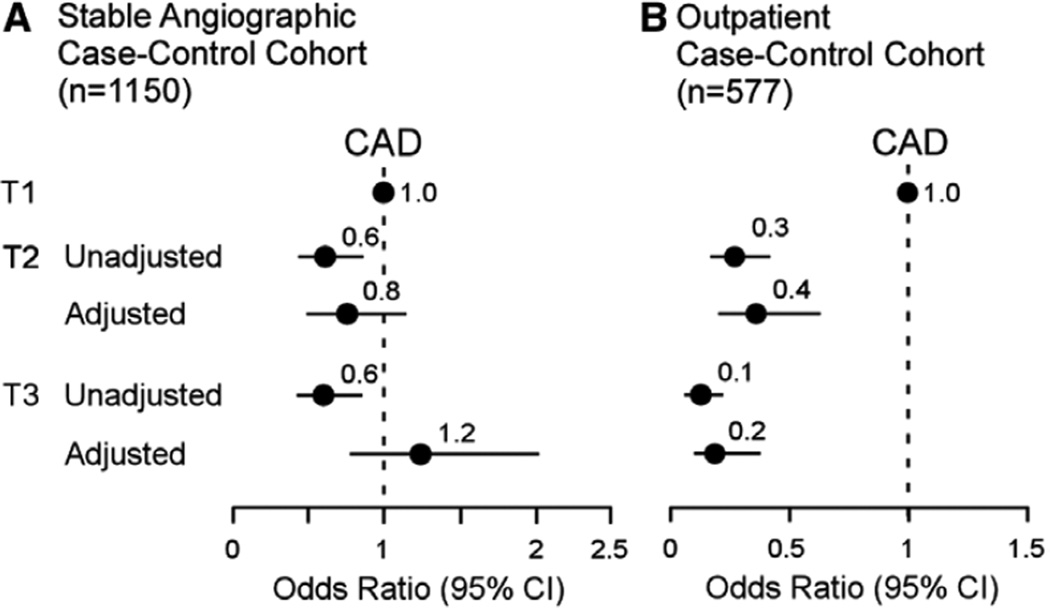
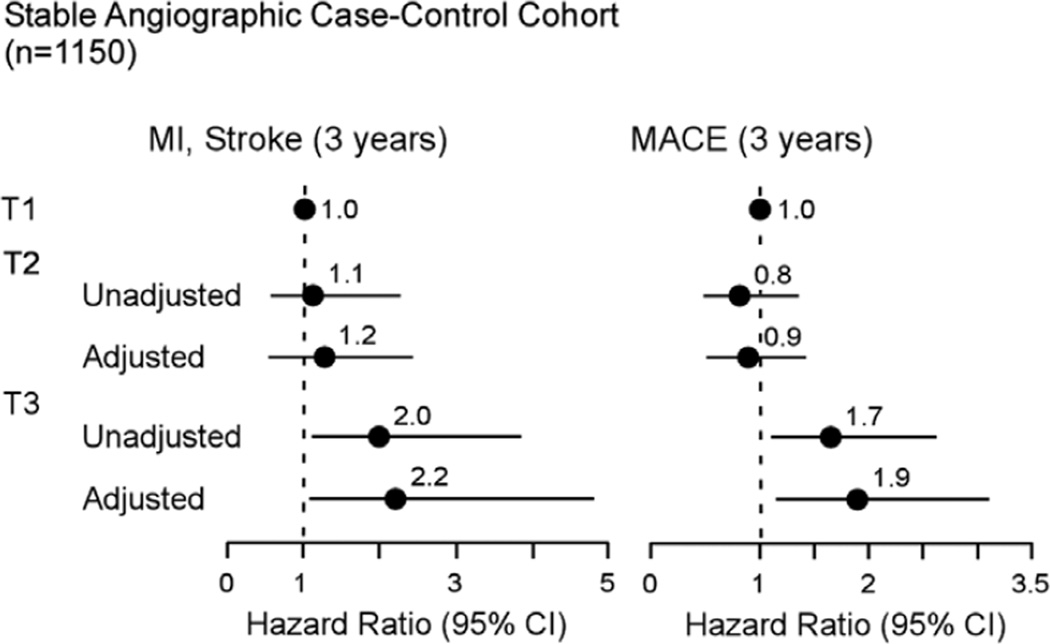
Approach and results: Cholesterol efflux activity from free cholesterol-enriched macrophages was measured in 2 case-control cohorts: (1) an angiographic cohort (n=1150) comprising stable subjects undergoing elective diagnostic coronary angiography and (2) an outpatient cohort (n=577). Analysis of media from cholesterol efflux assays revealed that the high-density lipoprotein fraction (1.063<d<1.21) contained only a minority (≈ 40%) of [(14)C]cholesterol released, with the majority found within the lipoprotein particle-depleted fraction, where ≈ 60% was recovered after apolipoprotein A1 immunoprecipitation. Albumin immunoprecipitation recovered another ≈ 30% of radiolabeled cholesterol within this fraction. Enhanced cholesterol efflux activity from ATP-binding cassette transporter A1-stimulated macrophages was associated with reduced risk of prevalent coronary artery disease in unadjusted models within both cohorts; however, the inverse risk relationship remained significant after adjustment for traditional coronary artery disease risk factors only within the outpatient cohort. Surprisingly, higher cholesterol efflux activity was associated with increase in prospective (3 years) risk of myocardial infarction/stroke (adjusted hazard ratio, 2.19; 95% confidence interval, 1.02-4.74) and major adverse cardiovascular events (adjusted hazard ratio, 1.85; 95% confidence interval, 1.11-3.06).
Conclusions: Heightened cholesterol efflux to apoB-depleted serum was paradoxically associated with increased prospective risk for myocardial infarction, stroke, and death. The majority of released radiolabeled cholesterol from macrophages in cholesterol efflux activity assays does not reside within a high-density lipoprotein particle.
Keywords: cholesterol efflux; high-density lipoprotein-cholesterol; macrophage; prognosis.
Figures
Comment in
-
Cholesterol efflux capacity: full steam ahead or a bump in the road?Arterioscler Thromb Vasc Biol. 2013 Jul;33(7):1449-51. doi: 10.1161/ATVBAHA.113.301519. Arterioscler Thromb Vasc Biol. 2013. PMID: 23766382 No abstract available.
References
-
- Maxfield FR, Tabas I. Role of cholesterol and lipid organization in disease. Nature. 2005;438:612–621. - PubMed
-
- Rosenson RS, Brewer HB, Jr, Davidson WS, Fayad ZA, Fuster V, Goldstein J, Hellerstein M, Jiang XC, Phillips MC, Rader DJ, Remaley AT, Rothblat GH, Tall AR, Yvan-Charvet L. Cholesterol efflux and atheroprotection: advancing the concept of reverse cholesterol transport. Circulation. 2012;125:1905–1919. - PMC - PubMed
-
- Navab M, Reddy ST, Van Lenten BJ, Fogelman AM. HDL and cardiovascular disease: atherogenic and atheroprotective mechanisms. Nat Rev Cardiol. 2011;8:222–232. - PubMed
-
- Boden WE, Probstfield JL, Anderson T, Chaitman BR, Desvignes-Nickens P, Koprowicz K, McBride R, Teo K, Weintraub W. Niacin in patients with low HDL cholesterol levels receiving intensive statin therapy. N Engl J Med. 2011;365:2255–2267. - PubMed
Publication types
MeSH terms
Substances
Grants and funding
LinkOut - more resources
Full Text Sources
Other Literature Sources
Medical
Miscellaneous
