


The dental plaque microbiome in health and disease
- PMID: 23520516
- PMCID: PMC3592792
- DOI: 10.1371/journal.pone.0058487
The dental plaque microbiome in health and disease
Abstract
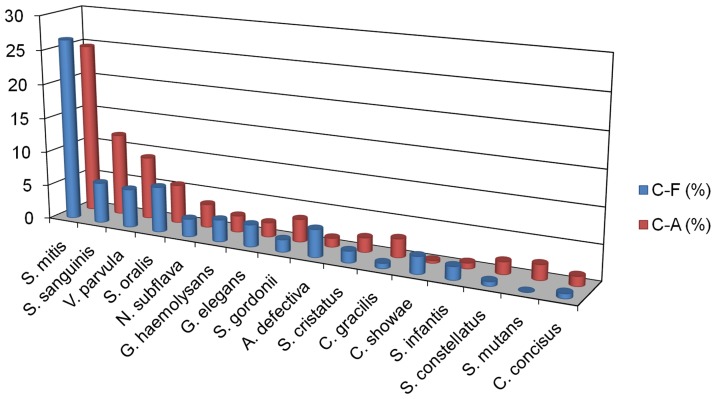
Dental decay is one of the most prevalent chronic diseases worldwide. A variety of factors, including microbial, genetic, immunological, behavioral and environmental, interact to contribute to dental caries onset and development. Previous studies focused on the microbial basis for dental caries have identified species associated with both dental health and disease. The purpose of the current study was to improve our knowledge of the microbial species involved in dental caries and health by performing a comprehensive 16S rDNA profiling of the dental plaque microbiome of both caries-free and caries-active subjects. Analysis of over 50,000 nearly full-length 16S rDNA clones allowed the identification of 1,372 operational taxonomic units (OTUs) in the dental plaque microbiome. Approximately half of the OTUs were common to both caries-free and caries-active microbiomes and present at similar abundance. The majority of differences in OTU's reflected very low abundance phylotypes. This survey allowed us to define the population structure of the dental plaque microbiome and to identify the microbial signatures associated with dental health and disease. The deep profiling of dental plaque allowed the identification of 87 phylotypes that are over-represented in either caries-free or caries-active subjects. Among these signatures, those associated with dental health outnumbered those associated with dental caries by nearly two-fold. A comparison of this data to other published studies indicate significant heterogeneity in study outcomes and suggest that novel approaches may be required to further define the signatures of dental caries onset and progression.
Conflict of interest statement
Figures


References
-
- Loesche WJ, Grenier E (1976) Detection of Streptococcus mutans in plaque samples by the direct fluorescent antibody test. J Dent Res 55: A87–93. - PubMed
-
- Oral health in America: a report of the Surgeon General. Journal of the California Dental Association 28: 685–695. - PubMed
-
- Acs G, Shulman R, Ng MW, Chussid S (1999) The effect of dental rehabilitation on the body weight of children with early childhood caries. Pediatr Dent 21: 109–113. - PubMed
-
- Low W, Tan S, Schwartz S (1999) The effect of severe caries on the quality of life in young children. Pediatr Dent 21: 325–326. - PubMed
Publication types
MeSH terms
Substances
Grants and funding
LinkOut - more resources
Full Text Sources
Other Literature Sources
Medical
