


Enhancing residents' neonatal resuscitation competency through unannounced simulation-based training
- PMID: 23522399
- PMCID: PMC3606478
- DOI: 10.3402/meo.v18i0.18726
Enhancing residents' neonatal resuscitation competency through unannounced simulation-based training
Abstract
Background: Almost half of pediatric third-year residents surveyed in 2000 had never led a resuscitation event. With increasing restrictions on residency work hours and a decline in patient volume in some hospitals, there is potential for fewer opportunities.
Purpose: Our primary purpose was to test the hypothesis that an unannounced mock resuscitation in a high-fidelity in-situ simulation training program would improve both residents' self-confidence and observed performance of adopted best practices in neonatal resuscitation.
Methods: Each pediatric and medicine-pediatric resident in one pediatric residency program responded to an unannounced scenario that required resuscitation of the high fidelity infant simulator. Structured debriefing followed in the same setting, and a second cycle of scenario response and debriefing occurred before ending the 1-hour training experience. Measures included pre- and post-program confidence questionnaires and trained observer assessments of live and videotaped performances.
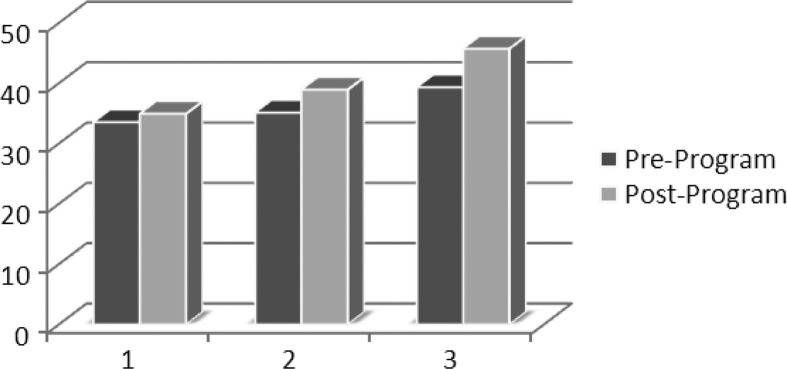
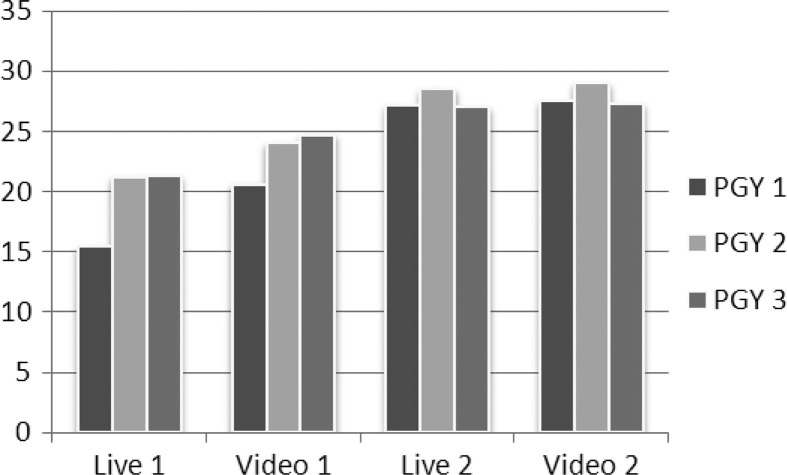
Results: Statistically significant pre-post gains for self-confidence were observed for 8 of the 14 NRP critical behaviors (p=0.00-0.03) reflecting knowledge, technical, and non-technical (teamwork) skills. The pre-post gain in overall confidence score was statistically significant (p=0.00). With a maximum possible assessment score of 41, the average pre-post gain was 8.28 and statistically significant (p<0.001). Results of the video-based assessments revealed statistically significant performance gains (p<0.0001). Correlation between live and video-based assessments were strong for pre-post training scenario performances (pre: r=0.64, p<0.0001; post: r=0.75, p<0.0001).
Conclusions: Results revealed high receptivity to in-situ, simulation-based training and significant positive gains in confidence and observed competency-related abilities. Results support the potential for other applications in residency and continuing education.
Keywords: competency; neonatal resuscitation; pediatric residents; simulation-based training.
Figures
References
-
- Kattwinkel J, Perlman J, Aziz K, Colby C, Fairchild K, Gallagher J, et al. Special report neonatal resuscitation: 2010 American Heart Association Guidelines for cardiopulmonary resuscitation and emergency cardiovascular care. Pediatrics. 2010;126:e1400–13. - PubMed
-
- AHA/AAP Neonatal Resuscitation Program Steering Committee. Elk Grove, IL: American Academy of Pediatrics; 2000. Textbook of neonatal resuscitation; pp. 1–2.
-
- Murphy A, Halamek L. Simulation-based training in neonatal resuscitation. Neoreviews. 2005;11:e489–91.
-
- Accreditation Council for Graduate Medical Education. Program requirements for residency education in pediatrics. Chicago, IL: Accreditation Council for Graduate Medical Education; 2007.
-
- Falk A, Escobedo M, Baillargeon J, Villard L, Gunkel J. Proficiency of pediatric residents in performing neonatal endotracheal intubation. Pediatrics. 2003;112:1242–47. - PubMed
MeSH terms
LinkOut - more resources
Full Text Sources
Other Literature Sources
Medical
Miscellaneous
