


Cost-utility of rapid polymerase chain reaction-based influenza testing for high-risk emergency department patients
- PMID: 23522607
- PMCID: PMC4162424
- DOI: 10.1016/j.annemergmed.2013.01.005
Cost-utility of rapid polymerase chain reaction-based influenza testing for high-risk emergency department patients
Abstract
Study objective: We evaluate the cost-effectiveness of polymerase chain reaction (PCR)-based rapid influenza testing and treatment for influenza in adult emergency department (ED) patients who are at high risk for or have evidence of influenza-related complications.
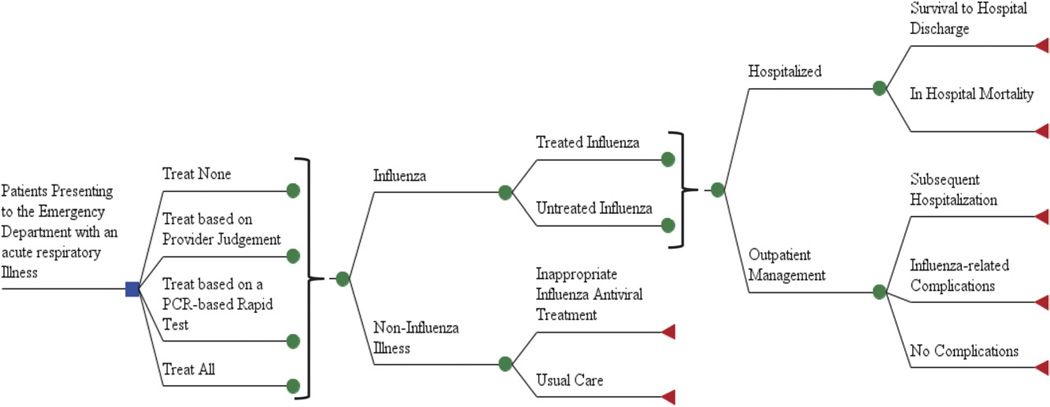
Methods: We developed a cost-utility decision analysis model that assessed adult patients presenting to the ED with symptoms of an acute respiratory infection, who met the Centers for Disease Control and Prevention criteria for recommended antiviral treatment. Analysis was performed from the societal perspective, with incremental comparisons of 4 influenza testing and treatment strategies: treat none, treat according to provider judgment, treat according to results of a PCR-based rapid diagnostic test, and treat all.
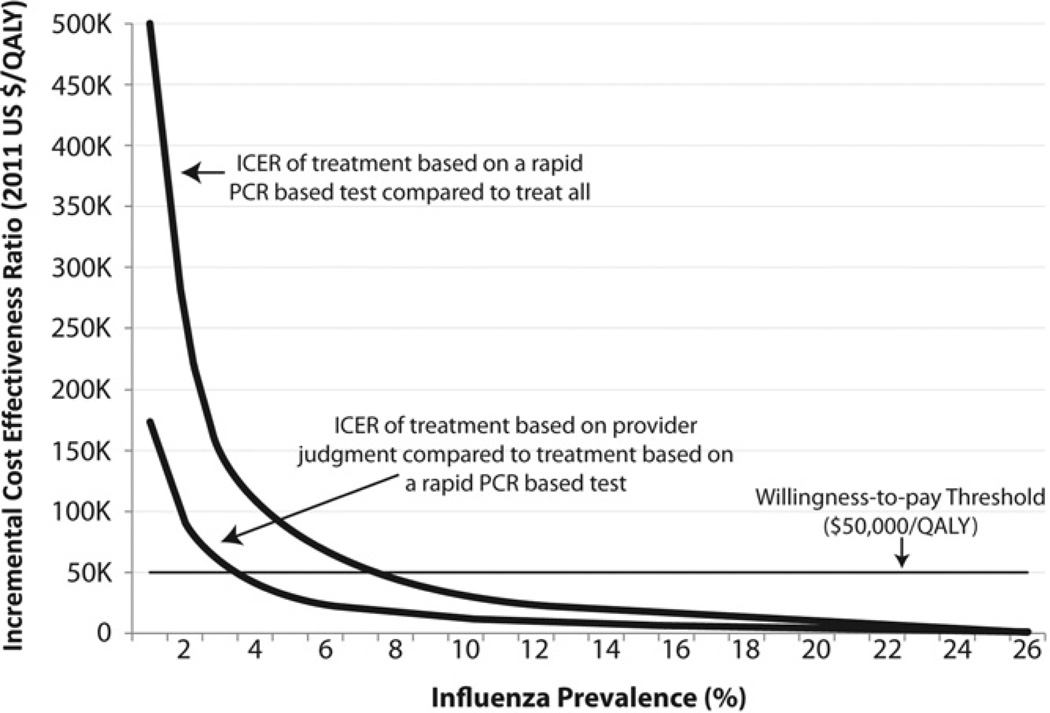
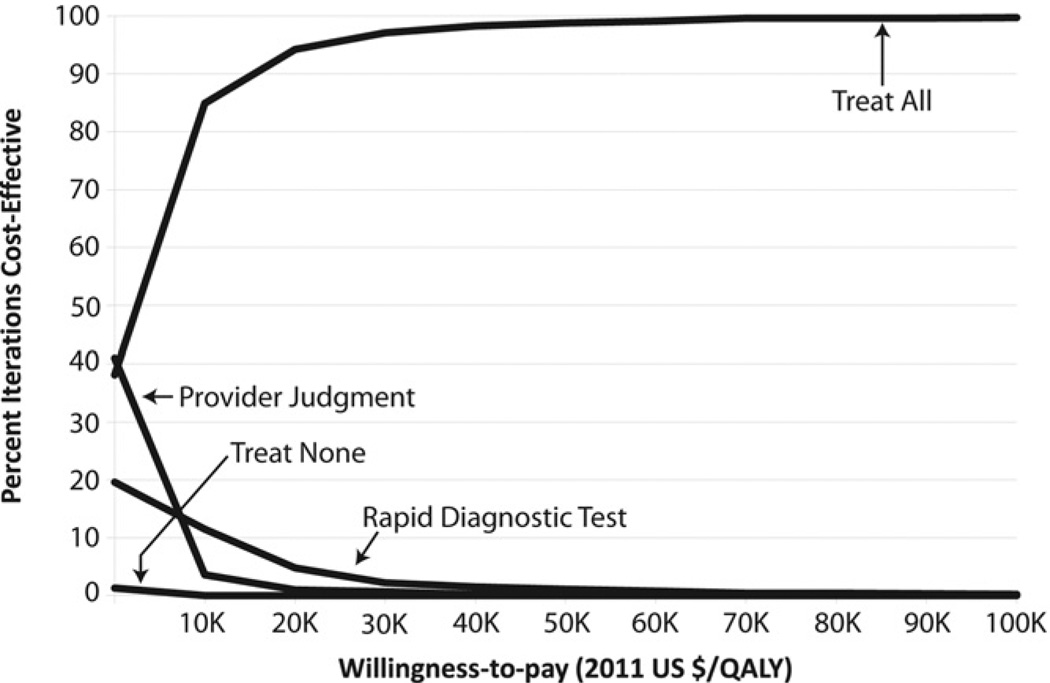
Results: Treating no patients with antivirals was dominated by all other strategies that increased in both cost and benefit in the following order: treat according to provider judgment, treat according to results of a PCR-based rapid diagnostic test, and treat all. As influenza prevalence increases, treating all patients eventually dominated all other options.
Conclusion: The economic benefit of incorporating use of rapid PCR-based influenza testing for ED patients at risk of developing influenza-related complications depends on influenza prevalence; treatment guided by physician diagnosis or rapid testing, and treatment of all patients is more effective and less costly than no treatment.
Copyright © 2013 American College of Emergency Physicians. Published by Mosby, Inc. All rights reserved.
Figures
Comment in
-
Cost utility of rapid polymerase chain reaction-based influenza testing: what should a clinician make of this analysis?Ann Emerg Med. 2013 Jul;62(1):89-90. doi: 10.1016/j.annemergmed.2013.01.027. Epub 2013 Mar 20. Ann Emerg Med. 2013. PMID: 23522606 No abstract available.
References
-
- Centers for Disease Control and Prevention. Seasonal influenza. [Accessed March 12, 2013];2011 Available at: http://www.cdc.gov/flu/about/qa/disease.htm.
-
- Thompson WW, Shay DK, Weintraub E, et al. Mortality associated with influenza and respiratory syncytial virus in the United States. JAMA. 2003;289:179–186. - PubMed
-
- Thompson WW, Shay DK, Weintraub E, et al. Influenza-associated hospitalizations in the United States. JAMA. 2004;292:1333–1340. - PubMed
-
- Fiore AE, Fry A, Shay D, et al. Centers for Disease Control and Prevention (CDC). Antiviral agents for the treatment and chemoprophylaxis of influenza—recommendations of the Advisory Committee on Immunization Practices (ACIP) MMWR Surveill Summ. 2011;60:1–24. - PubMed
Publication types
MeSH terms
Substances
Grants and funding
LinkOut - more resources
Full Text Sources
Other Literature Sources
Medical
Research Materials
Miscellaneous
