


CTNNB1, AXIN1 and APC expression analysis of different medulloblastoma variants
- PMID: 23525311
- PMCID: PMC3584274
- DOI: 10.6061/clinics/2013(02)oa08
CTNNB1, AXIN1 and APC expression analysis of different medulloblastoma variants
Abstract
Objectives: We investigated four components of the Wnt signaling pathway in medulloblastomas. Medulloblastoma is the most common type of malignant pediatric brain tumor, and the Wnt signaling pathway has been shown to be activated in this type of tumor.
Methods: Sixty-one medulloblastoma cases were analyzed for β-catenin gene (CTNNB1) mutations, β-catenin protein expression via immunostaining and Wnt signaling pathway-related gene expression. All data were correlated with histological subtypes and patient clinical information.
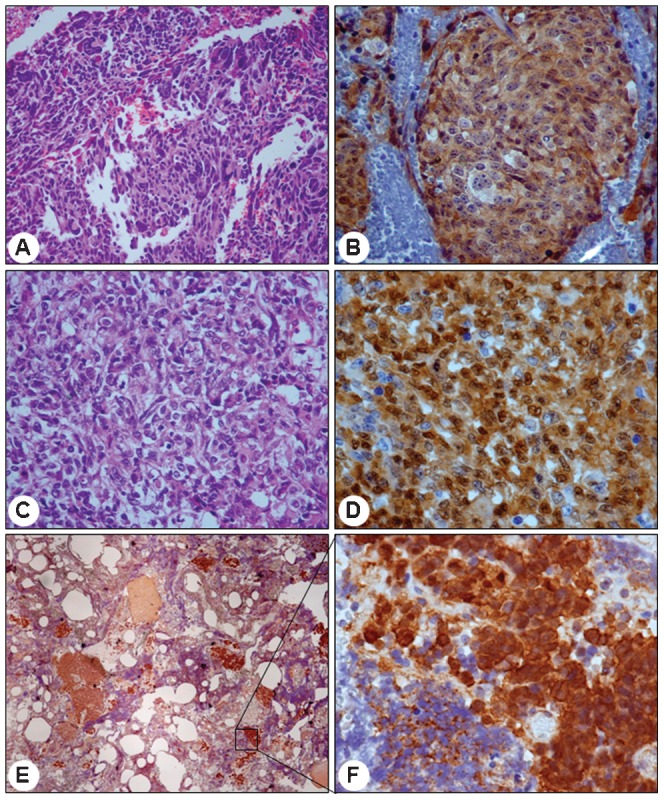
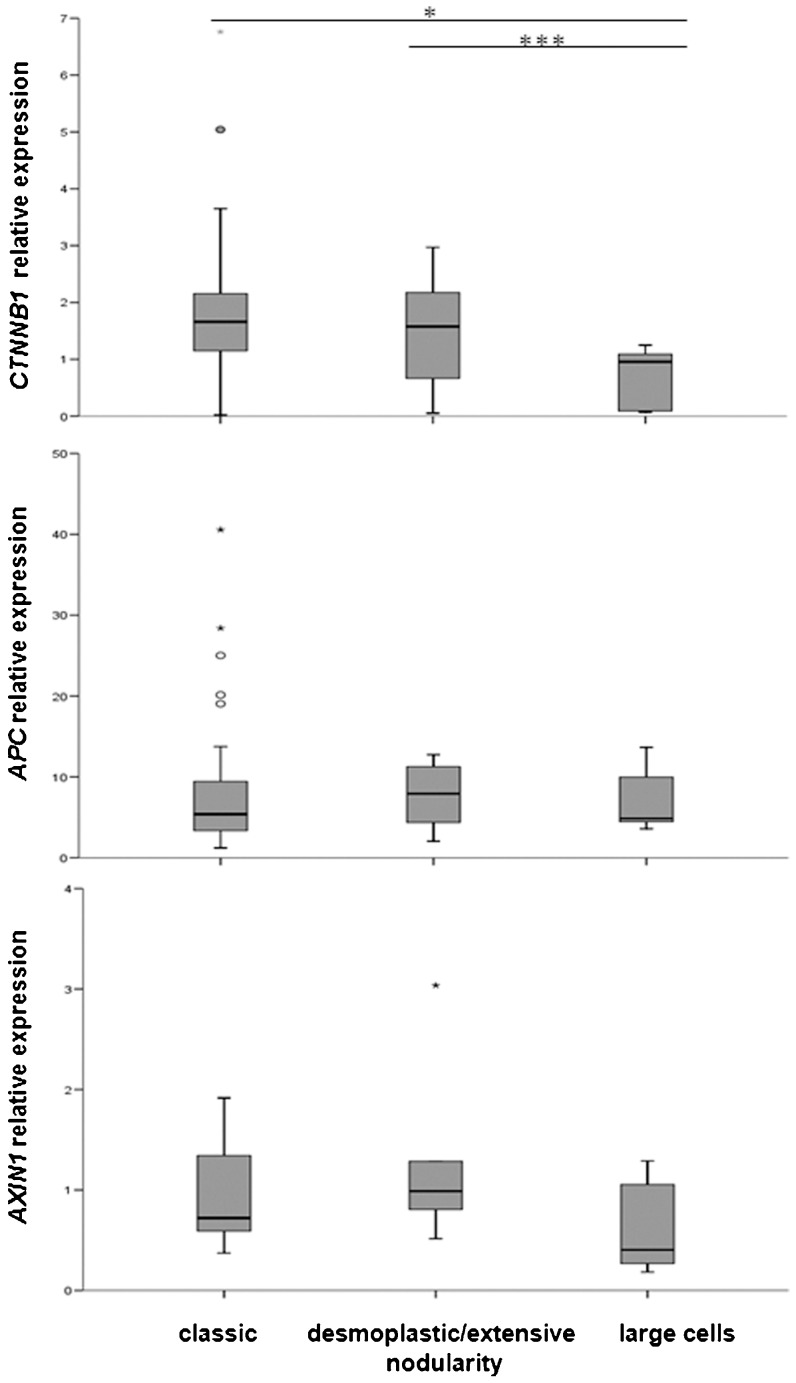
Results: CTNNB1 sequencing analysis revealed that 11 out of 61 medulloblastomas harbored missense mutations in residues 32, 33, 34 and 37, which are located in exon 3. These mutations alter the glycogen synthase kinase-3β phosphorylation sites, which participate in β-catenin degradation. No significant differences were observed between mutation status and histological medulloblastoma type, patient age and overall or progression-free survival times. Nuclear β-catenin accumulation, which was observed in 27.9% of the cases, was not associated with the histological type, CTNNB1 mutation status or tumor cell dissemination. The relative expression levels of genes that code for proteins involved in the Wnt signaling pathway (CTNNB1, APC, AXIN1 and WNT1) were also analyzed, but no significant correlations were found. In addition, large-cell variant medulloblastomas presented lower relative CTNNB1 expression as compared to the other tumor variants.
Conclusions: A small subset of medulloblastomas carry CTNNB1 mutations with consequent nuclear accumulation of β-catenin. The Wnt signaling pathway plays a role in classic, desmoplastic and extensive nodularity medulloblastoma variants but not in large-cell medulloblastomas.
Conflict of interest statement
No potential conflict of interest was reported.
Figures
References
-
- Giangaspero F, Eberhart CG, Haapasala H, Pietsch T, Wiestler OD, Ellison DW. Louis D N, Ohgaki H, Wiestler O D, Cavenee W K, edMedulloblastoma 2007France: IARC; 132–40.In WHO classification of tumors of the central nervous system
-
- Giordana MT, Schiffer P, Schiffer D. Prognostic factors in medulloblastoma. Child′s Nerv Syst. 1998;14(6):256–62. - PubMed
-
- Gulino A, Arcella A, Giangaspero F. Pathological and molecular heterogeneity of medulloblastoma. Curr Opin Oncol. 2008;20(6):668–75. - PubMed
-
- Thompson MC, Fuller C, Hogg TL, Dalton J, Finkelstein D, Lau CC, et al. Genomics identifies medulloblastoma subgroups that are enriched for specific genetic alterations. J Clin Oncol. 2006;24(12):1924–31. - PubMed
Publication types
MeSH terms
Substances
LinkOut - more resources
Full Text Sources
Other Literature Sources
Miscellaneous
