Effect of lumbar stabilization and dynamic lumbar strengthening exercises in patients with chronic low back pain
- PMID: 23525973
- PMCID: PMC3604220
- DOI: 10.5535/arm.2013.37.1.110
Effect of lumbar stabilization and dynamic lumbar strengthening exercises in patients with chronic low back pain
Abstract
Objective: To compare the effects of lumbar stabilization exercises and lumbar dynamic strengthening exercises on the maximal isometric strength of the lumbar extensors, pain severity and functional disability in patients with chronic low back pain (LBP).
Methods: Patients suffering nonspecific LBP for more than 3 months were included prospectively and randomized into lumbar stabilization exercise group (n=11) or lumbar dynamic strengthening exercise group (n=10). Exercises were performed for 1 hour, twice weekly, for 8 weeks. The strength of the lumbar extensors was measured at various angles ranging from 0° to 72° at intervals of 12°, using a MedX. The visual analog scale (VAS) and the Oswestry Low Back Pain Disability Questionnaire (ODQ) were used to measure the severity of LBP and functional disability before and after the exercise.
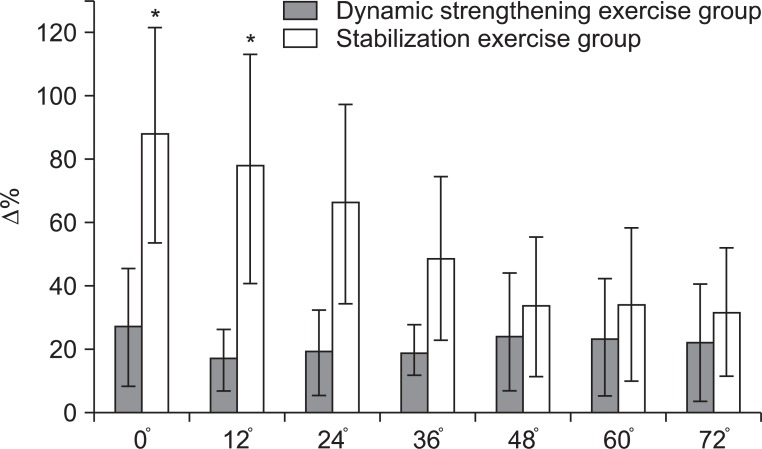
Results: Compared with the baseline, lumbar extension strength at all angles improved significantly in both groups after 8 weeks. The improvements were significantly greater in the lumbar stabilization exercise group at 0° and 12° of lumbar flexion. VAS decreased significantly after treatment; however, the changes were not significantly different between the groups. ODQ scores improved significantly in the stabilization exercise group only.
Conclusion: Both lumbar stabilization and dynamic strengthening exercise strengthened the lumbar extensors and reduced LBP. However, the lumbar stabilization exercise was more effective in lumbar extensor strengthening and functional improvement in patients with nonspecific chronic LBP.
Keywords: Abdominal muscle; Exercise; Low back pain; Muscle strength; Rehabilitation.
Conflict of interest statement
No potential conflict of interest relevant to this article was reported.
Figures
References
-
- Rozenberg S. Chronic low back pain: definition and treatment. Rev Prat. 2008;58:265–272. - PubMed
-
- Lawrence JP, Greene HS, Grauer JN. Back pain in athletes. J Am Acad Orthop Surg. 2006;14:726–735. - PubMed
-
- Davies JE, Gibson T, Tester L. The value of exercises in the treatment of low back pain. Rheumatol Rehabil. 1979;18:243–247. - PubMed
-
- Manniche C, Lundberg E, Christensen I, Bentzen L, Hesselsoe G. Intensive dynamic back exercises for chronic low back pain: a clinical trial. Pain. 1991;47:53–63. - PubMed
-
- McKenzie RA. Prophylaxis in recurrent low back pain. N Z Med J. 1979;89:22–23. - PubMed
LinkOut - more resources
Full Text Sources
Other Literature Sources
Medical
Miscellaneous