


Genome sequence of Lactobacillus pentosus KCA1: vaginal isolate from a healthy premenopausal woman
- PMID: 23527145
- PMCID: PMC3602190
- DOI: 10.1371/journal.pone.0059239
Genome sequence of Lactobacillus pentosus KCA1: vaginal isolate from a healthy premenopausal woman
Abstract
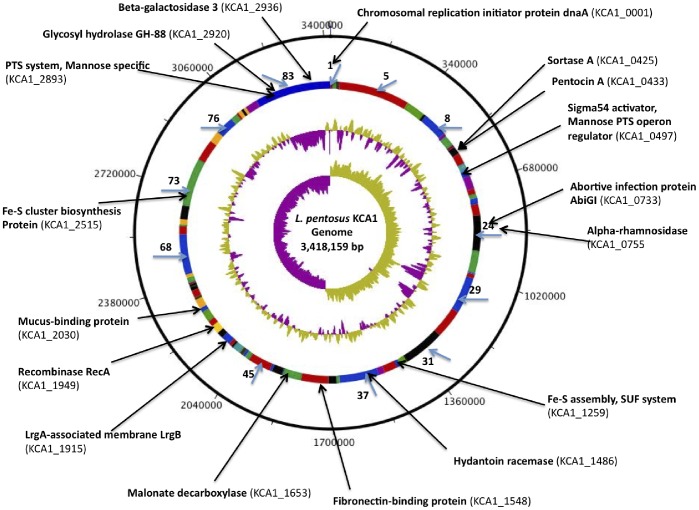
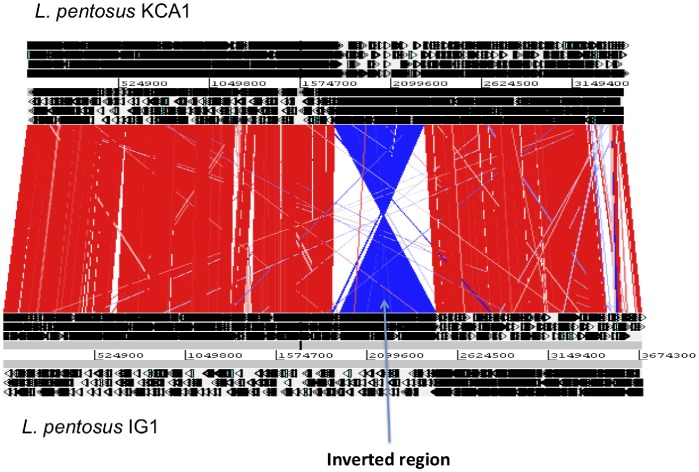
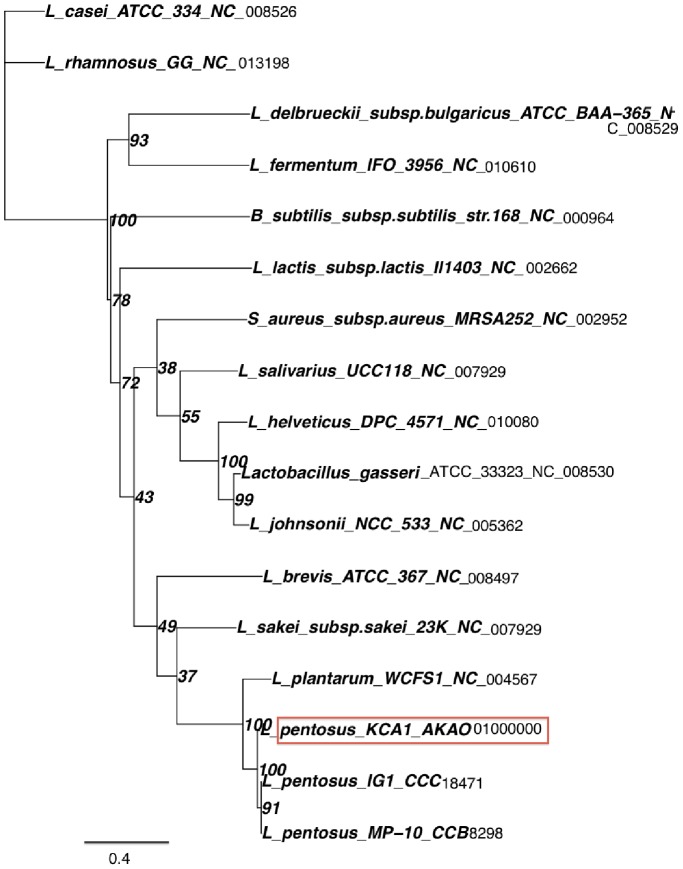
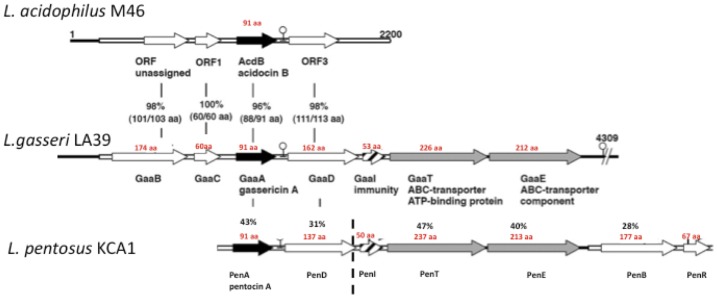
The vaginal microbiota, in particular Lactobacillus species, play an important role in female health through modulation of immunity, countering pathogens and maintaining a pH below 4.7. We report the isolation and genome sequence of Lactobacillus pentosus strain KCA1 (formally known as L. plantarum) from the vagina of a healthy Nigerian woman. The genome was sequenced using Illumina GA II technology. The resulting 16,920,226 paired-end reads were assembled with the Velvet tool. Contigs were annotated using the RAST server, and manually curated. A comparative analysis with the available genomes of L. pentosus IG1 and L. plantarum WCFS1 showed that over 15% of the predicted functional activities are found only in this strain. The strain has a chromosome sequence of 3,418,159 bp with a G+C content of 46.4%, and is devoid of plasmids. Novel gene clusters or variants of known genes relative to the reference genomes were found. In particular, the strain has loci encoding additional putative mannose phosphotransferase systems. Clusters of genes include those for utilization of hydantoin, isopropylmalate, malonate, rhamnosides, and genes for assimilation of polyglycans, suggesting the metabolic versatility of L. pentosus KCA1. Loci encoding putative phage defense systems were also found including clustered regularly interspaced short palindromic repeats (CRISPRs), abortive infection (Abi) systems and toxin-antitoxin systems (TA). A putative cluster of genes for biosynthesis of a cyclic bacteriocin precursor, here designated as pentocin KCA1 (penA) were identified. These findings add crucial information for understanding the genomic and geographic diversity of vaginal lactobacilli.
Conflict of interest statement
Figures

References
-
- Antonio MA, Hawes SE, Hillier SL (1999) The identification of vaginal Lactobacillus species and the demographic and microbiologic characteristics of women colonized by these species. J Infect Dis 180: 1950–1956. - PubMed
-
- Schwebke JR (2001) Role of vaginal flora as a barrier to HIV acquisition. Curr Infect Dis Rep 3: 152–155. - PubMed
-
- Cohn SE, Clark RA (2003) Sexually transmitted diseases, HIV, and AIDS in women. Med Clin North Am 87: 971–995. - PubMed
Publication types
MeSH terms
Substances
Associated data
- Actions
- Actions
- Actions
- Actions
- Actions
- Actions
- Actions
- Actions
- Actions
- Actions
- Actions
- Actions
- Actions
- Actions
- Actions
- Actions
- Actions
- Actions
- Actions
- Actions
- Actions
- Actions
- Actions
- Actions
- Actions
- Actions
- Actions
- Actions
- Actions
- Actions
- Actions
- Actions
- Actions
- Actions
- Actions
- Actions
- Actions
- Actions
- Actions
- Actions
- Actions
- Actions
- Actions
- Actions
- Actions
- Actions
- Actions
- Actions
- Actions
- Actions
- Actions
- Actions
- Actions
- Actions
- Actions
- Actions
- Actions
- Actions
- Actions
- Actions
- Actions
- Actions
- Actions
- Actions
- Actions
- Actions
- Actions
- Actions
- Actions
- Actions
- Actions
- Actions
- Actions
- Actions
- Actions
- Actions
- Actions
- Actions
- Actions
- Actions
- Actions
- Actions
- Actions
LinkOut - more resources
Full Text Sources
Other Literature Sources
Medical
Molecular Biology Databases
